25+ Playroom Inspiration Ideas to Create a Fun and Creative Space
A thoughtfully designed playroom gives children a dedicated space to learn, imagine, and explore while keeping the rest of the home organized. Whether you have a large bonus room or a small corner in your living area, the right playroom design can encourage creativity, independence, and hours of fun. From colorful themes and Montessori-inspired layouts to modern storage solutions and cozy reading corners, there are endless ways to create a space your kids will love. Shower Curtain Ideas
The best playroom inspiration combines functionality with playful design. Smart storage, age-appropriate furniture, soft textures, and engaging activity zones help children play comfortably while making cleanup easier for parents. These 25+ playroom inspiration ideas will help you design a stylish, organized, and inviting space where learning and imagination can grow every day.
1. Montessori Playroom
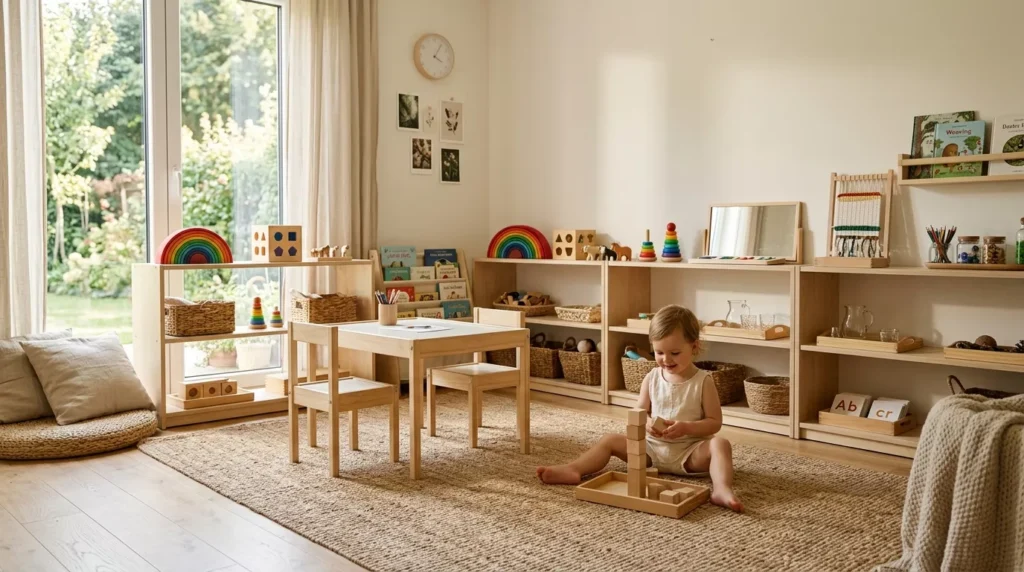
A Montessori playroom focuses on independence by giving children easy access to toys, books, and learning materials. Low open shelves, child-sized furniture, and neatly organized baskets encourage kids to choose activities on their own while developing responsibility and confidence. Neutral colors and natural materials create a calm environment that supports creativity without unnecessary distractions.
Decorate with wooden toys, educational puzzles, floor cushions, and simple wall art that promotes curiosity. Keep only a limited selection of toys on display and rotate them regularly to maintain interest while reducing clutter. This thoughtful setup creates a peaceful playroom where children can explore, learn, and play independently.
2. Neutral Playroom
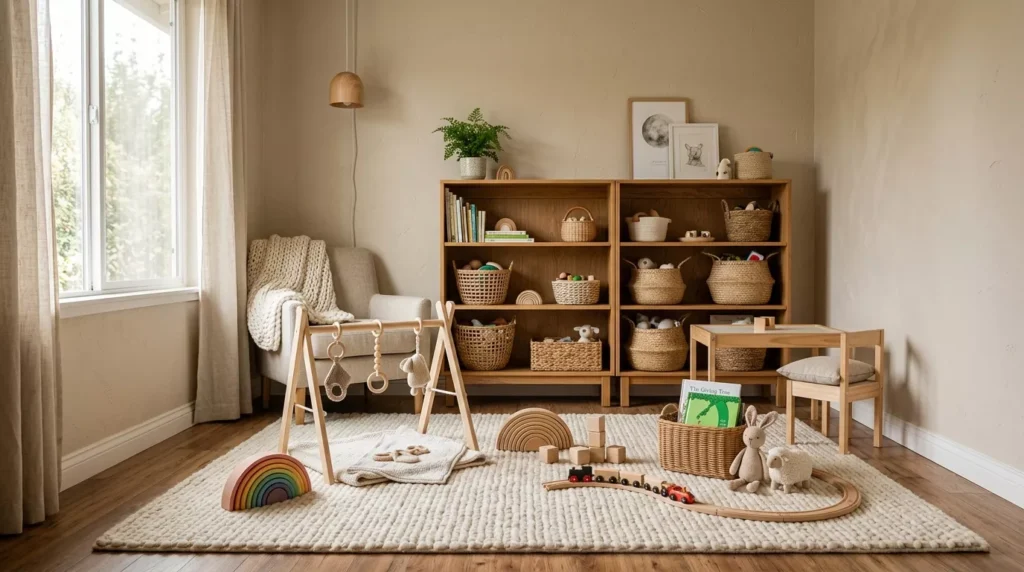
A neutral playroom creates a calming environment using soft shades of beige, cream, white, and warm wood tones. Instead of relying on bright colors, this style introduces texture through woven baskets, linen curtains, wooden furniture, and plush rugs. The result is a timeless space that feels relaxing for both children and parents.
Add subtle pops of color through books, toys, and artwork while maintaining the clean aesthetic. Floating shelves, toy baskets, and natural lighting help keep the room organized and inviting. A neutral playroom grows beautifully with your child and easily adapts to changing interests over time.
3. Colorful Rainbow Playroom
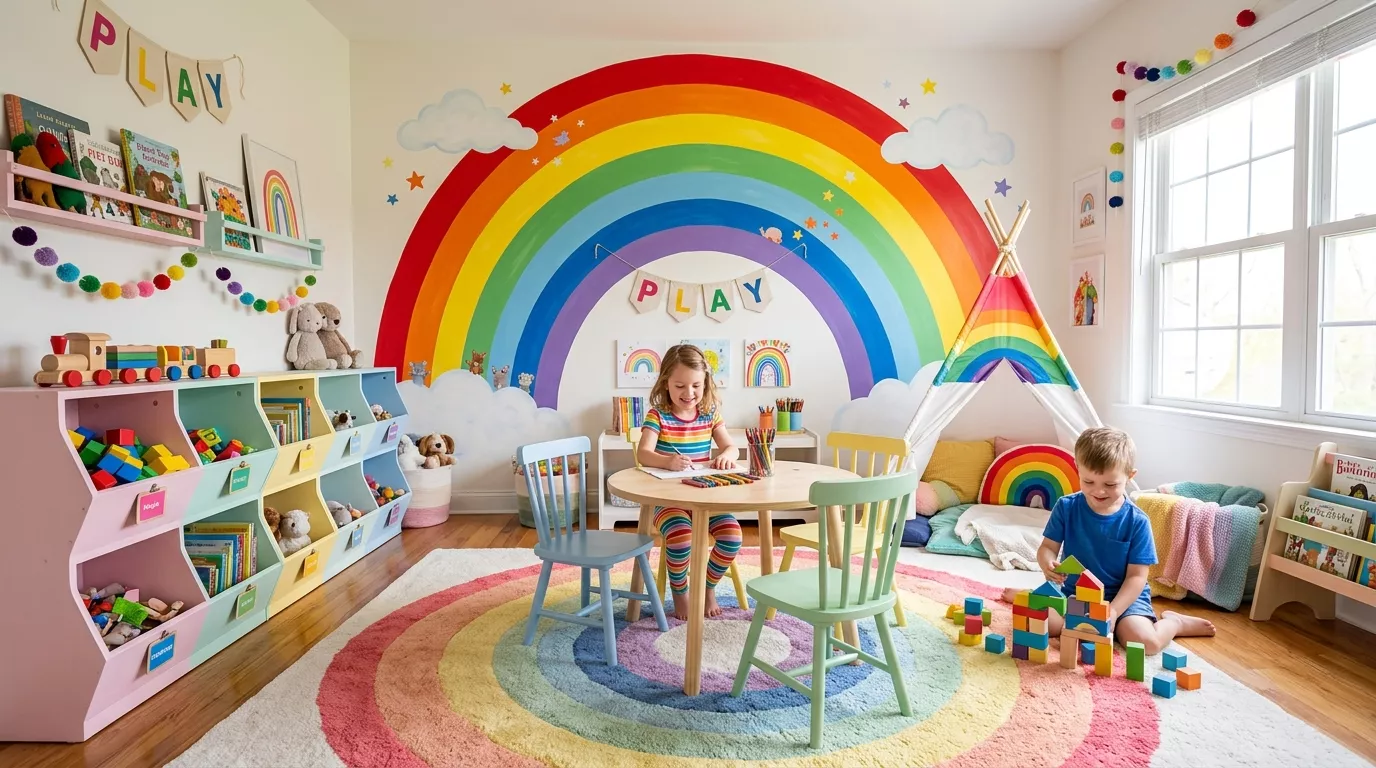
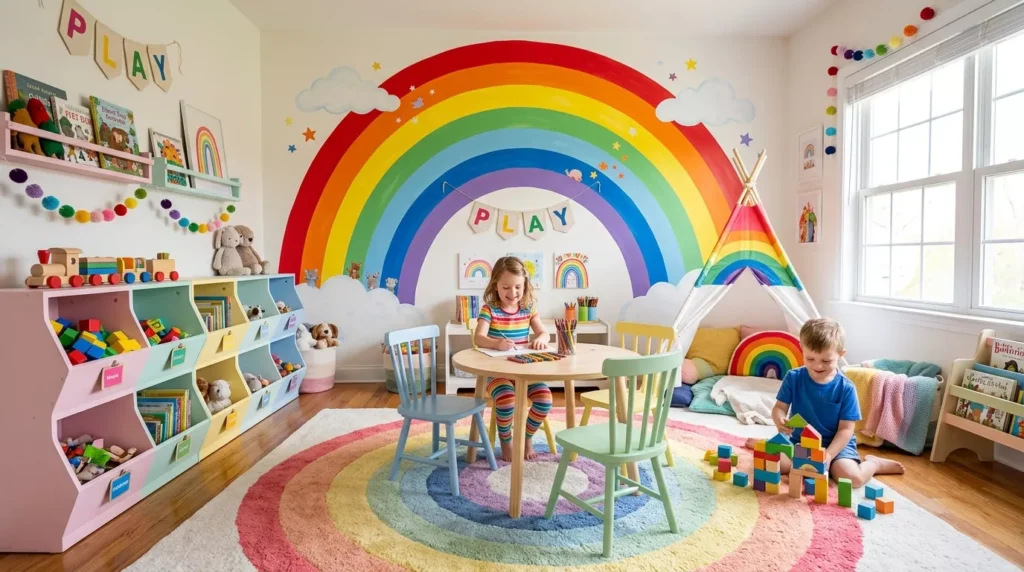
A rainbow-themed playroom fills the room with cheerful energy through colorful wall décor, playful rugs, and vibrant storage bins. Bright shades encourage creativity while making the space feel exciting and welcoming. Rainbow wall decals, colorful book displays, and playful artwork create an environment where imagination thrives.
Balance the bold colors with white walls and light wood furniture to prevent the room from feeling overwhelming. Soft seating, colorful cushions, and educational toys complete the joyful atmosphere. This playful design creates an inspiring environment perfect for active children who love to explore.
4. Modern Playroom
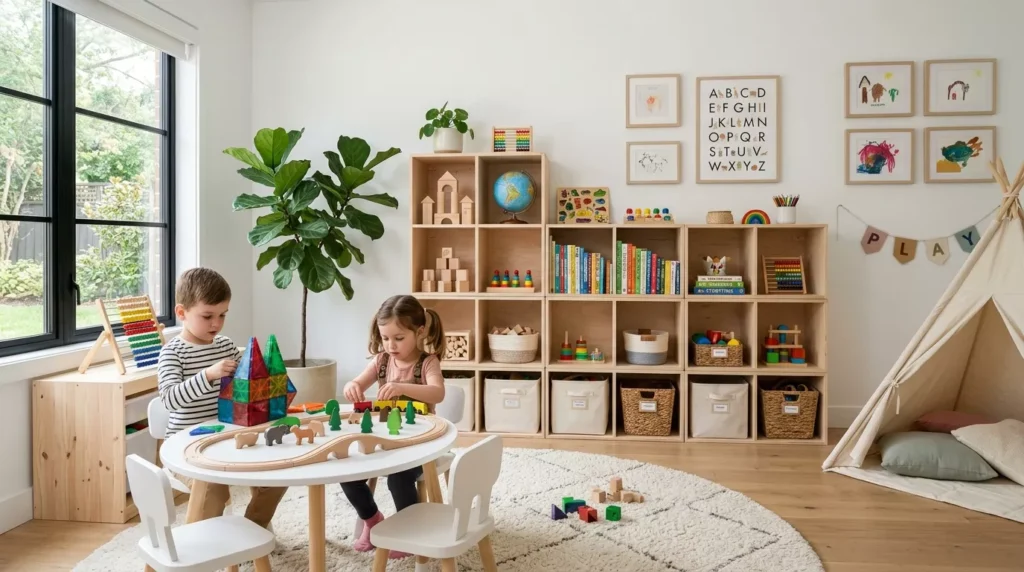
A modern playroom combines clean lines, functional furniture, and organized storage with playful touches that appeal to children. Neutral walls, sleek shelving, and minimalist décor create a tidy appearance while allowing colorful toys and books to become decorative elements themselves. This style works especially well in contemporary homes where simplicity is preferred.
Incorporate modular storage cubes, soft play mats, and stylish baskets that keep everything neatly organized. Large windows, indoor plants, and warm lighting soften the modern aesthetic while creating a welcoming atmosphere. A modern playroom is both practical and visually appealing for the entire family.
5. Reading Nook Playroom
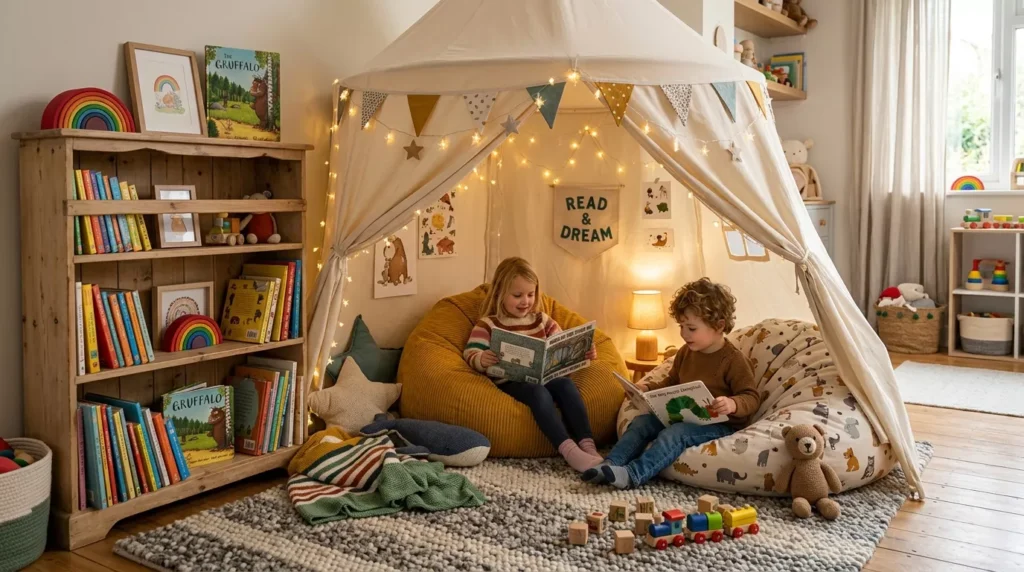
A cozy reading nook encourages children to develop a love of books by providing a quiet space designed specifically for reading and relaxation. Soft bean bags, floor cushions, low bookshelves, and warm lighting create an inviting corner where kids can comfortably enjoy their favorite stories. This dedicated area also offers a peaceful escape from active play.
Enhance the reading nook with fairy lights, playful wall decals, and a small canopy to create a magical atmosphere. Display books with their covers facing outward so children can easily choose what they want to read. A reading corner becomes one of the most valuable features in any playroom.
6. Nature-Inspired Playroom
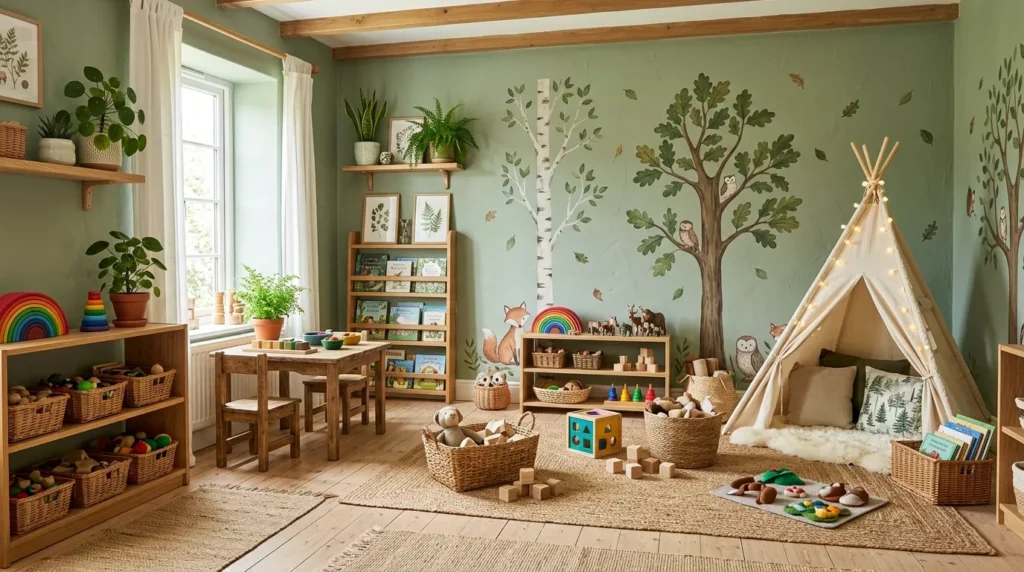
A nature-inspired playroom brings the outdoors inside through natural wood furniture, indoor plants, earthy colors, and botanical décor. Soft green walls, woven baskets, wooden toys, and nature-themed artwork create a peaceful environment that encourages imaginative play while promoting a connection with nature.
Decorate with tree-shaped bookshelves, leaf garlands, and animal-themed accessories that reinforce the organic theme. Natural sunlight, linen curtains, and textured rugs add warmth while maintaining the calming atmosphere. This timeless design creates a relaxing playroom where children can learn and explore in comfort.
7. Small Playroom Organization
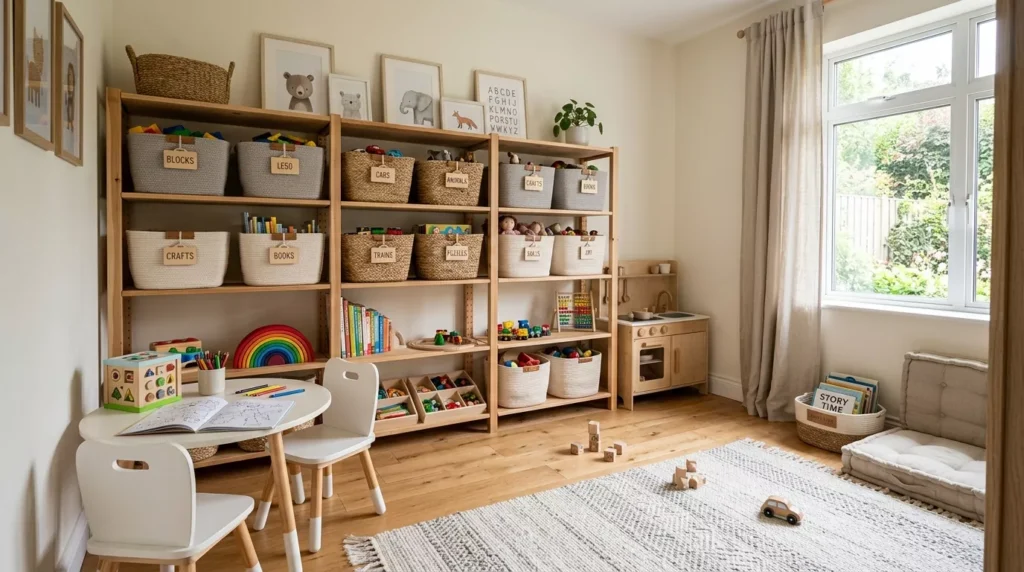
Even the smallest playroom can feel spacious with smart organization and multifunctional furniture. Vertical shelving, stackable bins, wall-mounted storage, and under-bench compartments maximize every inch while keeping toys easily accessible. Organized spaces encourage children to clean up independently while making the room feel less cluttered.
Choose furniture with built-in storage and label baskets by toy category for simple organization. Light wall colors, mirrors, and open shelving create the illusion of a larger room while maintaining functionality. With thoughtful planning, a compact playroom can still provide endless opportunities for creative play.
8. Boho Playroom
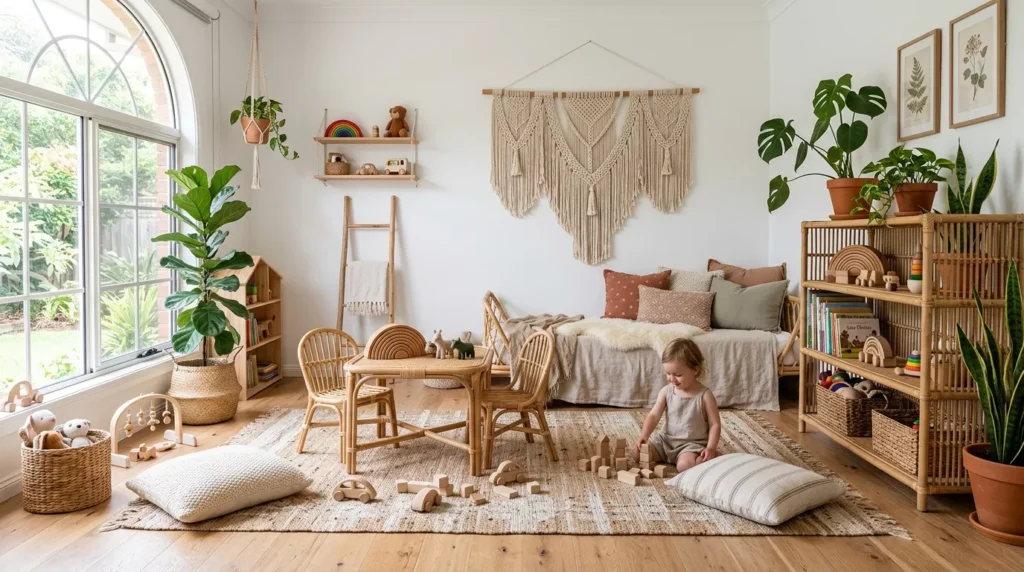
A boho playroom combines natural textures, earthy colors, and relaxed styling to create a warm and inviting space filled with personality. Woven rugs, rattan furniture, macramé wall hangings, and neutral fabrics establish a cozy atmosphere while colorful toys add playful energy. This balanced design feels stylish enough for adults while remaining fun for children.
Complete the look with floor cushions, indoor plants, wooden toys, and soft lighting that create a peaceful environment for reading, building, and imaginative play. Layering different textures adds warmth without making the room feel busy. A boho playroom offers timeless charm that grows beautifully alongside your child.
9. Playroom with Climbing Wall
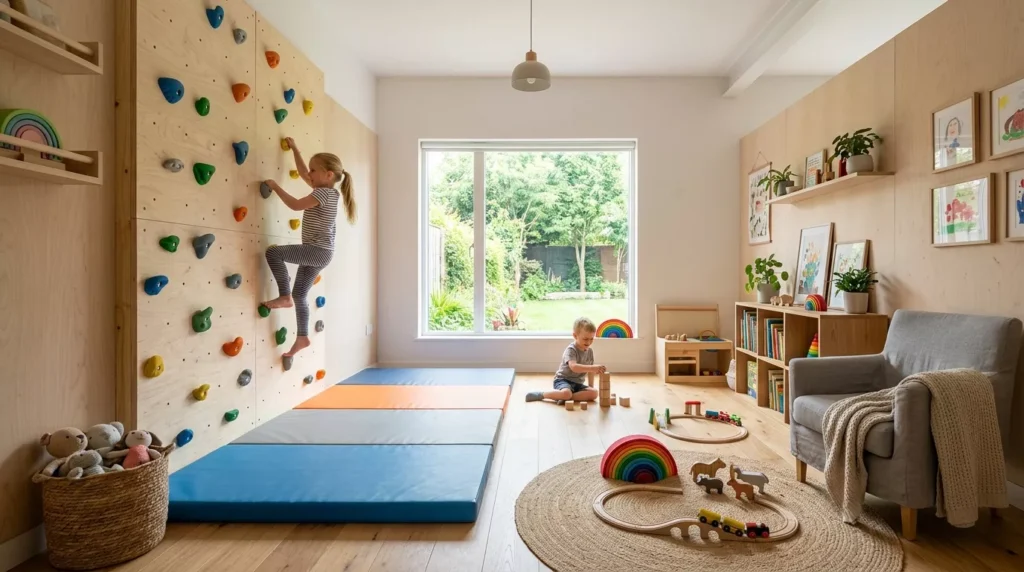
A small indoor climbing wall transforms an ordinary playroom into an exciting adventure zone that encourages active play and physical development. Child-friendly climbing holds mounted on a sturdy wall help improve balance, coordination, strength, and confidence while providing endless entertainment. Adding soft foam mats underneath ensures the space remains safe for daily use.
Decorate the climbing area with mountain-themed wall decals, colorful cushions, and storage baskets for sports equipment. Keep the surrounding furniture minimal to provide plenty of open space for movement. This interactive feature creates a fun environment where children can stay active regardless of the weather.
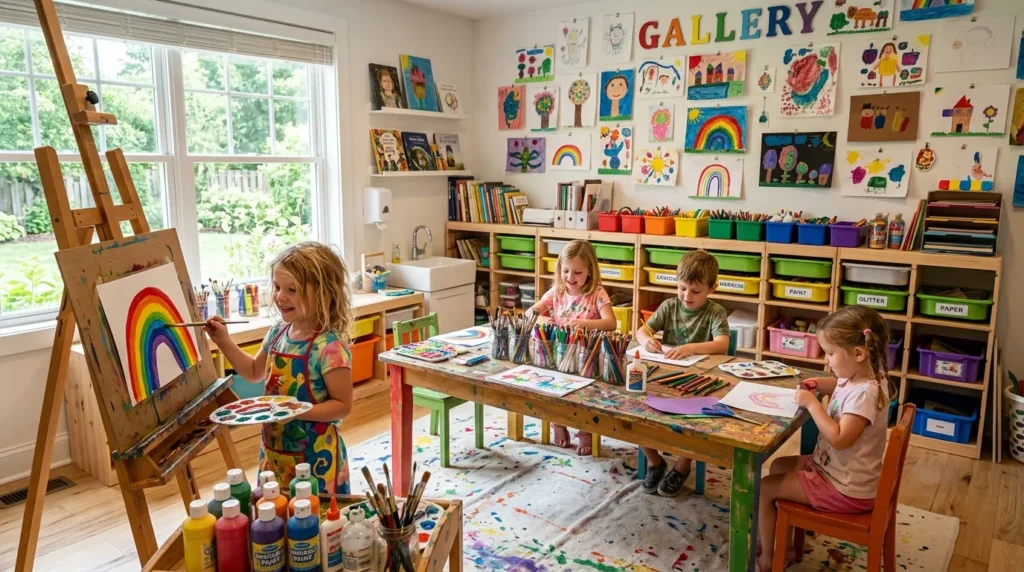
10. Creative Art Playroom
An art-focused playroom encourages creativity by providing a dedicated space for painting, drawing, crafting, and hands-on projects. A child-sized art table, open shelving, washable surfaces, and organized craft supplies make it easy for kids to explore their imagination while keeping materials neatly stored. Bright lighting helps create an inspiring workspace for artistic activities.
Display finished artwork on a gallery wall using clipboards, corkboards, or magnetic boards to celebrate children’s creativity. Use labeled containers for crayons, markers, paints, and paper so everything remains easy to find. This creative playroom supports learning while allowing children to proudly express themselves.
11. Woodland-Themed Playroom
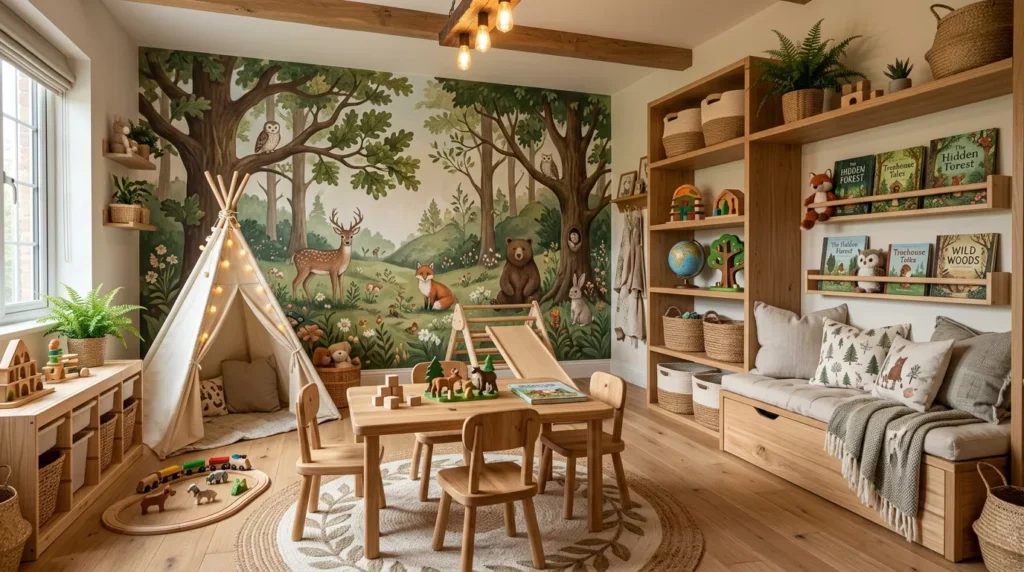
A woodland-themed playroom brings the beauty of nature indoors with forest-inspired décor, earthy colors, and adorable animal accents. Tree wall murals, woodland creatures, wooden toys, and leaf-shaped rugs create a magical setting where imagination can flourish. Soft green, beige, and brown tones establish a calm environment that’s both playful and relaxing.
Complete the room with a small play tent, natural wood furniture, woven baskets, and botanical artwork to reinforce the woodland theme. Plush animal toys and cozy reading corners make the space feel warm and inviting. This timeless design grows beautifully alongside children of different ages.
12. Indoor Play Tent Corner
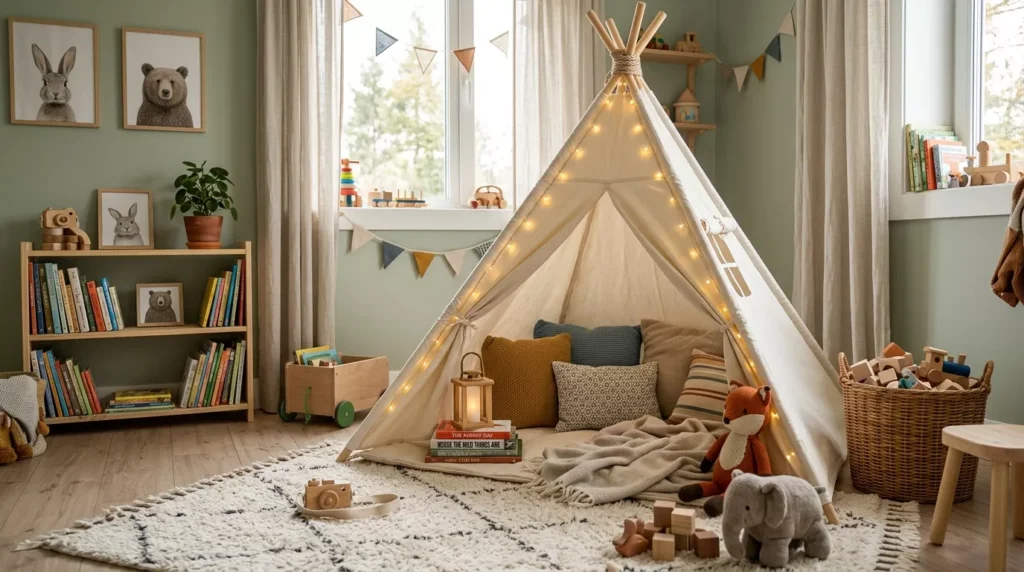
A play tent creates a cozy hideaway where children can read, relax, or enjoy imaginative adventures. Canvas teepees, fabric tents, or small indoor playhouses instantly make the playroom feel magical while encouraging independent play. Soft cushions, blankets, and fairy lights inside the tent create a comfortable retreat that children will love.
Place the tent beside a bookshelf or reading corner to encourage quiet activities between active play sessions. Decorate the surrounding area with plush toys, floor cushions, and woven baskets for a cozy atmosphere. This simple feature adds charm while making the playroom feel extra special.
13. Educational Playroom
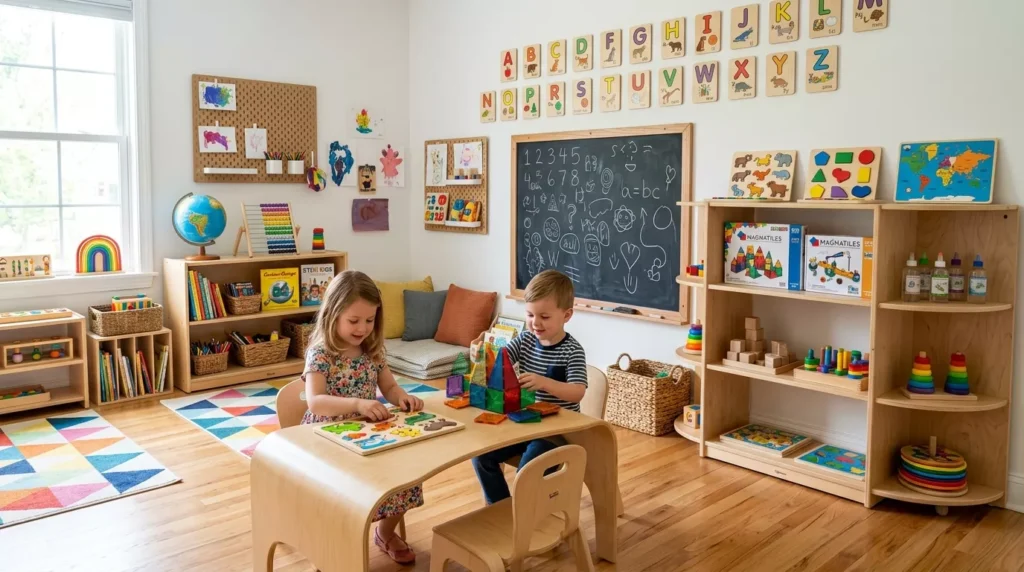
An educational playroom combines fun and learning through interactive activities that support early childhood development. Alphabet posters, number games, puzzles, STEM toys, maps, and sensory materials encourage curiosity while making learning enjoyable. Organized learning stations allow children to move easily between different educational activities.
Use low shelves with labeled bins to keep supplies neatly organized and accessible. Add a chalkboard, magnetic wall, or whiteboard for creative learning opportunities throughout the day. An educational playroom creates an engaging environment where children naturally develop important skills through play.
14. Shared Sibling Playroom
A shared playroom is designed to meet the interests of multiple children while encouraging cooperation and independent play. Separate activity zones for reading, building, pretend play, and crafts help siblings enjoy the space together without constant competition. Neutral furniture paired with colorful toys keeps the room balanced and adaptable as children grow.
Provide individual storage baskets for each child alongside shared shelving for larger toys and games. Comfortable seating, open floor space, and flexible furniture arrangements make the room practical for daily family life. A well-planned shared playroom creates harmony while maximizing available space.
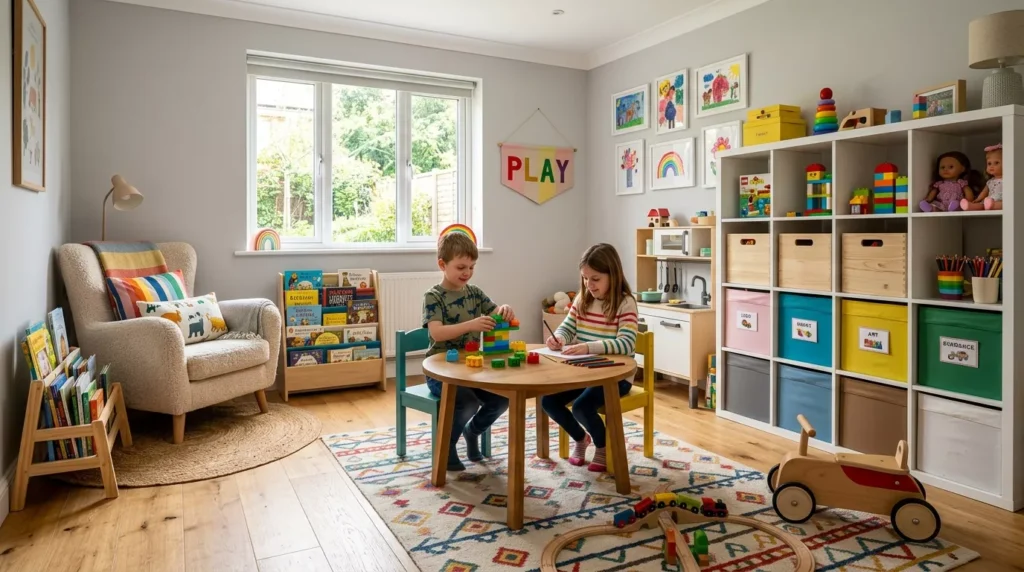
15. LEGO Playroom
A LEGO-inspired playroom provides endless opportunities for creativity by offering dedicated building stations and organized brick storage. Large tables, stackable drawers, and labeled containers make it easy for children to find pieces while keeping the room tidy. Open shelving allows completed creations to be displayed proudly without taking over the rest of the home.
Decorate with colorful artwork, building-themed wall decals, and comfortable seating that encourages long creative sessions. Bright lighting ensures children can easily see small pieces while building detailed projects. This organized setup transforms LEGO play into a fun and inspiring everyday activity.
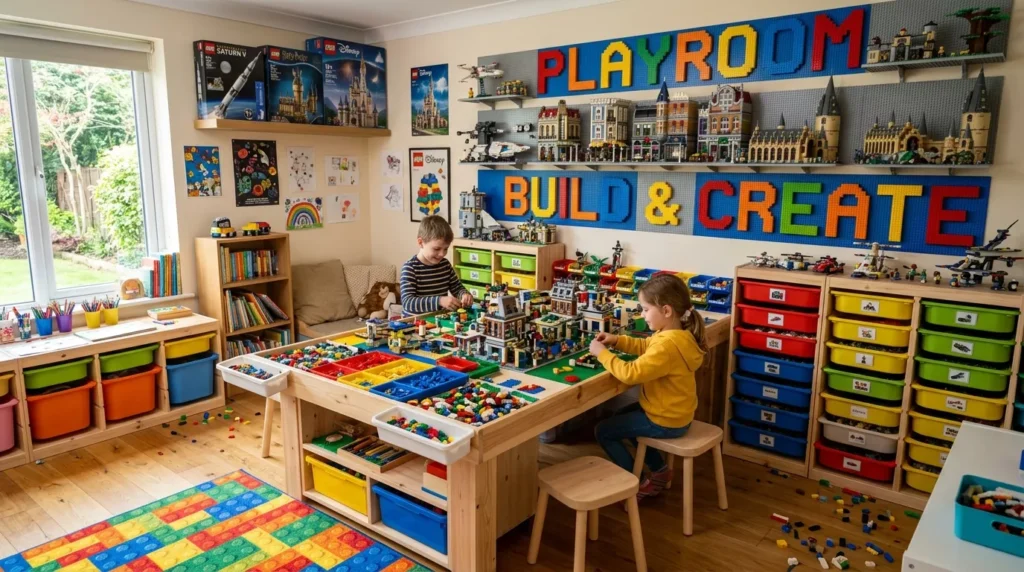
16. Soft Play Playroom
A soft play playroom creates a safe environment for toddlers and young children through foam climbing blocks, ball pits, padded flooring, tunnels, and soft play equipment. These gentle features encourage movement while reducing the risk of injuries, making the room perfect for energetic little ones. Bright colors and playful shapes keep the atmosphere cheerful and inviting.
Add washable rugs, toy storage, and comfortable seating for parents supervising playtime. Keep the layout open to allow children to move freely between activities without obstacles. A soft play area provides endless entertainment while supporting healthy physical development in a safe indoor environment.
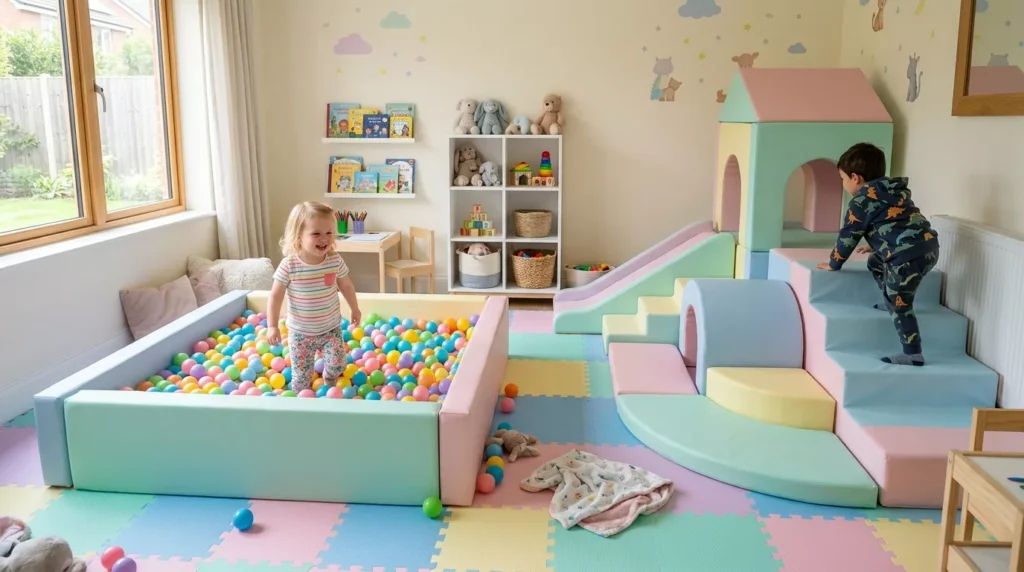
17. Playroom with Chalkboard Wall
A chalkboard wall turns an ordinary playroom into an interactive space where children can draw, write, practice letters, and express their creativity every day. It provides endless entertainment while encouraging learning through art and imaginative play. Whether you use an entire wall or a framed chalkboard panel, this feature quickly becomes one of the room’s favorite activity areas.
Place a small table nearby with chalk, erasers, coloring books, and craft supplies to create a dedicated creative station. Pair the wall with open shelving and colorful storage baskets to keep the room organized. A chalkboard wall is a simple addition that delivers hours of educational fun.
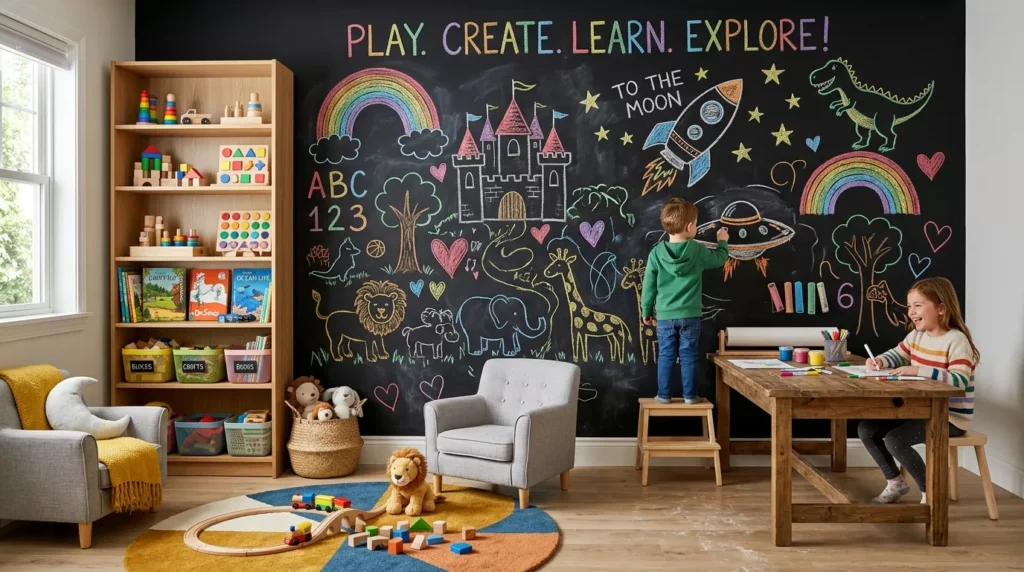
18. Toy Rotation Playroom
A toy rotation playroom helps reduce clutter while keeping children excited about their toys. Instead of displaying every toy at once, only a small selection remains on the shelves while the rest are stored and rotated every few weeks. This method encourages deeper engagement, improves focus, and keeps the playroom neat and organized.
Use labeled storage bins or cabinets to organize toys by category for easy rotation. Open shelves with a limited number of toys create a calm environment that feels inviting rather than overwhelming. This practical system makes cleanup easier and keeps the playroom fresh throughout the year.
19. Playroom with Built-In Storage
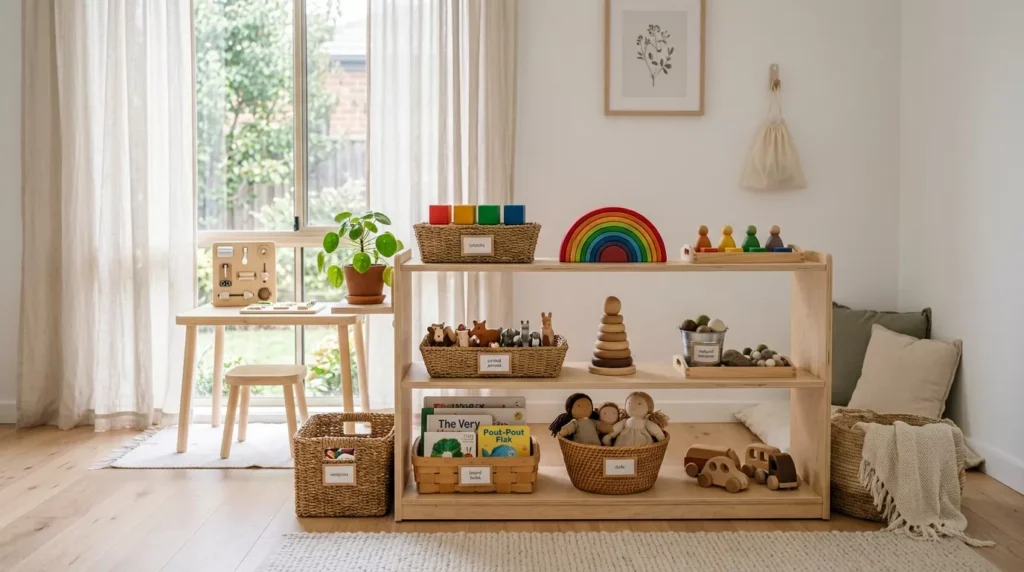
Built-in storage maximizes every inch of the playroom while creating a clean and polished appearance. Custom cabinets, cubbies, window benches with storage, and floor-to-ceiling shelving provide plenty of space for toys, books, puzzles, and games. Hidden storage keeps clutter out of sight while maintaining an organized environment.
Decorate the shelves with baskets, books, framed artwork, and decorative toys to create a balanced display. Neutral cabinetry combined with colorful bins keeps the room playful without appearing messy. Built-in storage makes daily organization simple while adding long-term value to the home.
20. Imaginative Pretend Play Corner
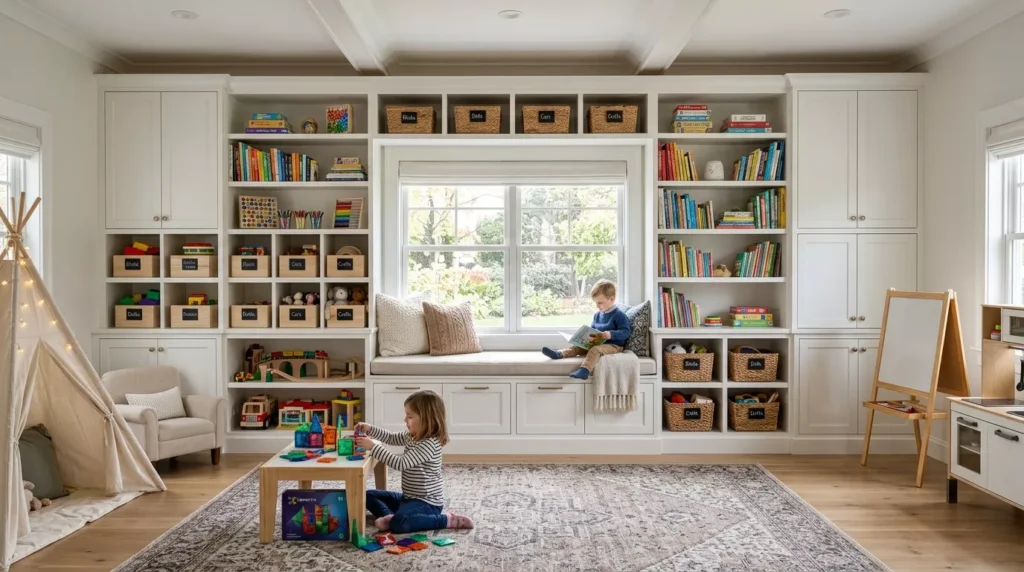
A pretend play corner encourages creativity by giving children a dedicated area for role-playing and storytelling. Mini play kitchens, grocery stores, dollhouses, dress-up stations, or puppet theaters allow kids to create imaginative adventures while developing communication and social skills. This interactive zone quickly becomes the heart of the playroom.
Organize costumes and accessories using low racks, baskets, and open shelves so children can easily access everything they need. Decorative wall art and themed accessories complete the playful atmosphere. A pretend play area inspires endless creativity while supporting important developmental milestones.
21. Scandinavian Playroom
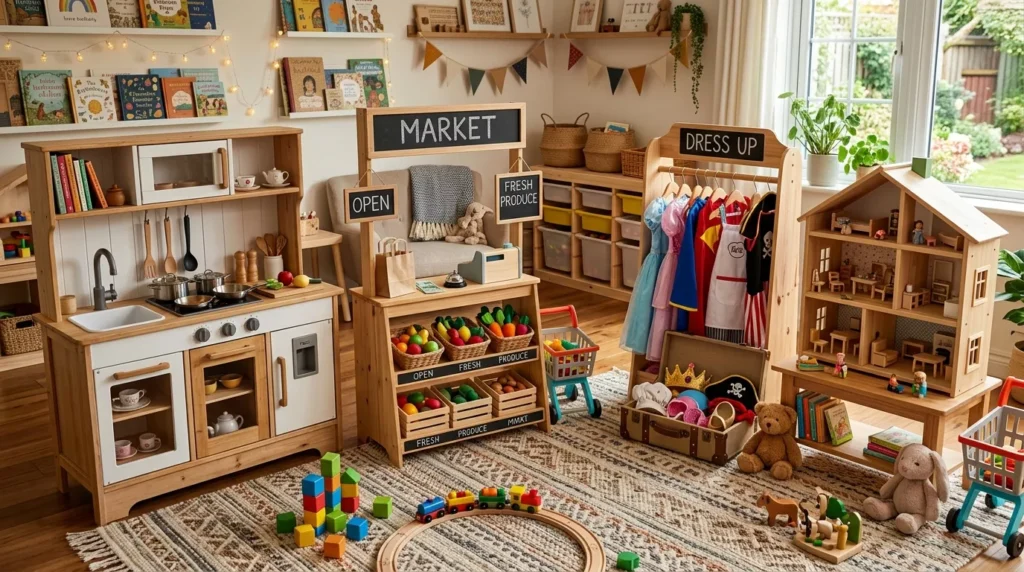
A Scandinavian playroom combines simplicity, functionality, and natural materials to create a calm environment where children can focus and explore. White walls, light oak furniture, woven baskets, and neutral textiles establish a timeless design that feels bright and welcoming. Colorful toys naturally become decorative accents within the minimalist space.
Complete the room with soft rugs, floor cushions, indoor plants, and wooden educational toys that reinforce the Scandinavian aesthetic. Large windows and warm lighting keep the playroom cheerful throughout the day. This elegant style remains practical while growing beautifully with your child.
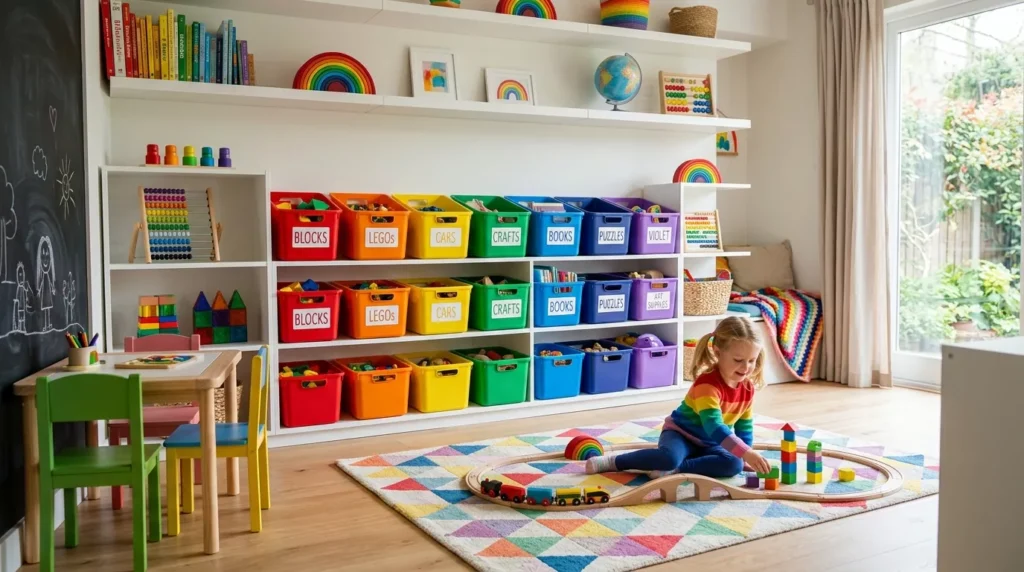
22. Rainbow Storage Playroom
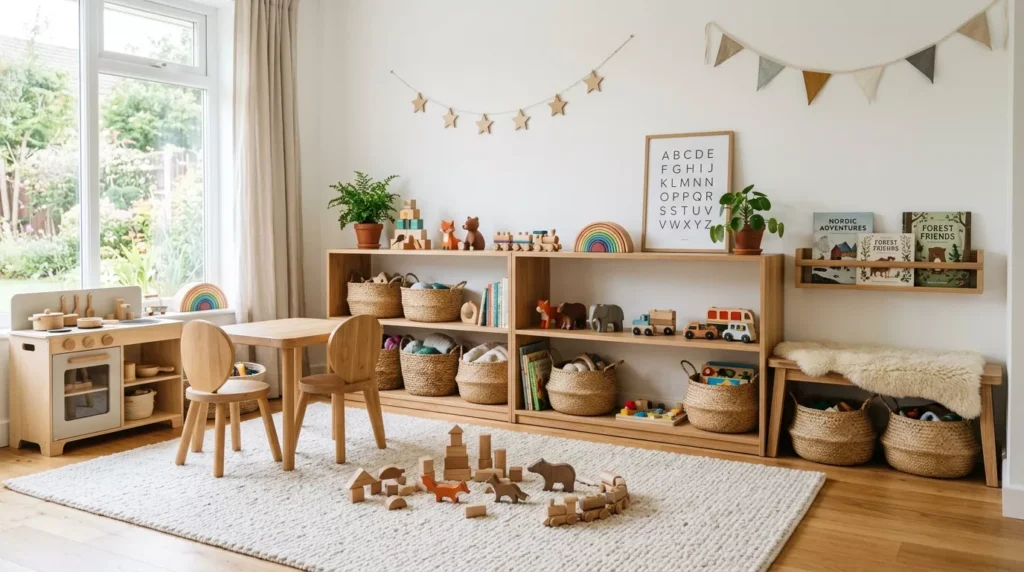
Rainbow-colored storage bins make organizing toys fun while adding cheerful color throughout the playroom. Bright cubbies, labeled baskets, and colorful shelving encourage children to sort and return toys after playtime, promoting independence and responsibility. The organized layout keeps the room tidy without sacrificing its playful personality.
Balance the colorful storage with neutral furniture, white walls, and natural wood accents to maintain visual harmony. Display favorite books and decorative toys on open shelves to complete the vibrant look. Rainbow storage creates an exciting space that’s both functional and inspiring.
23. Sensory Playroom
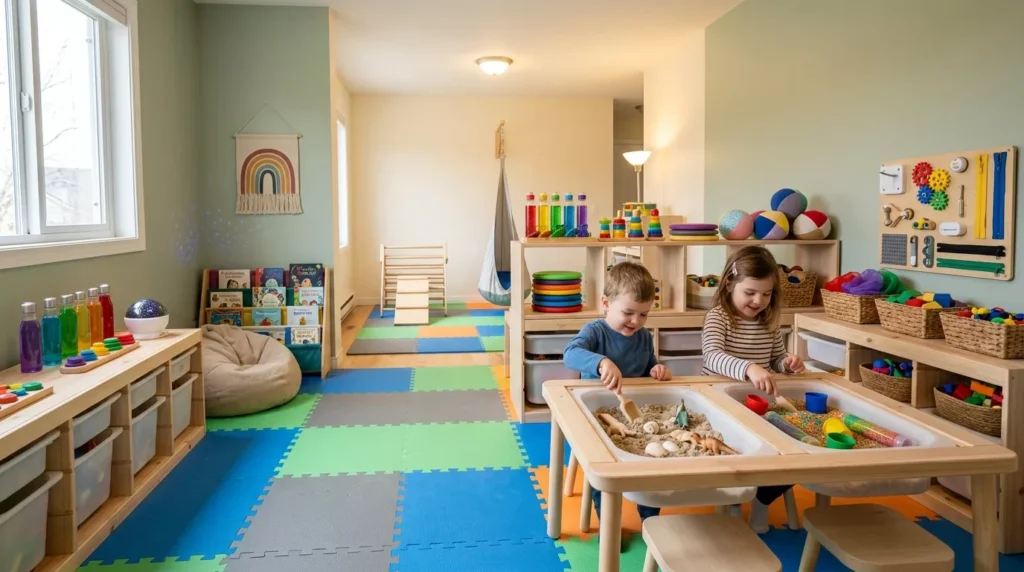
A sensory playroom provides hands-on experiences that stimulate children’s senses while supporting cognitive and motor development. Sensory bins, textured walls, tactile toys, light tables, soft fabrics, and calming colors encourage exploration in a safe and engaging environment. This type of playroom is especially beneficial for toddlers and young learners.
Organize sensory materials using clear containers and open shelving for easy access. Include comfortable seating, soft lighting, and quiet corners where children can relax between activities. A sensory playroom promotes learning through touch, movement, and creative exploration.
24. Pinterest-Inspired Playroom
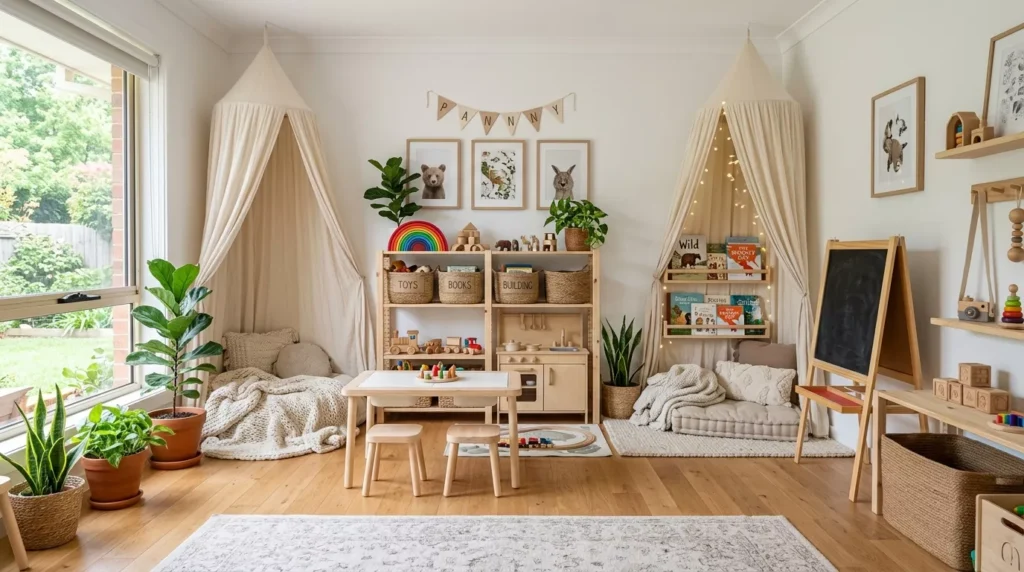
A Pinterest-inspired playroom combines stylish décor with practical organization to create a beautiful space both parents and children enjoy. Neutral walls, wooden furniture, woven baskets, open shelving, and cozy reading corners establish a timeless foundation, while colorful toys add playful energy. Every design element serves both a decorative and functional purpose.
Complete the room with personalized wall art, indoor plants, soft play mats, decorative lighting, and neatly organized toy displays. Layered textures and thoughtful styling create a cozy atmosphere that feels professionally designed. This elegant playroom balances beauty, comfort, and everyday functionality while remaining perfect for family life.
25. STEM Learning Playroom
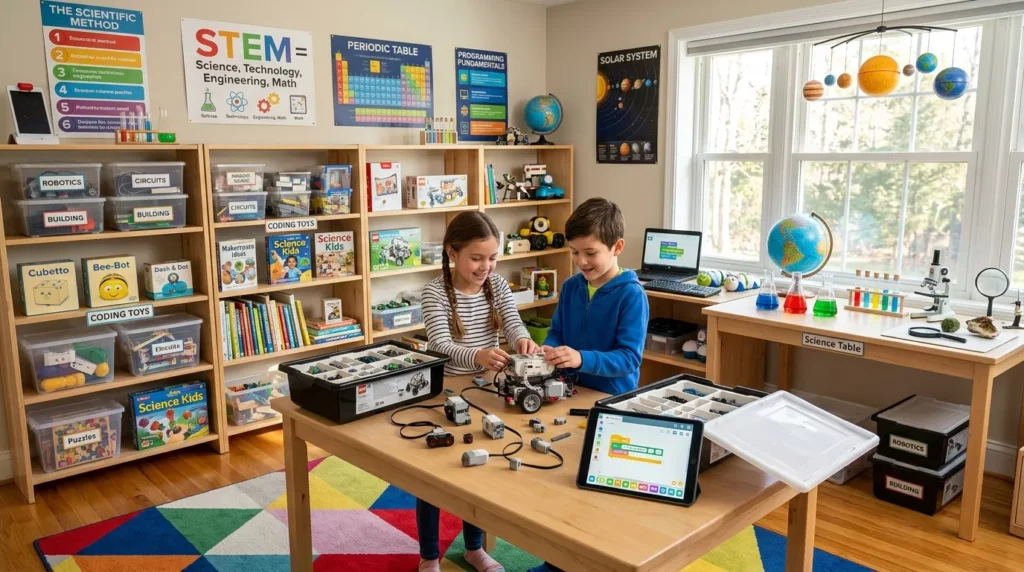
A STEM learning playroom inspires curiosity through science, technology, engineering, and math activities designed for children of all ages. Building blocks, coding toys, magnetic tiles, science kits, robotics sets, and problem-solving games encourage hands-on learning while making education exciting. A dedicated activity table provides plenty of workspace for experiments, puzzles, and creative building projects.
Organize educational materials in labeled bins and display books about science, nature, and engineering on open shelves. Bright lighting, comfortable seating, and interactive wall charts complete the learning environment. This inspiring setup helps children develop critical thinking skills while having fun every day.
26. Multi-Activity Family Playroom
A multi-activity family playroom is designed to grow with your children by combining several activity zones into one organized space. Reading corners, craft stations, LEGO tables, pretend play areas, sensory activities, and open floor space allow kids to enjoy different types of play without needing multiple rooms. Flexible furniture and smart storage make the room practical for everyday family life.
Complete the space with soft rugs, modular storage cubes, comfortable seating, wall art, and decorative baskets that keep everything organized. Choose neutral furniture with colorful accessories so the room can easily adapt as children grow. A versatile family playroom creates lasting memories while supporting learning, creativity, and active play.
Conclusion
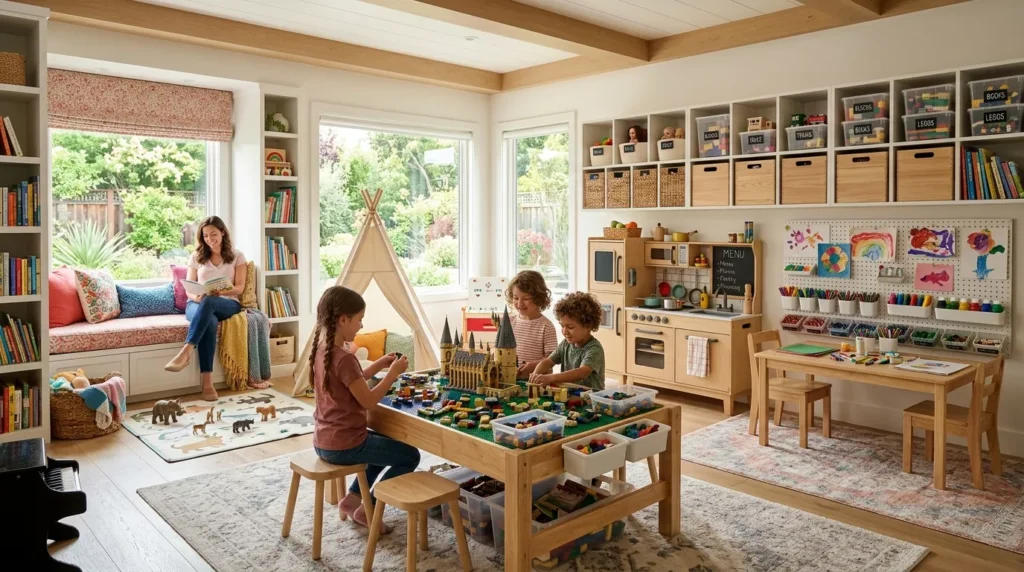
A well-designed playroom is more than just a place to store toys—it’s a space where children learn, imagine, build confidence, and create lasting memories. Whether you prefer a Montessori-inspired setup, a colorful creative zone, a cozy reading nook, or a modern organized playroom, thoughtful design makes playtime both enjoyable and educational. Smart storage, child-friendly furniture, and dedicated activity areas help keep the room functional while encouraging independence.
These 25+ playroom inspiration ideas show that every home can include a beautiful and practical play space, regardless of size. By combining creativity, organization, and comfort, you can design a playroom that grows with your child while remaining stylish enough to fit seamlessly into your home. Choose the ideas that match your family’s lifestyle and create a space where imagination can flourish every day.
Frequently Asked Questions
How do I organize a small playroom?
Use vertical shelving, labeled storage bins, multifunctional furniture, and rotate toys regularly to reduce clutter.
What should every playroom have?
A playroom should include toy storage, comfortable seating, open play space, books, educational toys, and a creative activity area.
What colors are best for a playroom?
Soft neutrals, pastel shades, sage green, light blue, and cheerful accent colors create a fun yet calming environment.
How do I make a playroom educational?
Add bookshelves, puzzles, STEM toys, craft stations, sensory activities, and child-accessible learning materials.
What is the Montessori playroom style?
A Montessori playroom features low shelves, natural materials, simple organization, and child-sized furniture that encourages independence.