20+ Backyard and Front Yard Garden Ideas for a Beautiful Outdoor Space
A beautiful garden can completely transform the look and feel of your home, whether you are working with a spacious backyard, a compact front yard, or a narrow outdoor area. The right combination of plants, pathways, containers, landscaping materials, and decorative features can turn an ordinary space into a welcoming retreat. Black Accent Wall
From colorful flower beds and raised vegetable gardens to modern landscaping and charming cottage-style designs, there are countless ways to create a garden that suits your home and lifestyle. These backyard and front yard garden ideas will help you design an outdoor space that feels attractive, practical, and full of personality.
1. Layered Flower Beds
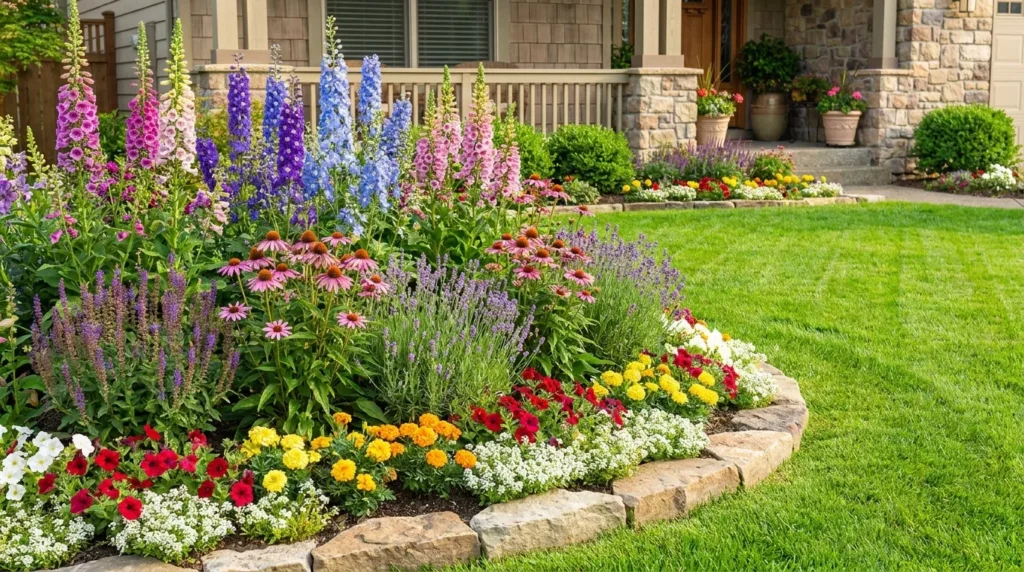
Layered flower beds are a beautiful way to give a backyard or front yard garden more depth and dimension. Arrange plants at different heights, placing taller flowers and ornamental grasses toward the back and shorter flowers along the front edge. This creates a fuller appearance while allowing every plant to remain visible.
Choose flowers with complementary colors and different blooming seasons to keep the garden interesting throughout the year. Adding a defined border made from stone, brick, or timber can make the planting area look polished and intentional while also keeping the lawn separate from the garden.
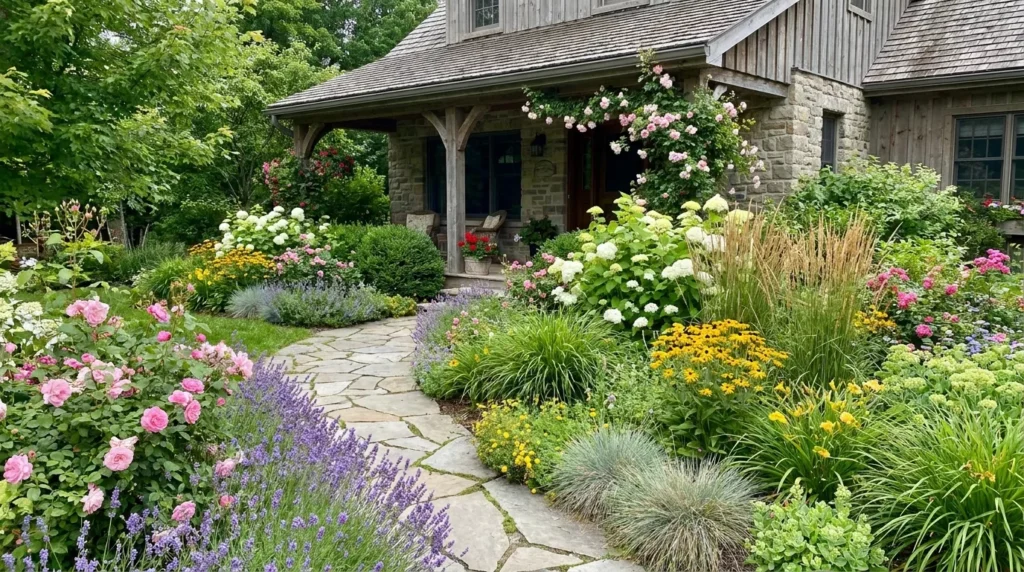
2. Cottage-Style Front Yard Garden
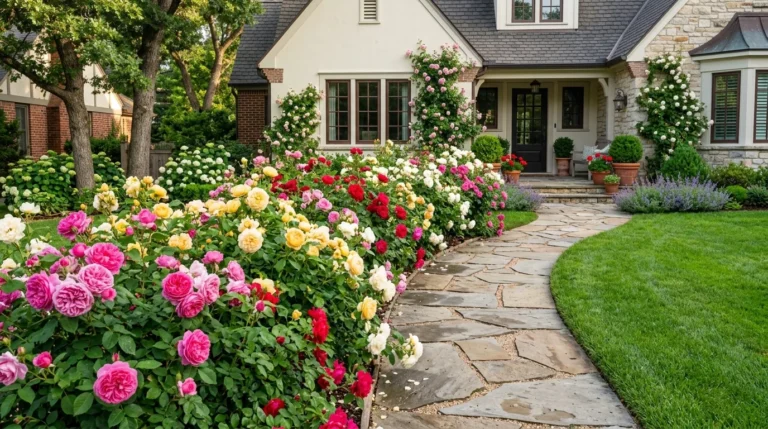
A cottage-style garden can make the front of your home feel charming, welcoming, and naturally abundant. Mix flowering plants, shrubs, herbs, and ornamental grasses instead of arranging everything in perfectly straight rows. A slightly relaxed planting style creates the informal beauty associated with traditional cottage gardens.
Use a combination of soft colors such as white, pink, lavender, and pale yellow for a romantic appearance. A simple pathway leading toward the front door can complete the design, especially when surrounded by overflowing flowers and low-growing plants.
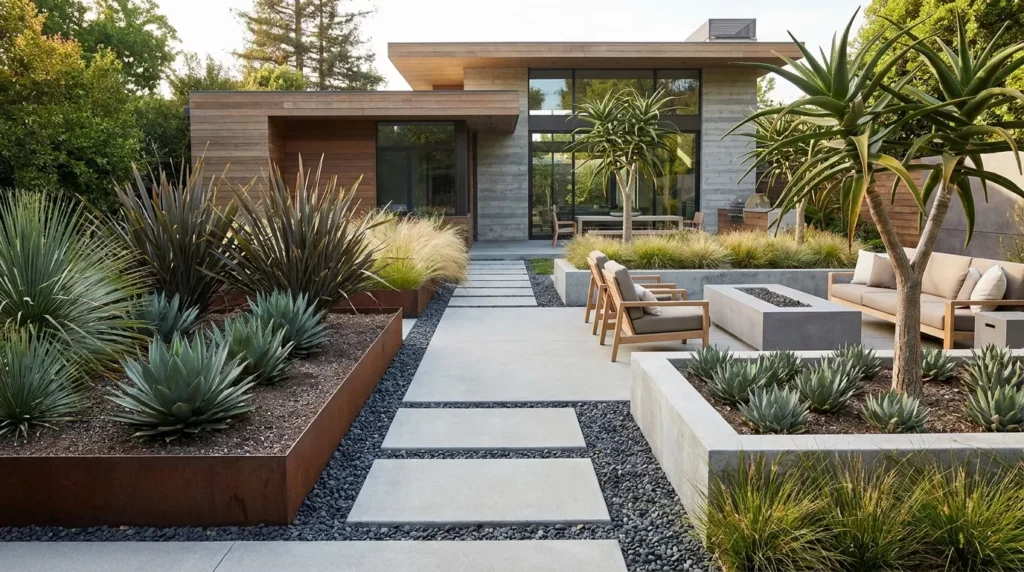
3. Modern Minimalist Garden
A modern minimalist garden is ideal if you prefer clean lines and an uncluttered outdoor space. Keep the planting palette simple and combine architectural plants with neatly defined lawn areas, gravel, concrete, or large-format stepping stones. Repetition can help create a calm and organized appearance.
Choose a limited selection of plants and repeat them throughout the yard for visual consistency. Simple outdoor furniture, sculptural planters, and subtle lighting can complement the landscaping without competing with the clean structure of the garden.
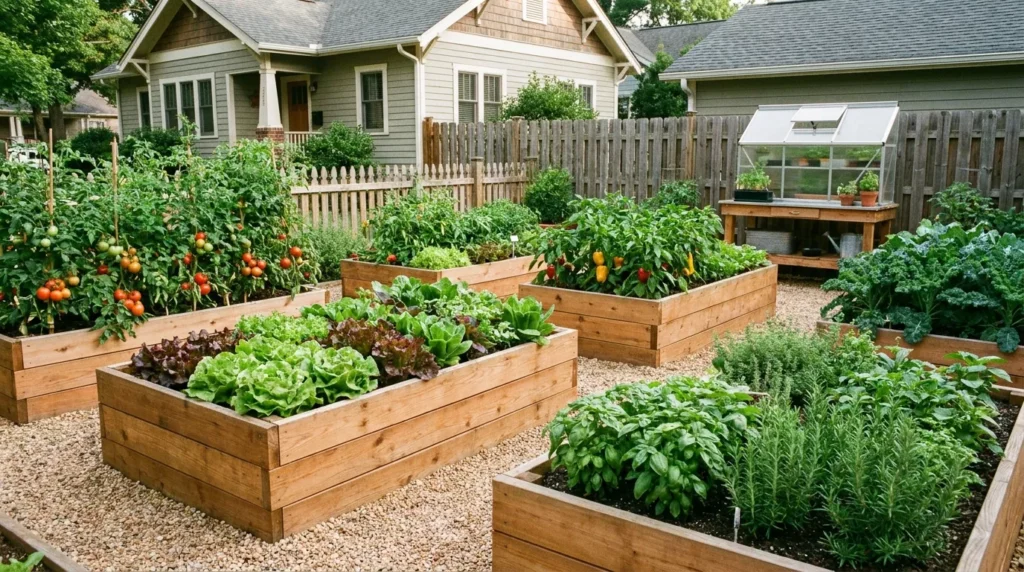
4. Raised Vegetable Garden
A raised vegetable garden is both attractive and practical for a backyard. Build several rectangular planting beds from wood or another suitable material and organize vegetables according to their growing needs. The elevated design makes the garden easier to maintain and gives the backyard a structured appearance.
You can grow tomatoes, lettuce, peppers, herbs, carrots, and other seasonal vegetables depending on your climate. Leave comfortable pathways between the beds so you can easily water, harvest, and care for the plants without stepping into the growing areas.
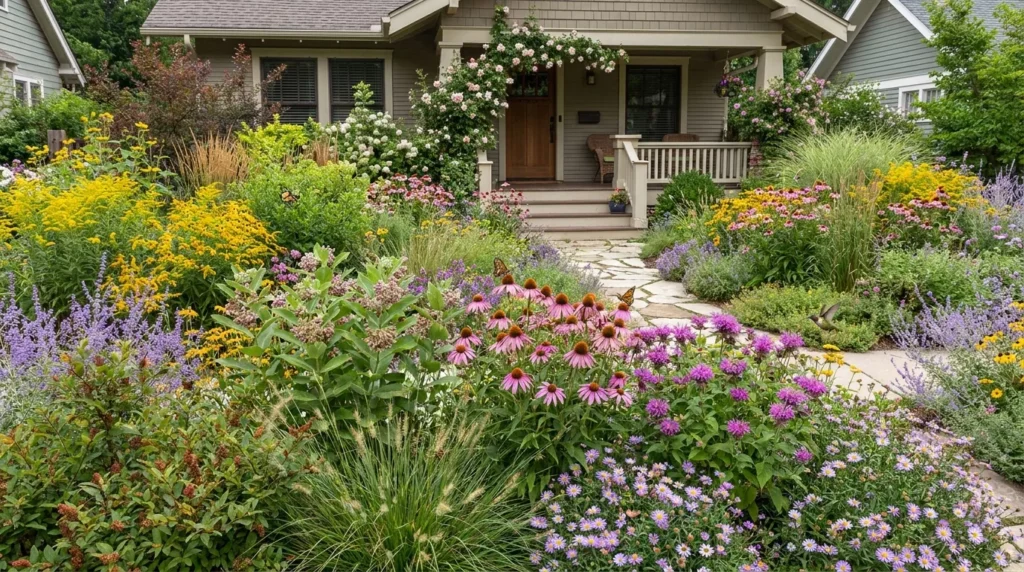
5. Front Yard Pollinator Garden
Transform your front yard into a colorful pollinator-friendly garden by planting a variety of flowering plants that provide food and shelter for beneficial insects. Group plants together in generous clusters rather than scattering individual flowers throughout the yard. This creates a more dramatic visual effect while making the planting area easier to manage.
Choose flowers with different shapes, colors, and blooming periods to provide seasonal interest. A natural-looking arrangement with grasses, flowering perennials, and low shrubs can create a beautiful landscape while adding ecological value to your outdoor space.
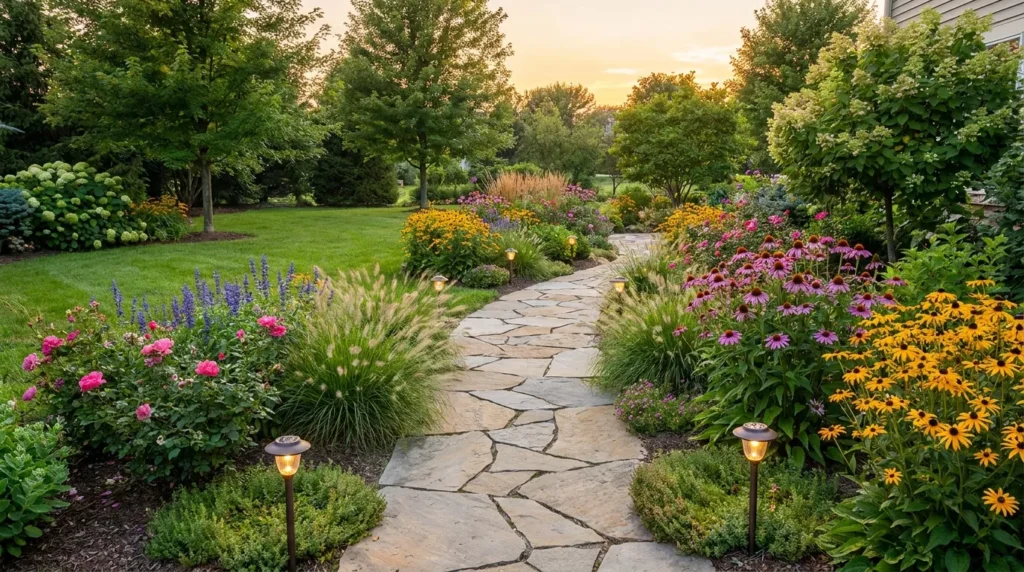
6. Garden Pathway Through the Yard
A garden pathway can turn a simple yard into an inviting outdoor journey. Use stepping stones, natural stone, brick, gravel, or pavers to create a route through flower beds and planted areas. Curved pathways can create a softer, more natural appearance, while straight paths work well with modern landscaping.
Surround the pathway with low flowers, ornamental grasses, groundcovers, or small shrubs to make it feel integrated into the garden. Solar path lights can add warmth in the evening while also making the walkway easier to navigate after dark.
7. Vertical Garden for Small Yards
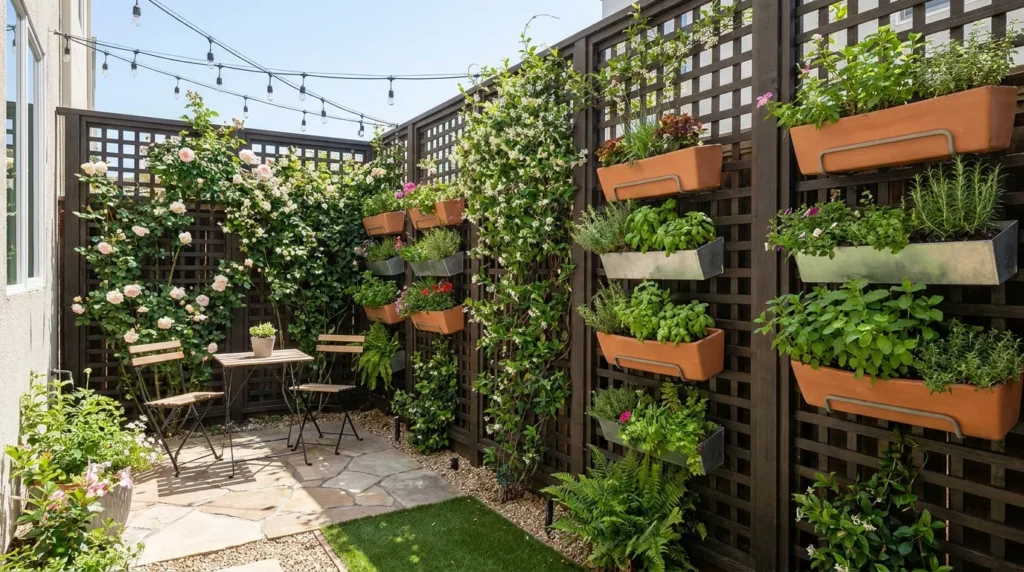
A vertical garden is an excellent solution when your backyard or front yard has limited planting space. Use trellises, wall-mounted planters, vertical frames, or tiered containers to grow plants upward instead of spreading them across the ground. This approach can add greenery without sacrificing valuable floor space.
Climbing flowers, herbs, leafy plants, and compact vegetables can all work well in vertical arrangements. Choose a structure that complements your home’s exterior and repeat similar pots or materials to make the garden feel cohesive rather than cluttered.
8. Colorful Container Garden
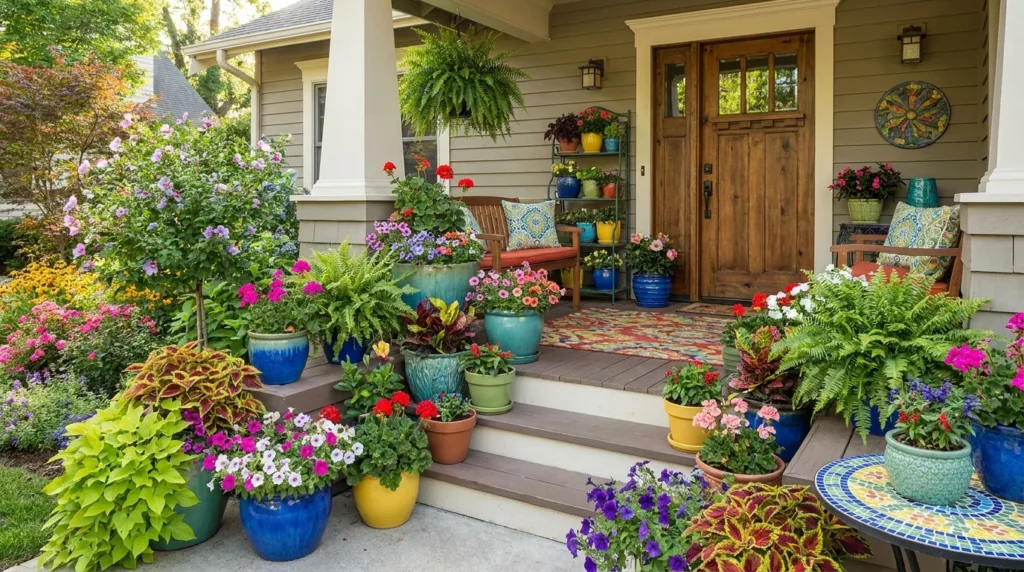
Container gardening allows you to create a flexible garden almost anywhere. Arrange colorful pots around a front entrance, patio, porch, deck, or backyard seating area and fill them with flowers and foliage plants. Mixing different pot heights can create a layered display without requiring permanent landscaping.
Choose containers in complementary colors and materials for a coordinated look. You can also change seasonal plants throughout the year, making container gardens especially useful for homeowners who enjoy refreshing their outdoor decor regularly.
9. Backyard Herb Garden
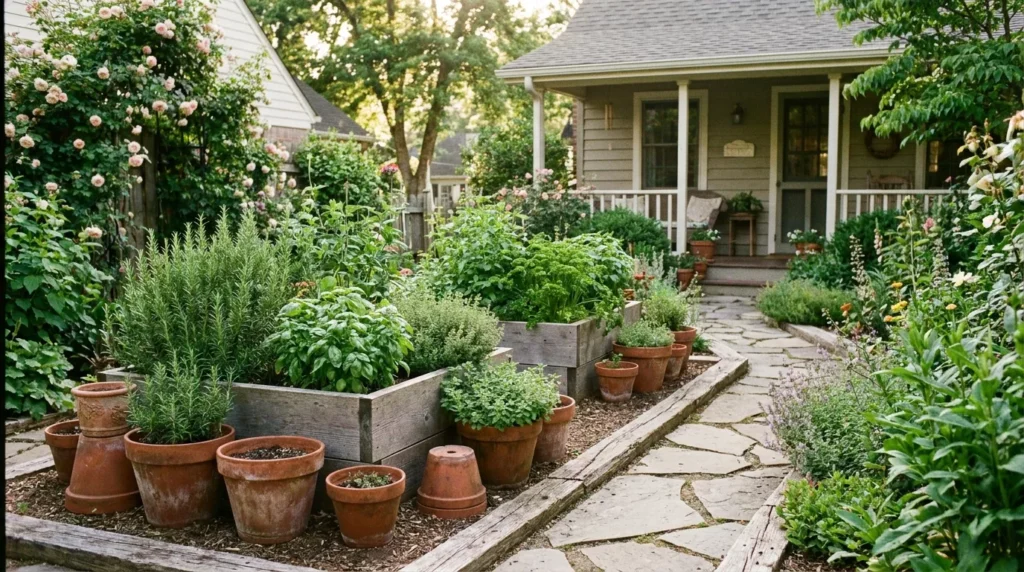
A dedicated herb garden can combine beauty and practicality in a small backyard space. Plant herbs such as rosemary, basil, thyme, mint, parsley, and oregano in a raised bed, border, or collection of attractive containers. Position the garden near the kitchen or outdoor entertaining area for convenient access.
Use different textures and shades of green to create visual interest even when the plants are not flowering. Small stone pathways, wooden edging, and decorative plant markers can give the herb garden a charming finished appearance without making it feel overly formal.
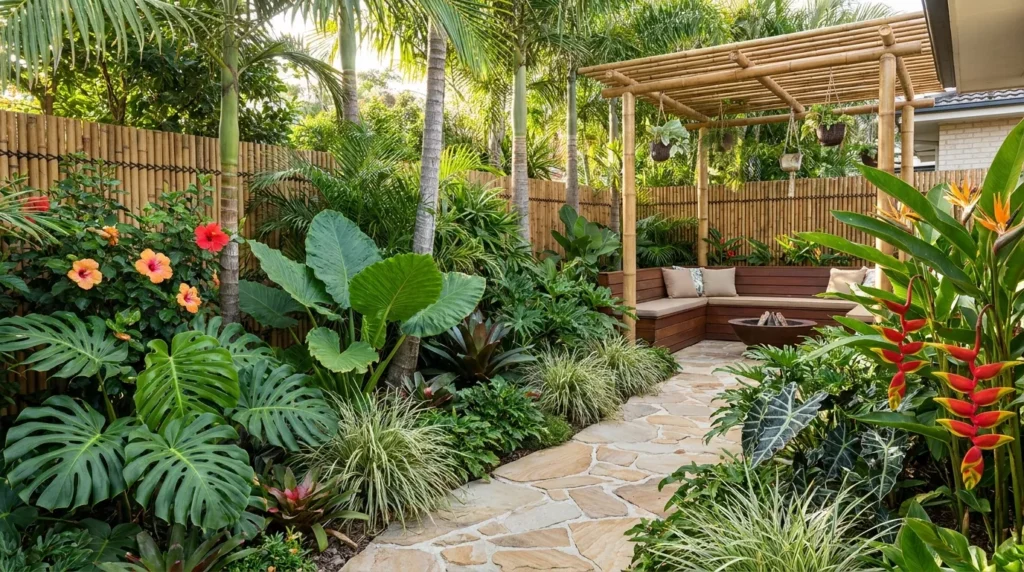
10. Tropical Backyard Garden
Create a lush tropical atmosphere by combining large-leaved plants, palms, ornamental grasses, and colorful flowering plants. Arrange plants in layers so taller foliage creates a backdrop while medium and low plants fill the foreground. This layered approach can make even an ordinary backyard feel like a private getaway.
Natural materials such as stone, timber, bamboo, and textured planters can reinforce the tropical aesthetic. Add a comfortable outdoor chair, water feature, or small seating area to create a relaxing destination where you can enjoy the greenery.
11. Gravel Garden
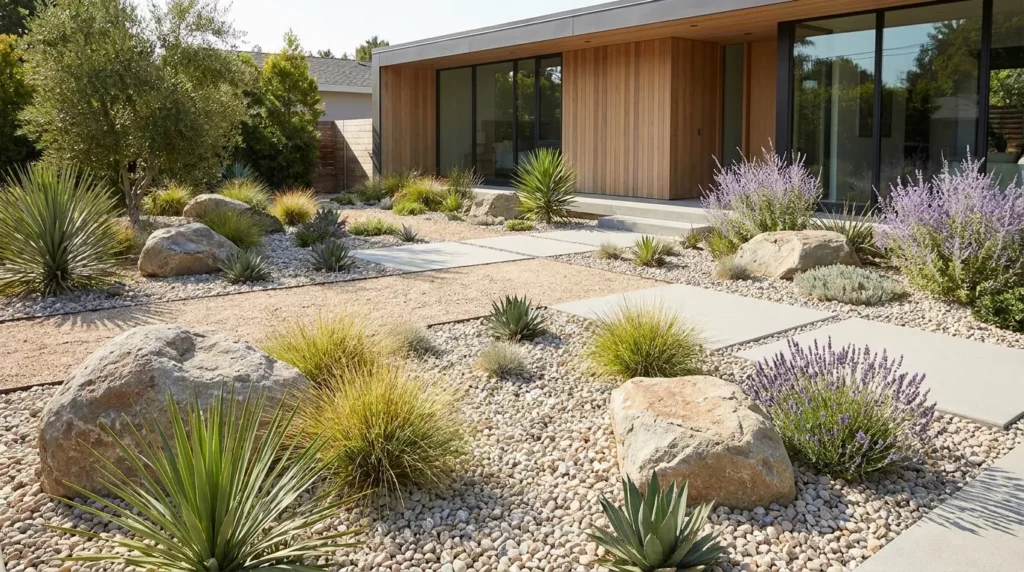
A gravel garden offers a low-maintenance alternative to a traditional lawn-heavy landscape. Cover selected areas with decorative gravel and plant drought-tolerant flowers, ornamental grasses, shrubs, and architectural plants throughout the space. The contrast between the stone and greenery creates a clean, contemporary appearance.
Use large rocks, stepping stones, or timber edging to add structure to the design. A limited color palette can make the garden look especially sophisticated, while repeated plant groupings help prevent the gravel area from feeling empty.
12. Small Front Yard Garden Border
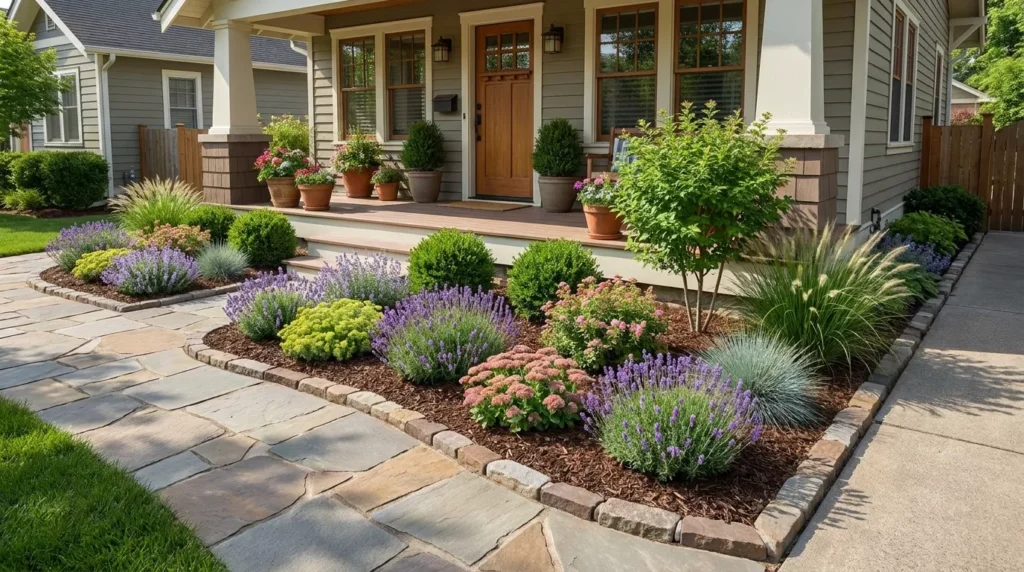
If your front yard is small, a narrow garden border can add plenty of curb appeal without taking over the available space. Plant a mixture of low shrubs, flowering perennials, ornamental grasses, and groundcovers along the edge of the house or walkway. Keeping plants at appropriate heights can maintain visibility around windows and entrances.
Use mulch or decorative stone around the plants to give the border a clean finished appearance. Repeating a few favorite plants along the entire bed can create continuity and make a small landscape feel larger and more thoughtfully designed.
13. Backyard Flower Garden Around a Patio
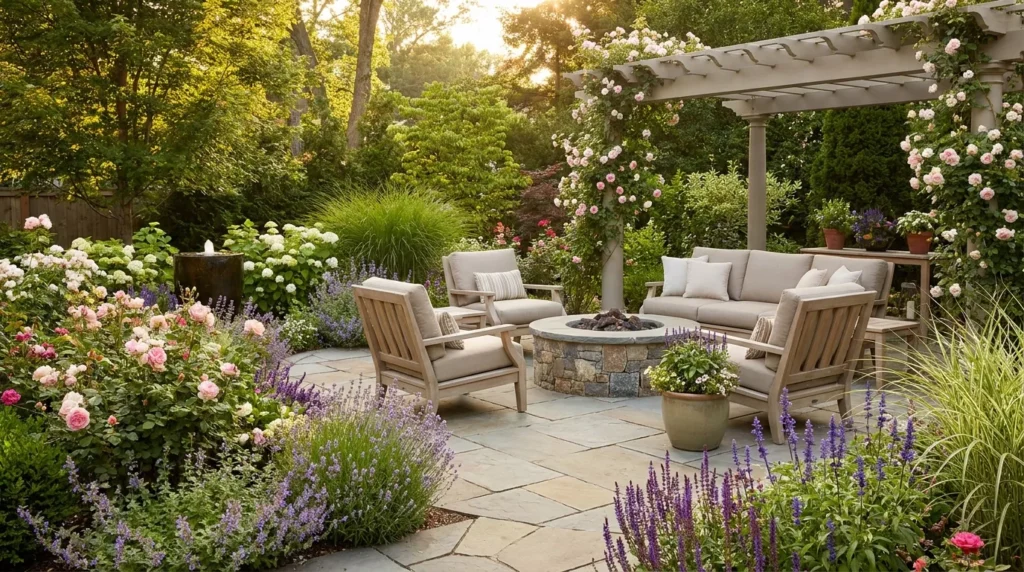
Surrounding a patio with flowers can make an outdoor entertaining area feel more inviting and connected to nature. Create planting beds around the patio edges and fill them with colorful flowers, fragrant plants, ornamental grasses, and compact shrubs. Leave enough open space around seating areas so the garden does not feel crowded.
Choose plants that complement the colors of your patio furniture and outdoor accessories. Adding planters at different heights around the seating area can create additional layers of greenery while maintaining a comfortable and functional layout.
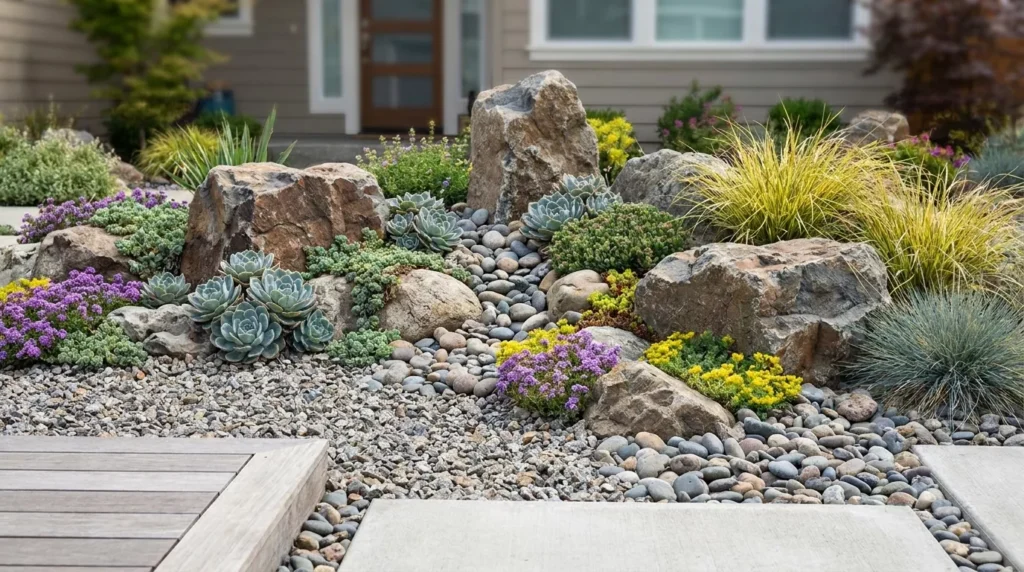
14. Rock Garden
A rock garden can add texture and visual interest to areas where traditional planting may be difficult. Arrange stones of different sizes around hardy plants, succulents, ornamental grasses, and low-growing flowers. Leave some visible gravel or soil between the plants to emphasize the natural character of the design.
The key is to make the rocks look intentionally positioned rather than randomly scattered. Repeating similar stone colors throughout the garden can create a cohesive appearance, while a few larger rocks can serve as strong focal points.
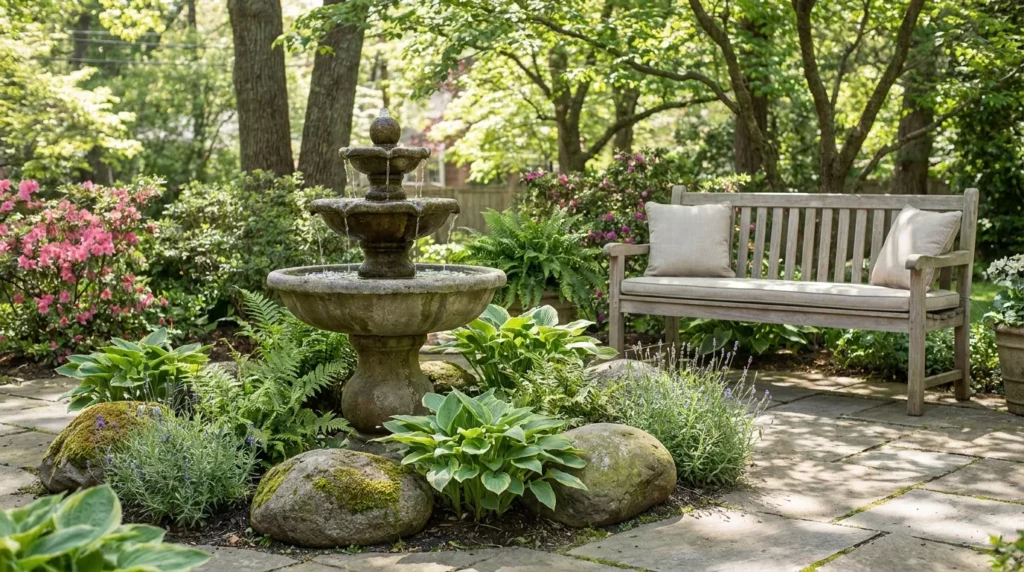
15. Backyard Garden With a Water Feature
A small water feature can become the focal point of a backyard garden while adding a relaxing atmosphere. Consider a compact pond, bubbling fountain, stone basin, or contemporary water bowl surrounded by plants. The sound and movement of water can make the garden feel more peaceful and visually dynamic.
Frame the water feature with lush greenery, decorative stones, or flowering plants without completely hiding it. A nearby bench or pair of outdoor chairs can create a quiet spot for relaxing and enjoying the garden.
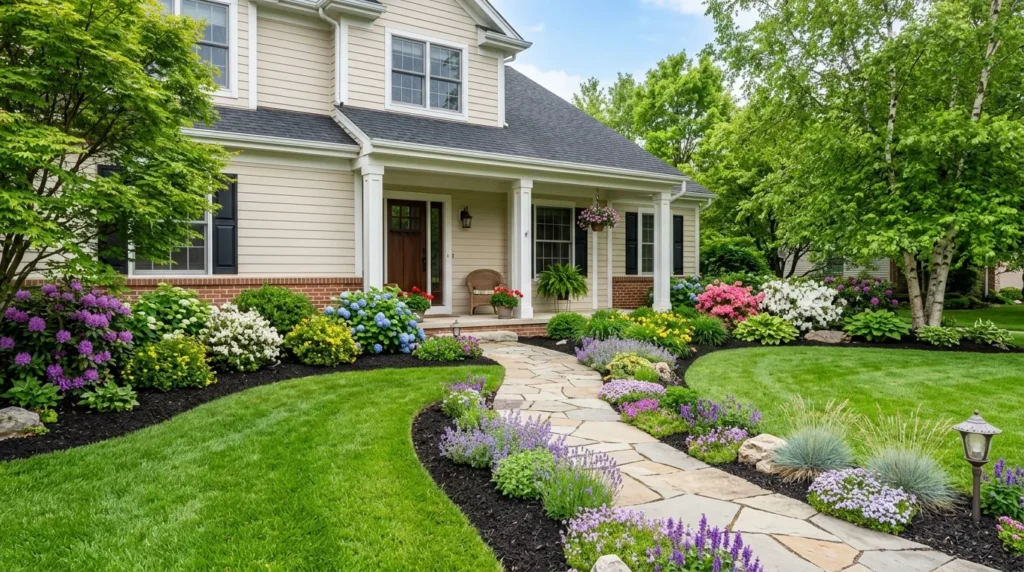
16. Flowering Shrub Front Yard
Flowering shrubs can provide structure, color, and year-round interest in a front yard garden. Plant shrubs along the home’s foundation, beside the walkway, or around the edges of a lawn to create a strong framework for smaller plants. Select varieties with different flowering periods for a landscape that changes throughout the seasons.
Combine shrubs with low flowers, ornamental grasses, and mulch for a layered effect. Keep larger shrubs trimmed away from doors and windows so the front of the home remains open, bright, and visually balanced.
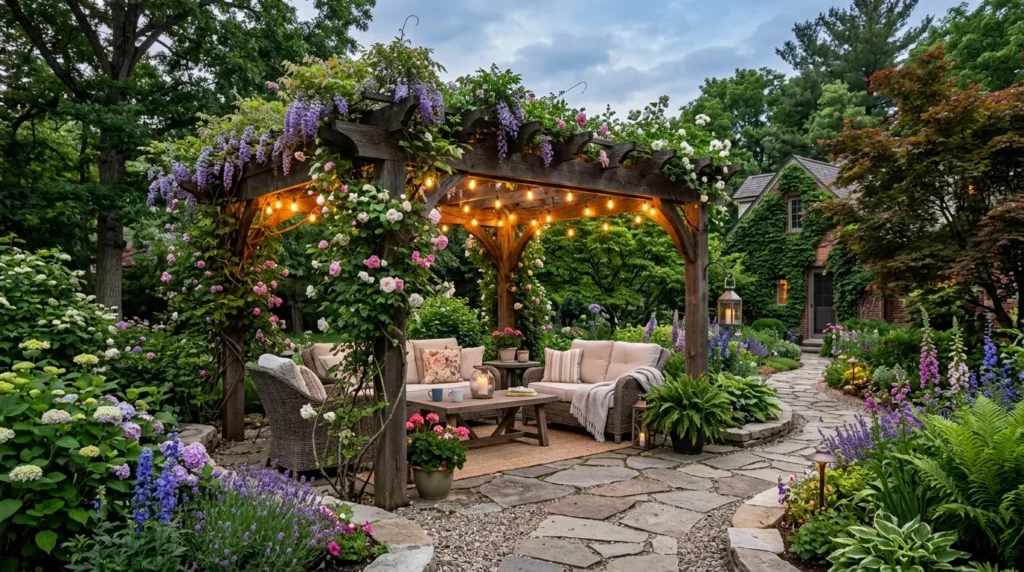
17. Backyard Garden With a Pergola
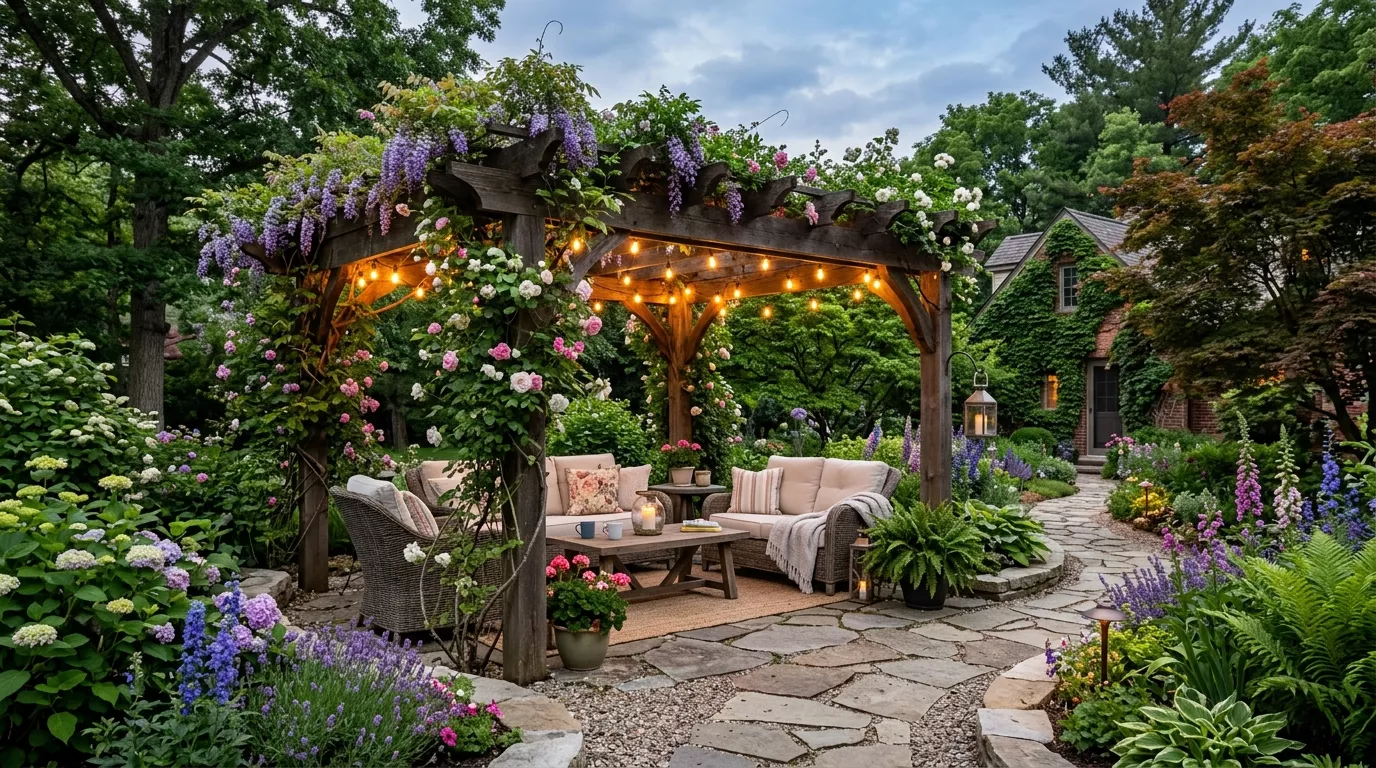
A pergola can give a backyard garden a strong architectural focal point while creating a comfortable area for outdoor living. Place the structure over a seating or dining area and surround it with climbing plants, flowering vines, or container greenery. The combination of structure and plants can create a beautiful garden room.
Add outdoor furniture, string lights, and soft textiles to make the space feel warm and inviting. Climbing plants can gradually soften the structure and provide additional shade, creating a relaxing destination within the garden.
18. Edible Landscape Garden
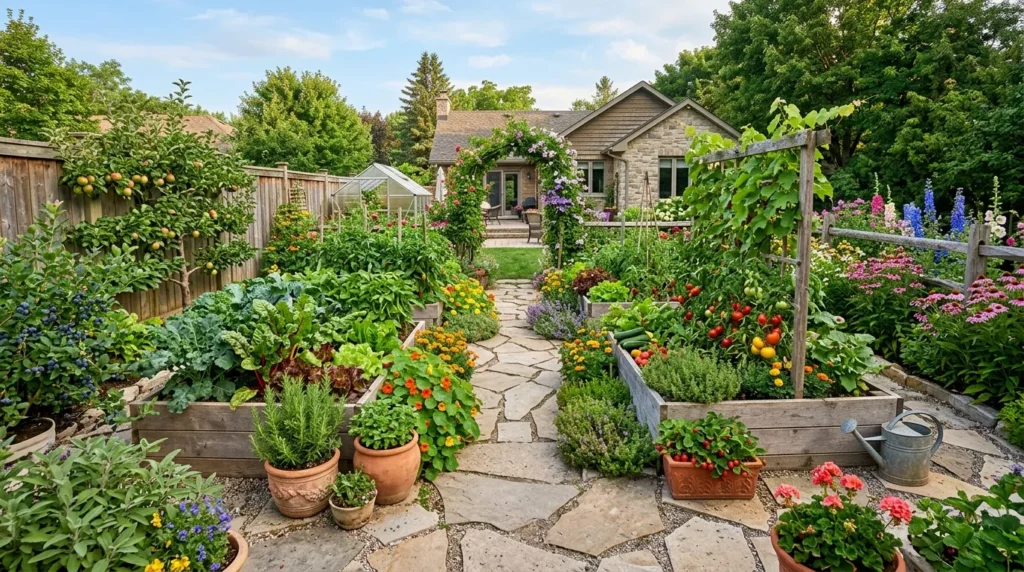
An edible landscape combines food-producing plants with ornamental landscaping to create a garden that is both useful and beautiful. Integrate vegetables, herbs, fruiting plants, and edible flowers into attractive planting beds instead of separating them completely from decorative areas. This approach can make a productive garden feel like part of the overall landscape.
Use pathways, raised beds, decorative containers, and repeated plant groupings to keep the design organized. Mixing edible plants with flowers can also add color and texture while giving you fresh ingredients to enjoy throughout the growing season.
19. Front Yard Tree Garden
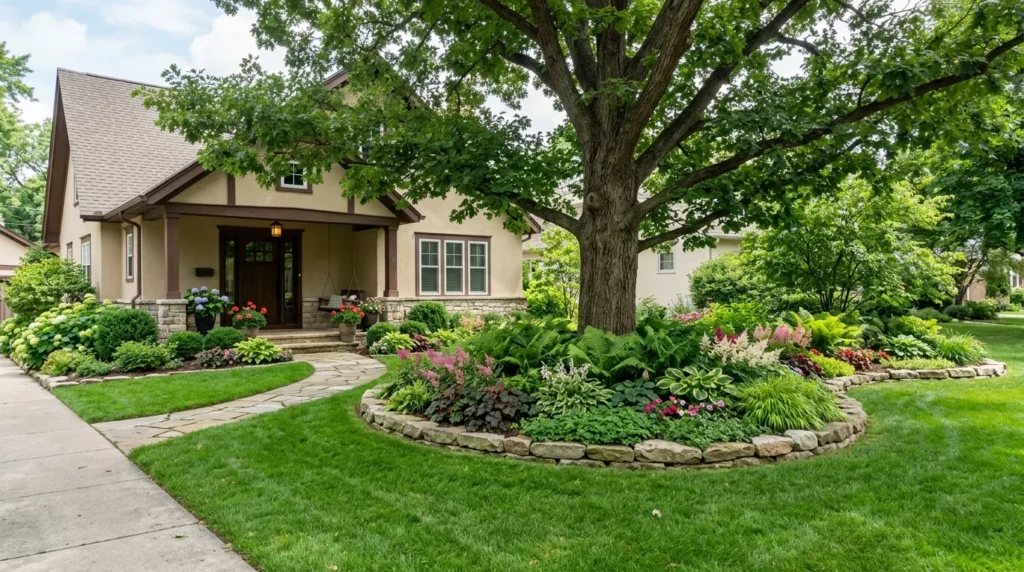
A mature or newly planted tree can become the centerpiece of a beautiful front yard garden. Surround the tree with shade-tolerant groundcovers, flowering plants, ferns, or decorative grasses depending on the conditions. Keep the planting arrangement open enough to showcase the tree’s trunk and natural shape.
Create a defined planting bed around the tree using natural stone, brick, or a clean mulch border. A simple curved edge can make the landscape feel softer and more organic while connecting the tree garden with the rest of the yard.
20. Backyard Garden With Raised Planters
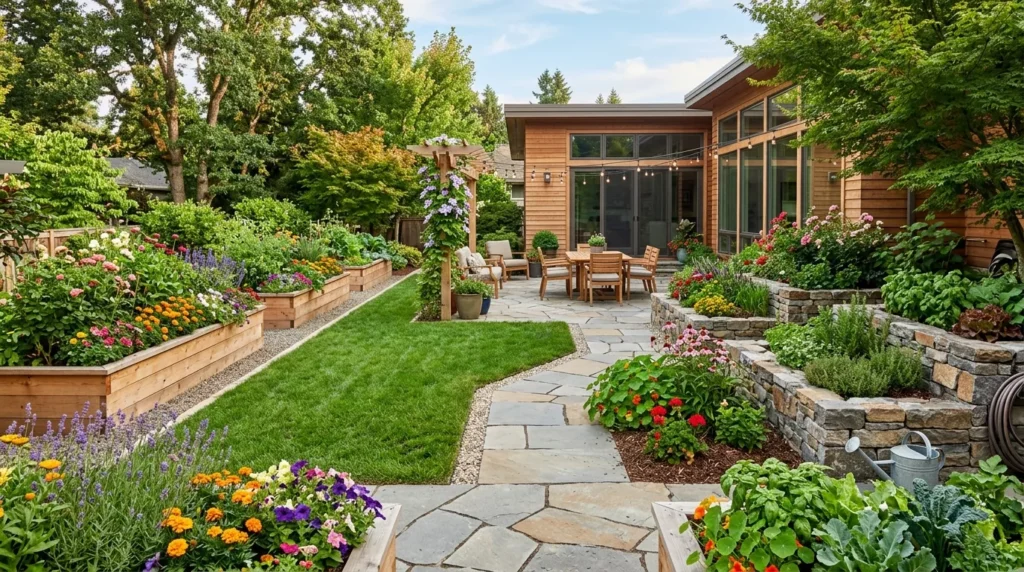
Raised planters can bring structure and visual height to a backyard garden while making planting areas easier to organize. Arrange several planters around a patio, lawn, fence, or outdoor seating area and fill them with flowers, herbs, vegetables, or ornamental foliage. Different planter heights can create a more dynamic composition.
Choose materials that coordinate with your home’s exterior, such as natural wood, stone, metal, or modern composite finishes. Keep enough space between the planters for comfortable movement and maintenance, especially if the garden will be used frequently.
21. Cottage Garden Along a Fence
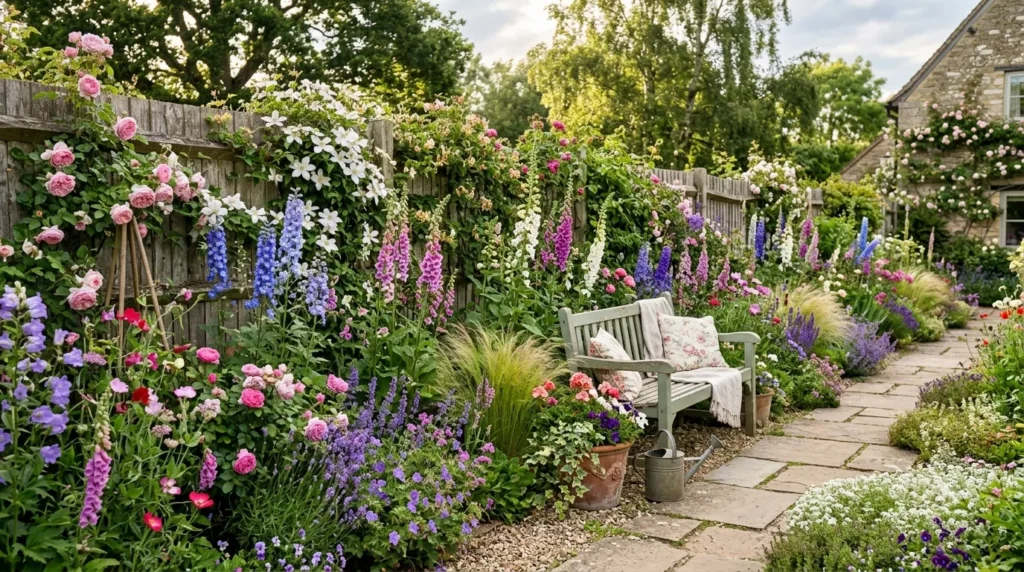
A fence provides a natural backdrop for creating a lush cottage-style garden. Plant tall flowers and climbing vines near the fence, followed by medium-height perennials and low-growing flowers toward the front. This layered arrangement can soften a plain boundary and make the backyard feel more established.
Use a relaxed mixture of colors and textures rather than creating a perfectly symmetrical planting scheme. Adding a small bench, vintage-style planter, or simple garden ornament can enhance the charming character without making the space feel overly decorated.
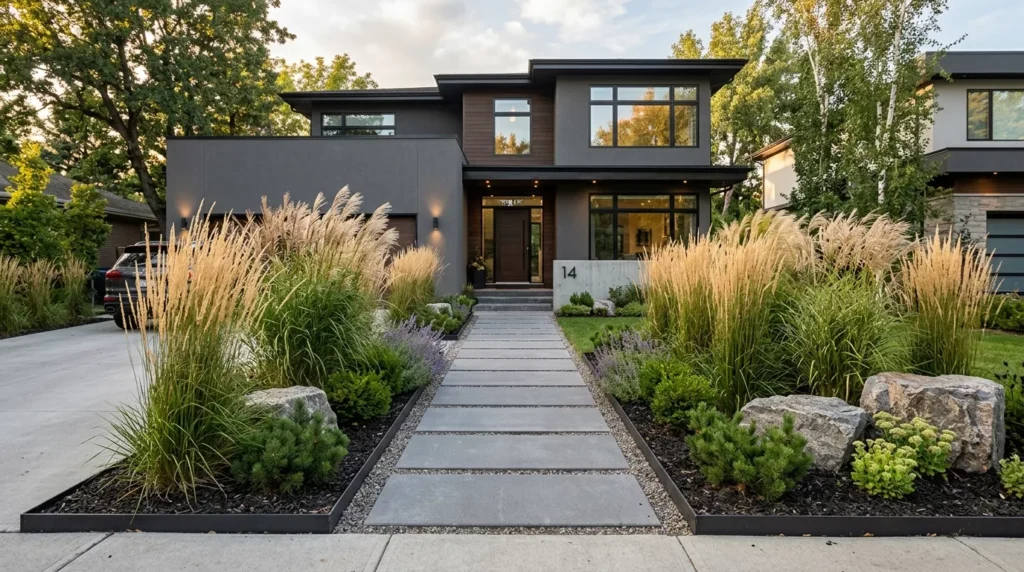
22. Modern Front Yard With Ornamental Grasses
Ornamental grasses can give a front yard a contemporary appearance while adding movement and texture. Plant clusters of grasses along pathways, garden borders, or around architectural features to create a clean but organic landscape. Their flowing shapes can soften hard surfaces such as concrete and stone.
Combine grasses with evergreen shrubs, large rocks, or simple groundcovers for a restrained modern palette. Repeating the same grass variety throughout the yard can create visual rhythm and make the overall landscape feel professionally designed.
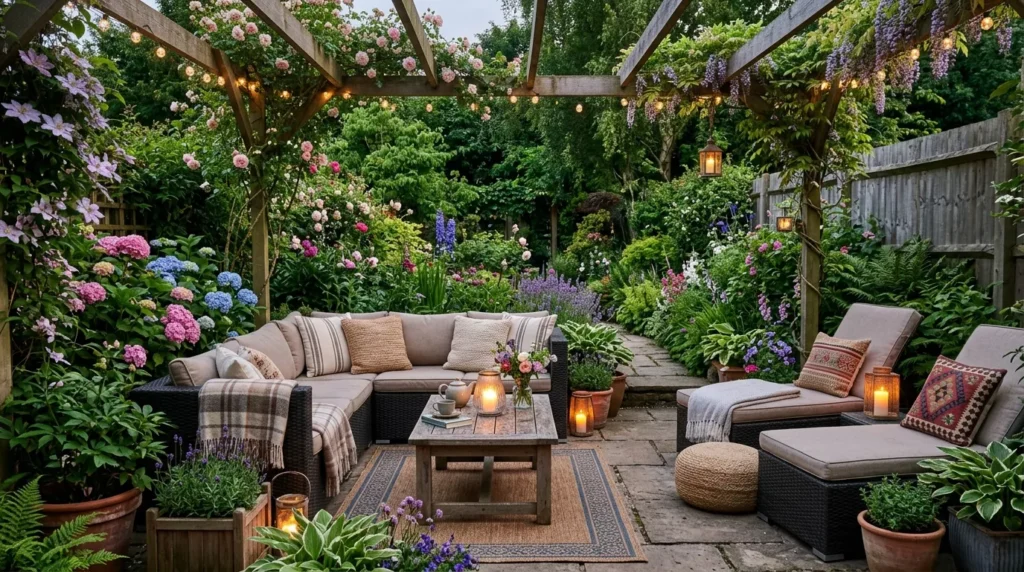
23. Backyard Garden With Outdoor Seating
An outdoor seating area can become the heart of a backyard garden when surrounded by carefully selected plants. Place comfortable chairs or a small outdoor sofa within or beside a garden bed and frame the area with flowering plants, shrubs, and greenery. This creates a private and inviting space for relaxing outdoors.
Use a combination of containers, garden beds, and climbing plants to add layers around the seating area. Soft outdoor cushions, lanterns, and warm lighting can make the space especially inviting in the evening while keeping the garden connected to the home’s living areas.
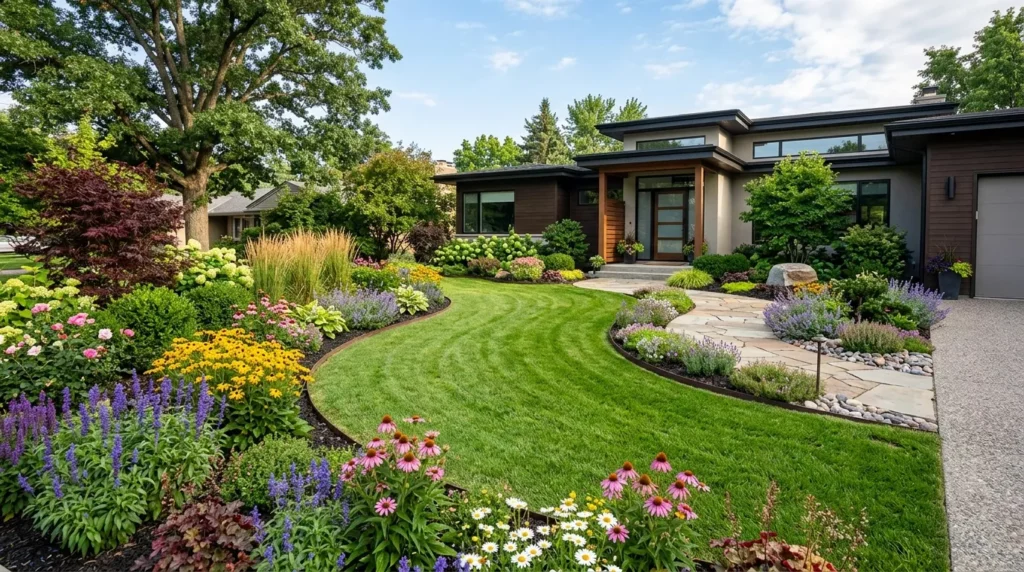
24. Front Yard Garden With a Curved Lawn
A curved lawn can give a front yard a softer and more natural appearance than a rigid rectangular layout. Create sweeping garden borders around the lawn and fill them with shrubs, flowers, grasses, and groundcovers. The curved shape naturally guides the eye through the landscape and creates a sense of movement.
Keep the lawn area simple and allow the planting beds to provide most of the color and texture. Repeating plants along the curves can create a cohesive design while maintaining the relaxed appearance of the overall landscape.
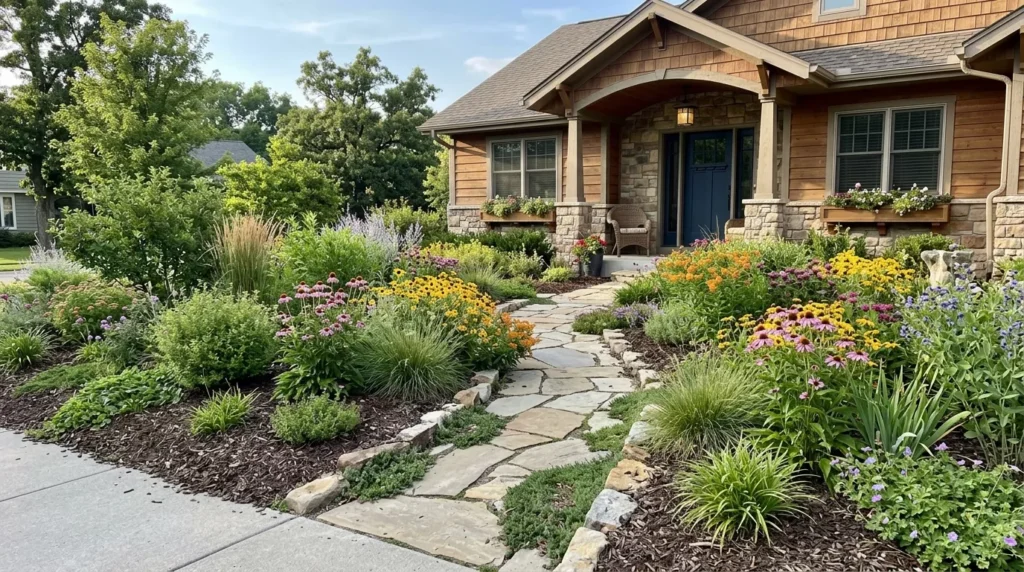
25. Low-Maintenance Native Plant Garden
A native plant garden can create a beautiful outdoor space while using plants that are naturally suited to the local environment. Combine native flowers, grasses, shrubs, and groundcovers in informal groups to create a landscape with a natural appearance. Varying plant heights can add depth without requiring complicated garden structures.
Use mulch, stone paths, and defined planting areas to keep the design organized. Once established, appropriately selected native plants can provide seasonal interest and create a landscape that feels connected to its surrounding environment.
How to Design a Beautiful Backyard or Front Yard Garden
Start by considering how much sunlight, shade, water, and usable space your yard receives throughout the day. Choose plants that fit those conditions rather than selecting them based only on appearance. A successful garden should work with the natural characteristics of the space instead of constantly fighting them.
Think about structure as well as plants when planning the layout. Pathways, borders, trees, raised beds, seating areas, containers, lighting, and focal points can give the garden a clear sense of organization. Combining different heights, textures, and materials will make the landscape feel layered and visually interesting.
Final Thoughts
Whether you prefer a colorful cottage garden, a modern minimalist landscape, a productive vegetable garden, or a lush backyard retreat, there are plenty of ways to transform your outdoor space. The best garden design combines beauty with practical elements that suit the way you use your yard.
Start with one area that needs the most attention and build the design gradually. By combining thoughtfully selected plants with pathways, borders, containers, seating, and decorative features, you can create a backyard or front yard garden that feels welcoming, personalized, and beautiful throughout the seasons.