25+ Vegetable Garden Layout Ideas for a Productive & Beautiful Garden
A well-planned vegetable garden can make growing fresh produce easier, more organized, and more enjoyable. The right layout helps you use available space efficiently while making watering, harvesting, and maintenance much simpler. Whether you have a large backyard or a tiny outdoor area, thoughtful planning can turn almost any space into a productive garden. Fall Decor Ideas 2026
From raised beds and traditional rows to vertical gardens, containers, and creative geometric designs, there are plenty of ways to organize your crops. These 25+ vegetable garden layout ideas will help you find a practical design that suits your space, gardening style, and favorite vegetables.
1. Classic Row Vegetable Garden
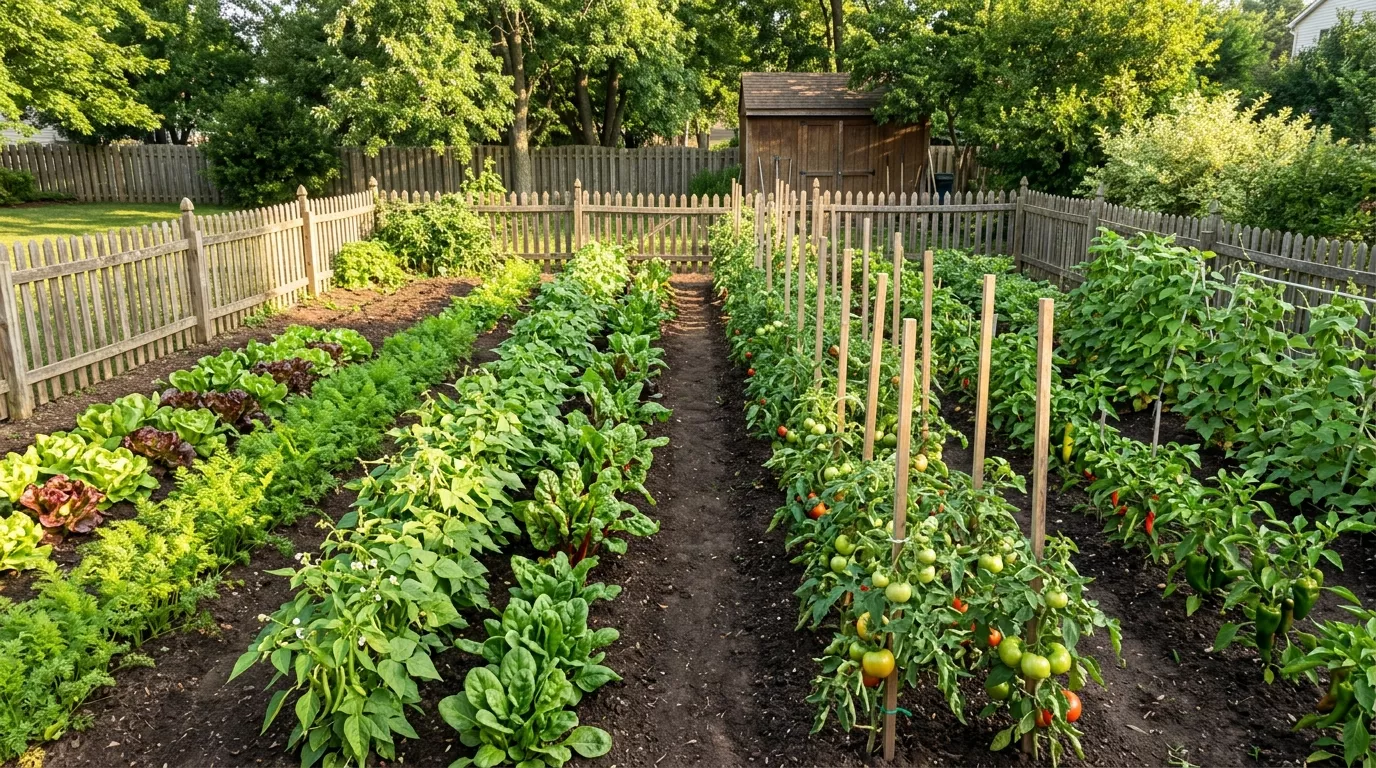
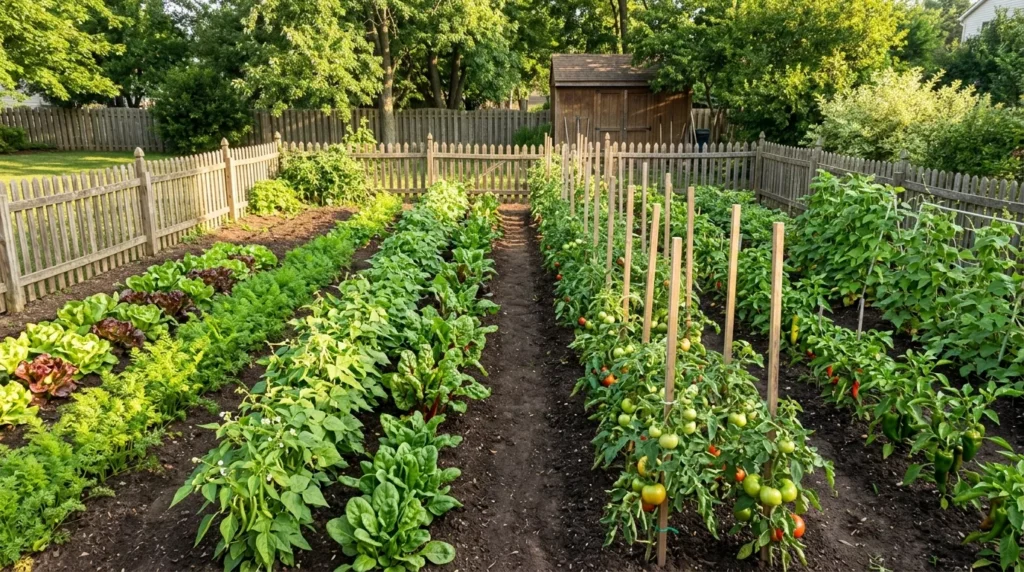
A classic row vegetable garden is a simple and practical way to organize a backyard growing space. Create long, straight rows with enough room between them for comfortable walking and maintenance. Group similar vegetables together according to their growing needs and keep each row clearly defined. This traditional layout works especially well in larger gardens.
Place taller crops where they won’t unnecessarily shade shorter vegetables throughout the day. You can add stakes or trellises for climbing plants such as beans, peas, and suitable tomato varieties. Mulching between rows can help reduce weeds and conserve soil moisture. With thoughtful planning, a classic row garden can be both productive and attractive.
2. Raised Bed Vegetable Garden
Raised beds create clearly defined growing areas while giving your vegetable garden a neat and structured appearance. You can build rectangular beds from suitable wood, stone, or other durable materials. Leave comfortable pathways between each bed so you can easily reach every plant. This layout is particularly useful for creating an organized backyard garden.
Fill the beds with suitable growing soil and arrange vegetables according to their mature size. Add mulch around plants to help retain moisture and reduce weed growth. You can also install trellises along selected beds for climbing crops and vertical growing. Combining several raised beds creates an attractive and productive vegetable garden.
3. Square-Foot Vegetable Garden
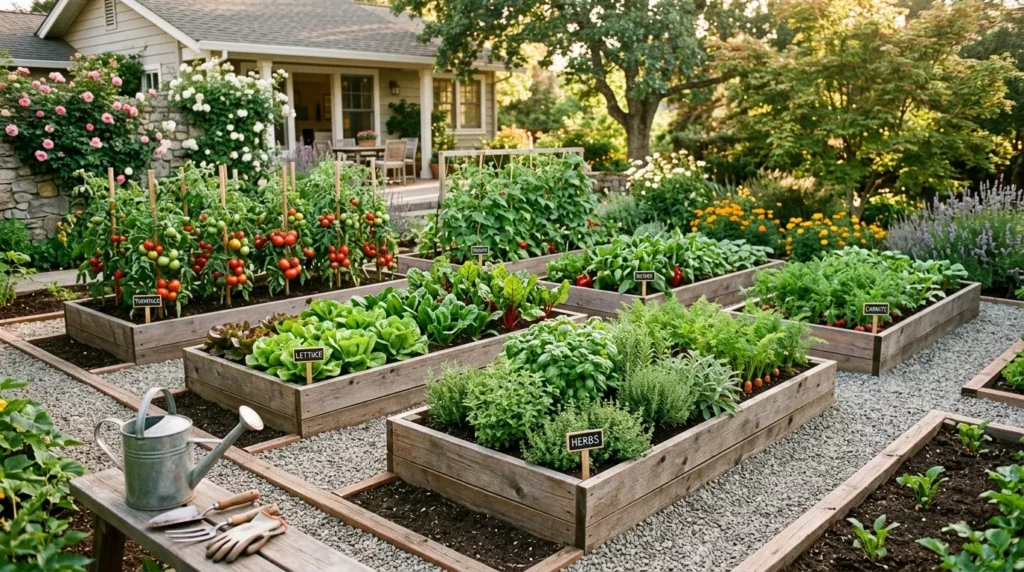
Square-foot gardening divides a raised bed into smaller planting sections, allowing you to grow several types of vegetables in one compact area. Each section can be assigned to a different crop based on the space it needs to mature. A simple grid made with garden twine or thin wooden strips makes the layout easy to organize. This method is particularly useful for beginners and small gardens.
Place larger vegetables in sections where they have enough room to spread without crowding nearby crops. Smaller vegetables and herbs can occupy the remaining sections for efficient use of space. Vertical supports can be added for suitable climbing plants. The result is a highly organized garden that can produce a surprising variety of fresh vegetables.
4. Small Backyard Vegetable Garden
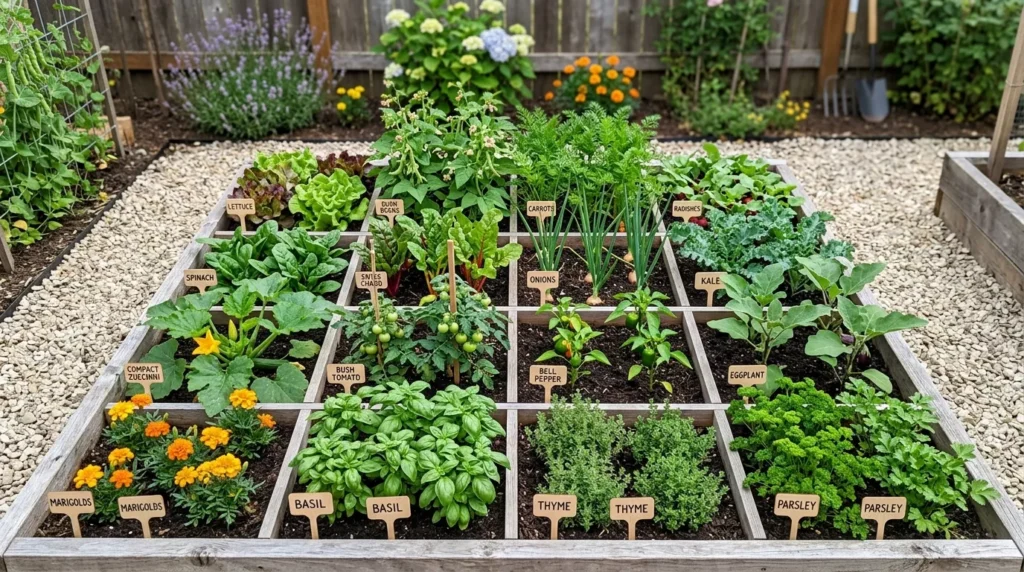
A small backyard can still become a productive vegetable garden when every section is carefully planned. Use compact raised beds, narrow pathways, containers, and vertical supports to maximize your growing area. Choose vegetables that don’t require excessive space and consider compact varieties whenever appropriate. Keeping the design simple also makes everyday maintenance easier.
Place taller crops toward suitable boundaries so they don’t block sunlight from smaller plants. Containers can provide additional growing space when the main beds become full. Herbs and frequently harvested greens can be planted close to pathways for easy access. With smart planning, even a small backyard can provide a useful seasonal harvest.
5. L-Shaped Garden Beds
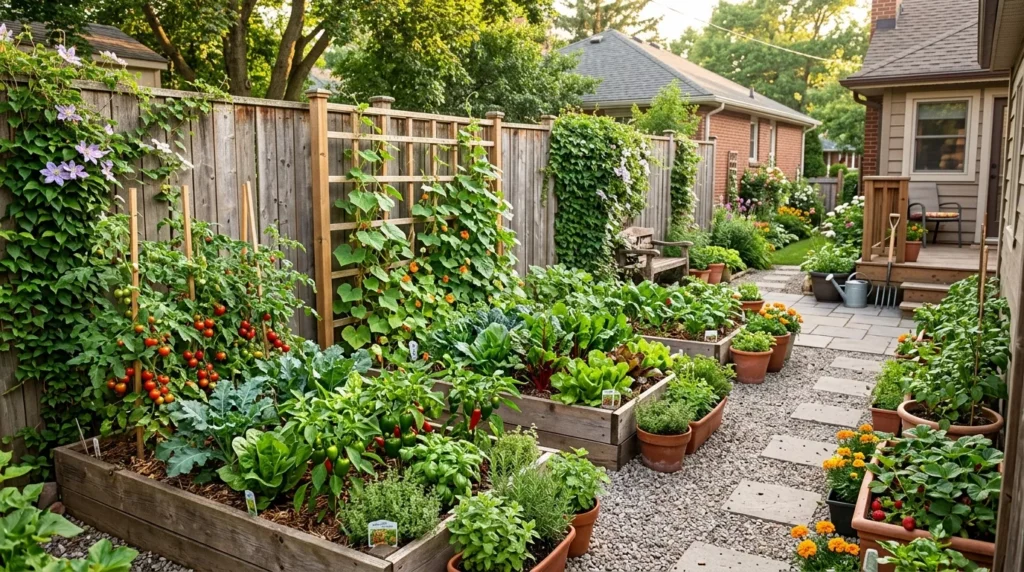
L-shaped garden beds are a smart way to make use of unused corners in a backyard. Two connected beds can follow adjoining fences or walls while leaving the center open for a walkway or seating area. This layout provides plenty of planting space without making the entire garden feel crowded. It works particularly well in medium-sized outdoor spaces.
Use the inside corner for herbs or vegetables that you frequently harvest throughout the season. Taller crops can be placed toward the outside edges where they have more room to grow. Add consistent edging to give the beds a polished appearance. An L-shaped layout can combine practicality with attractive garden design.
6. U-Shaped Vegetable Garden
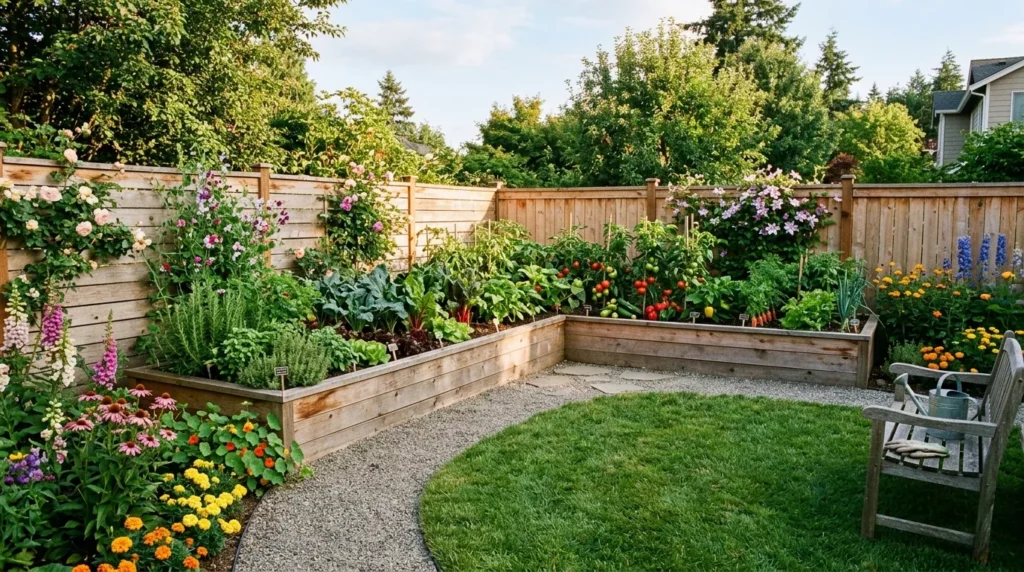
A U-shaped vegetable garden provides plenty of planting space while keeping the growing areas easy to reach. Build raised beds along three sides of the garden and leave the middle open as a working area. This arrangement allows you to access plants from several directions without stepping into the soil. It is especially useful for dedicated kitchen gardens.
Use different sections of the U-shaped layout for different crop groups or planting schedules. The central area can accommodate a potting bench, garden cart, or small work station. Keep the paths wide enough for comfortable movement and maintenance. This layout creates an efficient garden while maintaining a pleasing symmetrical appearance.
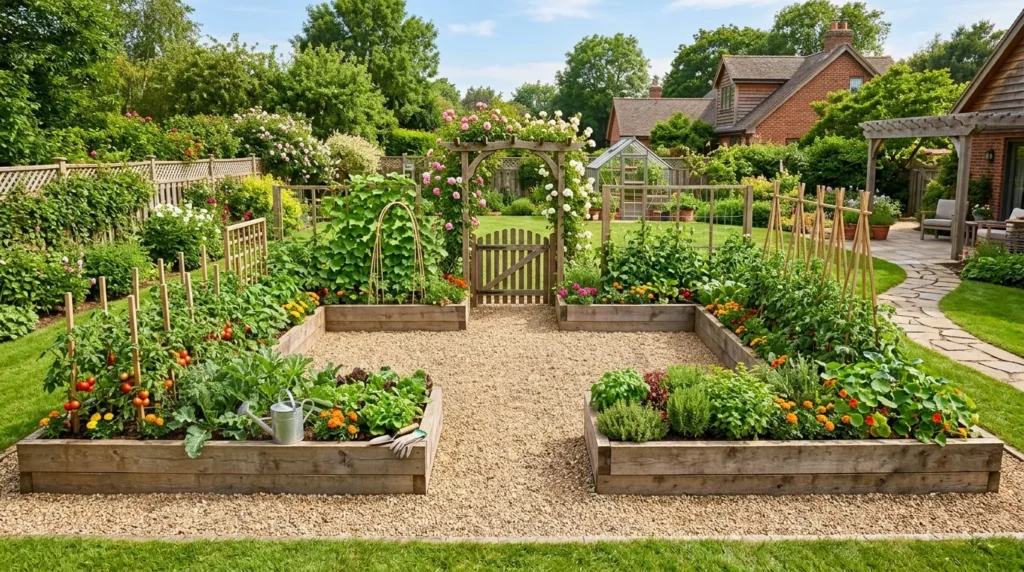
7. Vertical Vegetable Garden
A vertical vegetable garden is ideal when you have limited floor space but plenty of wall or fence space. Trellises, arches, stakes, and vertical planters allow suitable vegetables to grow upward rather than spreading across the ground. Beans, peas, cucumbers, and some tomato varieties can benefit from this approach. Vertical growing can significantly increase productivity in compact gardens.
Position vertical supports carefully so they don’t create excessive shade over nearby crops. Make sure structures are strong enough to support mature plants and their produce. Combine climbing vegetables with low-growing crops underneath where appropriate. This creates a productive garden that also adds height and visual interest.
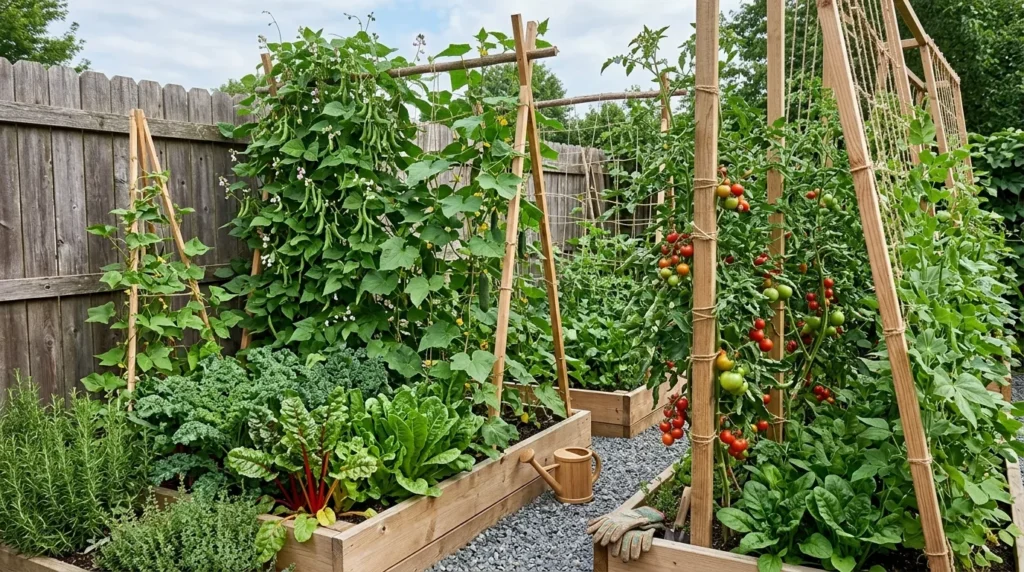
8. Container Vegetable Garden
Container gardening is an excellent solution for patios, balconies, small yards, and homes without traditional planting beds. Use suitable pots, grow bags, troughs, or other containers for vegetables that grow well in confined spaces. Arrange them according to plant height, sunlight requirements, and watering needs. Containers also give you flexibility because they can be repositioned when necessary.
Choose appropriately sized containers for each crop and ensure they have suitable drainage. Place larger plants toward the back and smaller crops where they won’t be shaded. You can combine vegetables with herbs and edible flowers for additional variety. A collection of well-arranged containers can become a productive and attractive mini garden.
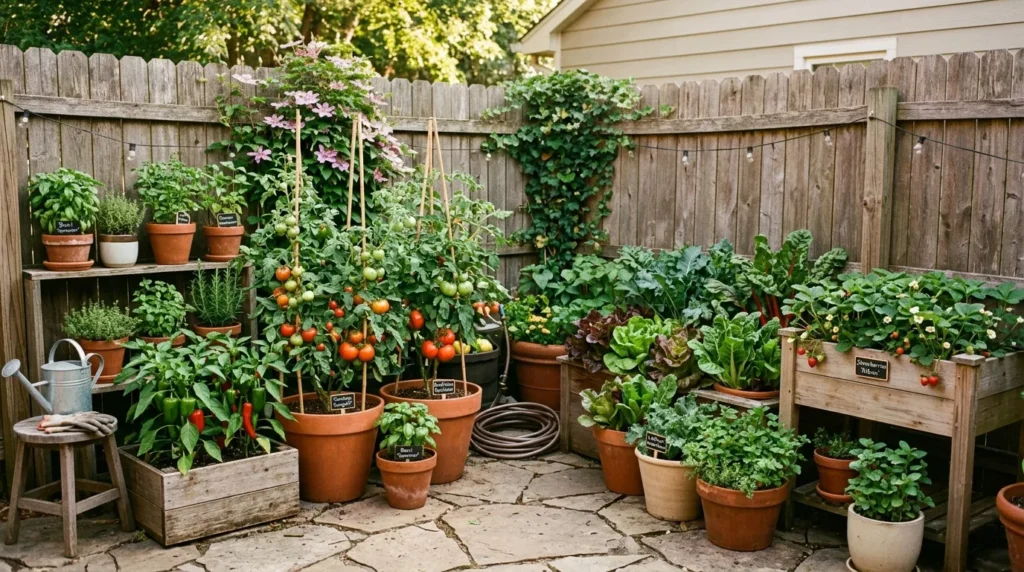
9. Vegetable Garden with Gravel Paths
Gravel paths can give a vegetable garden a clean, structured appearance while providing a practical walking surface. Create pathways around raised beds so you can comfortably move between growing areas. Choose a gravel material that complements your home’s exterior and surrounding landscaping. The contrast between gravel and lush plants can also make the vegetables stand out.
Use consistent bed shapes to create a more organized overall design. Add stepping stones in areas where extra stability is useful, especially near entrances. Mulch inside the beds can create an attractive contrast with the gravel paths. This layout is a great choice if you want a vegetable garden that looks polished as well as productive.
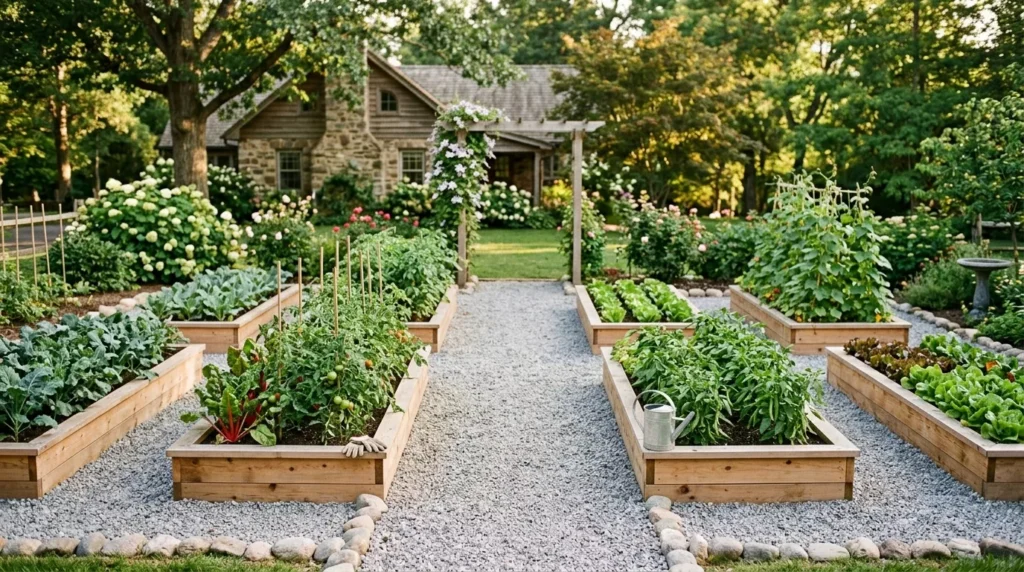
10. Keyhole Vegetable Garden
A keyhole garden uses a rounded planting bed with a narrow access path extending toward its center. This unique shape allows you to reach a large portion of the growing area without walking through the soil. It can make efficient use of space while creating an interesting visual feature. The design is especially appealing for gardeners who want something different from traditional rectangular beds.
Place herbs and frequently harvested vegetables near the accessible sections of the garden. Use the outer portions for crops that need more room to develop. Attractive edging made from stone, brick, or suitable garden materials can define the shape. A keyhole layout can combine practical growing space with a distinctive garden design.
11. Circular Vegetable Garden
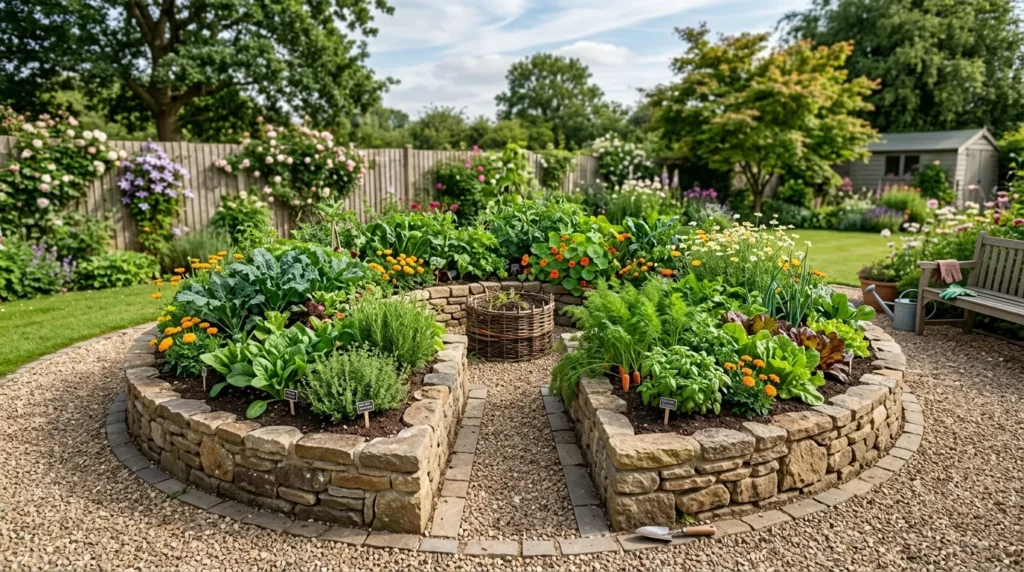
A circular vegetable garden provides a softer alternative to traditional rectangular planting beds. Divide the circle into sections using narrow pathways, borders, or different planting zones. The shape can become a natural focal point while still providing plenty of room for vegetables. It works particularly well in informal, cottage, and ornamental gardens.
Position taller crops carefully according to the direction of sunlight so they don’t shade smaller plants. Use low-growing vegetables and herbs around the outer edges for easy access. A central planter, sculpture, or small tree can add visual interest if appropriate. The circular structure creates a garden that feels decorative as well as functional.
12. Kitchen Garden Layout
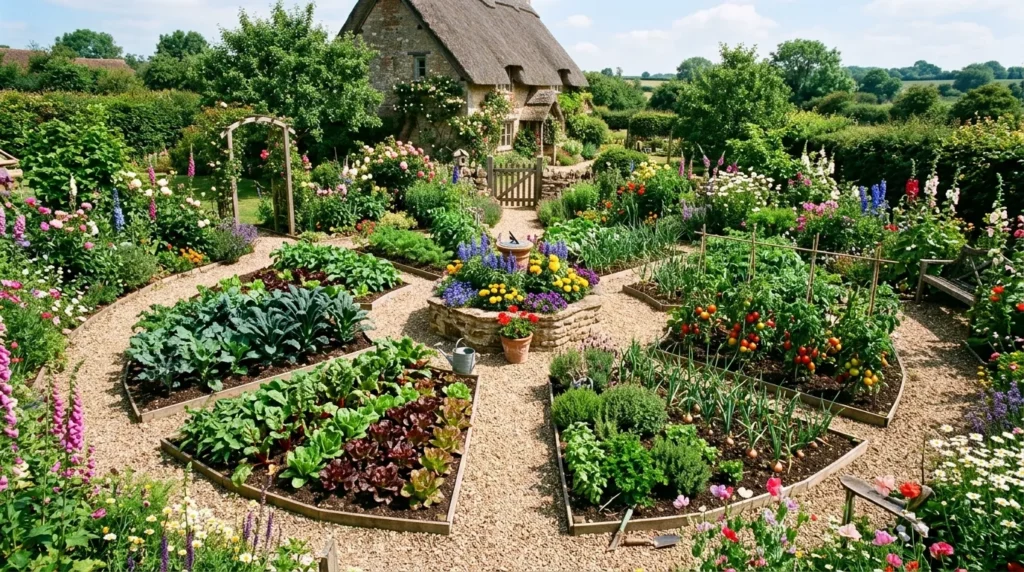
A dedicated kitchen garden keeps herbs and vegetables close to the house, making harvesting convenient for everyday cooking. Arrange raised beds with clear paths between them and place frequently used herbs near the easiest entrance. Climbing vegetables can be grown against trellises along the garden’s boundaries. This creates a practical growing area that is closely connected to the kitchen.
Add a small potting bench or tool station nearby to make garden maintenance easier. Containers can provide extra room for herbs or seasonal crops when the beds are full. Use natural materials such as wood and stone to create a timeless appearance. A well-designed kitchen garden can be both highly productive and visually charming.
13. Companion Planting Layout
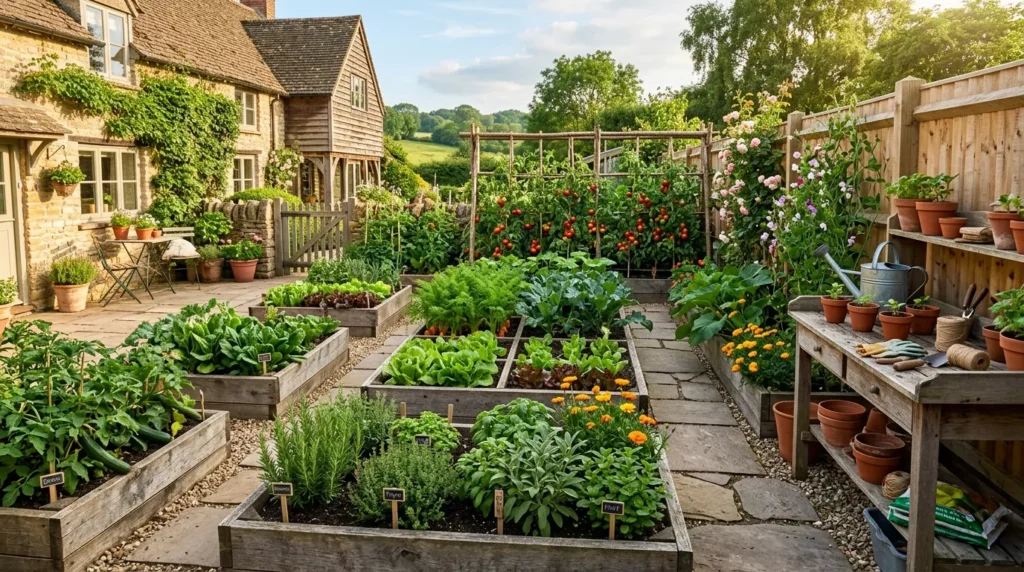
A companion planting layout organizes vegetables, herbs, and suitable flowers according to plants that can be grown together successfully. Grouping compatible crops can help you make better use of available space while creating a diverse growing environment. Consider the mature size, sunlight requirements, and watering needs of every plant before arranging them. Avoid overcrowding simply because plants are considered compatible.
Create clear planting sections so each crop still has enough room for healthy growth. Herbs and flowers can be placed around vegetables to add variety and color. Use labels if you’re experimenting with different combinations during the growing season. A thoughtfully planned mixed garden can be productive while looking more natural than rows of a single crop.
14. Vegetable Garden with Flower Borders
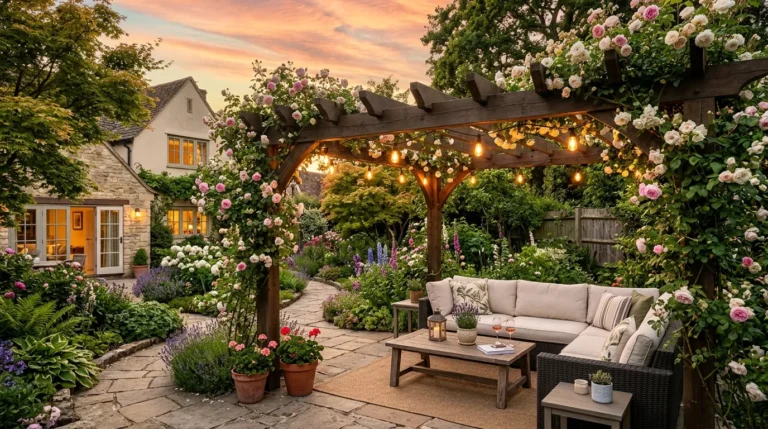
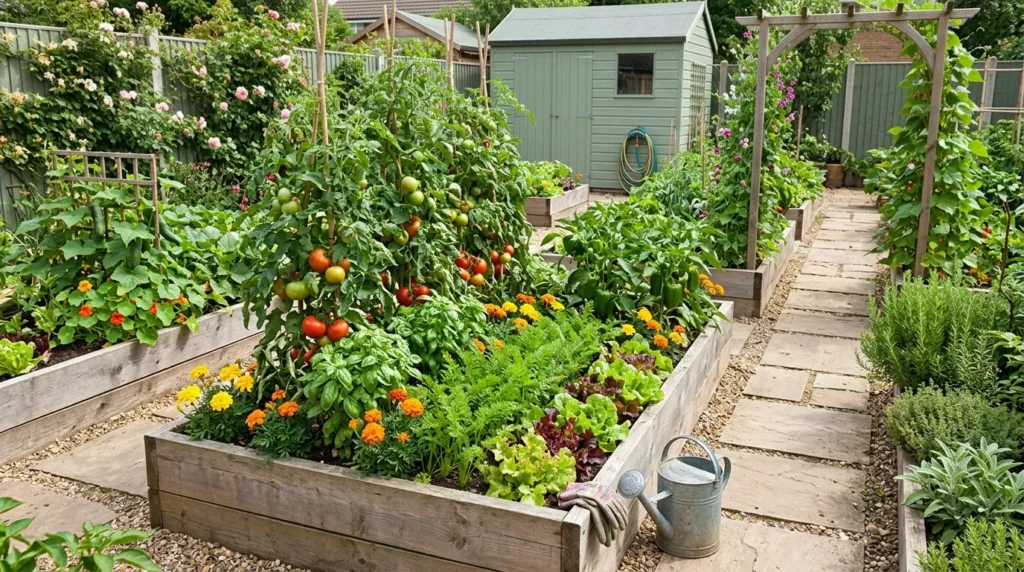
Flower borders can transform a practical vegetable garden into a colorful and inviting outdoor space. Plant suitable flowers around the edges of raised beds or along pathways to create a soft transition between crops and landscaping. Different flower colors and heights can add visual interest throughout the growing season. This approach is especially beautiful in cottage-style gardens.
Keep the vegetable beds clearly defined so harvesting and maintenance remain easy. Choose flowers that are appropriate for your climate and available sunlight. You can also incorporate attractive herbs and foliage plants into the border. The combination of flowers and vegetables creates a garden that feels both productive and ornamental.
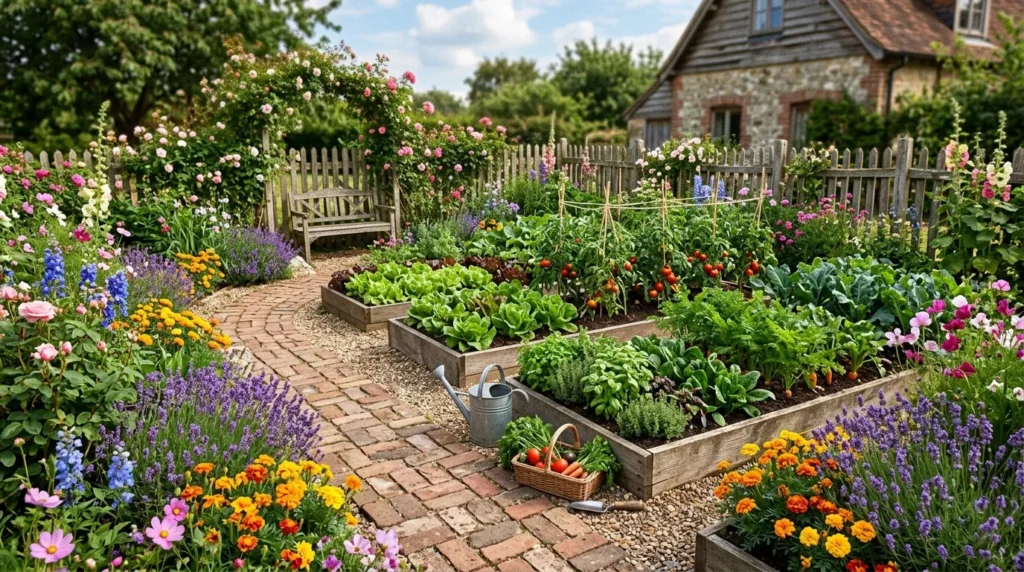
15. Long Narrow Vegetable Garden
A long narrow garden can become surprisingly productive when divided into carefully planned planting beds. Create narrow rows or raised beds with pathways running between them so every plant remains accessible. Keep each bed narrow enough that you can reach the center without stepping into the soil. This layout works particularly well in side yards and long backyard spaces.
Use trellises along one boundary for climbing vegetables and crops that benefit from vertical support. Position taller plants thoughtfully so they don’t unnecessarily shade shorter varieties. A central or side pathway can make watering and harvesting much easier. With the right organization, a narrow garden can feel spacious and highly functional.
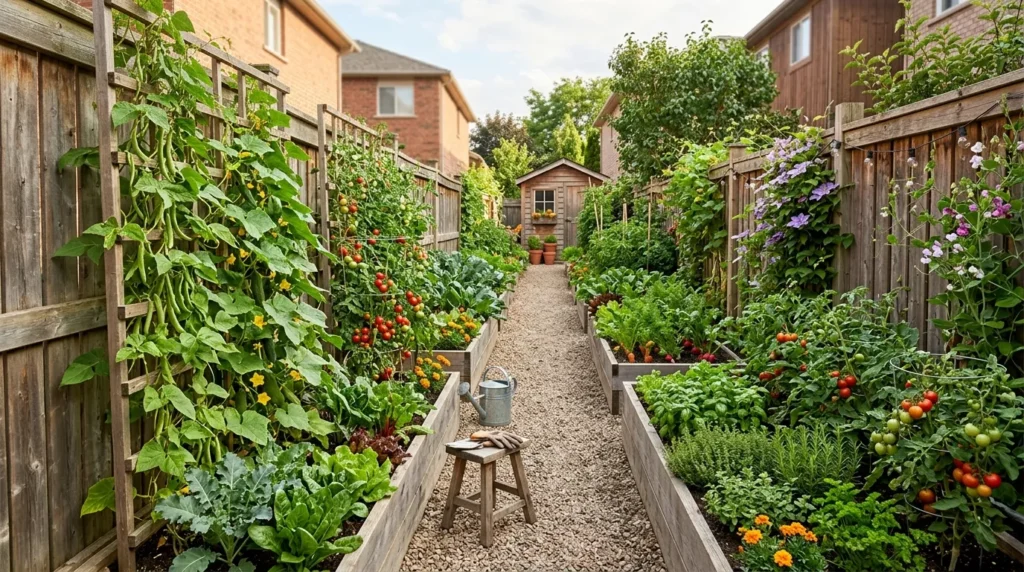
16. Tiered Vegetable Garden
A tiered vegetable garden is a useful solution for sloped yards or spaces where different elevations can be incorporated into the design. Build properly supported terraces or raised beds to create separate planting levels. Each level can be used for different crops according to sunlight, moisture, and space requirements. The different heights can also add attractive visual dimension.
Make sure retaining structures are stable and that each level has appropriate drainage. Place frequently harvested crops on the easiest-to-reach sections of the garden. Connect the tiers with safe pathways or steps where necessary. A well-designed tiered garden can transform a difficult slope into a productive growing space.
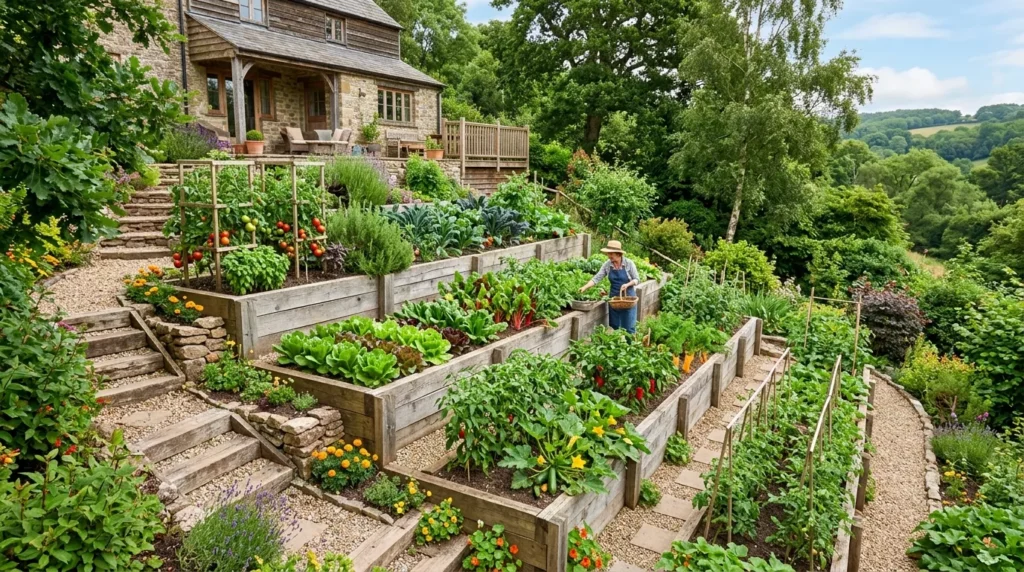
17. Vegetable Garden with Trellis Arch
A trellis arch can combine vertical growing space with an attractive architectural feature. Place the arch between two planting beds and train suitable climbing vegetables across the structure. Beans, peas, and cucumbers can create a lush green tunnel as they grow. The arch can also make the entrance to your vegetable garden feel more inviting.
Choose a sturdy structure capable of supporting mature plants and their produce. Position the arch carefully so it doesn’t cast excessive shade on nearby crops. Add flowers or herbs around its base to soften the structure. This layout is a beautiful choice for both traditional and modern gardens.
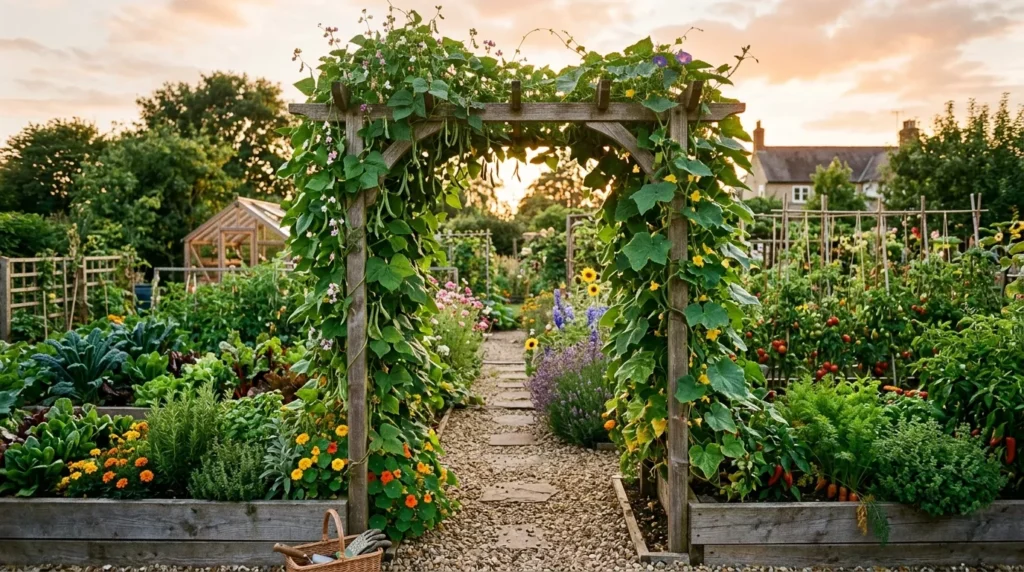
18. Four-Bed Vegetable Garden
A four-bed layout divides the garden into four clearly defined planting areas separated by intersecting pathways. Each bed can be assigned to different vegetable groups, making the garden easy to organize. The paths provide convenient access to all sides of the growing areas. This straightforward design is particularly suitable for beginners.
You can rotate crops between the beds in future seasons to help maintain an organized growing system. Use one area for leafy greens, another for root vegetables, and others for suitable seasonal crops. Add trellises to beds containing climbing plants. The result is a simple, structured garden that is easy to understand and maintain.
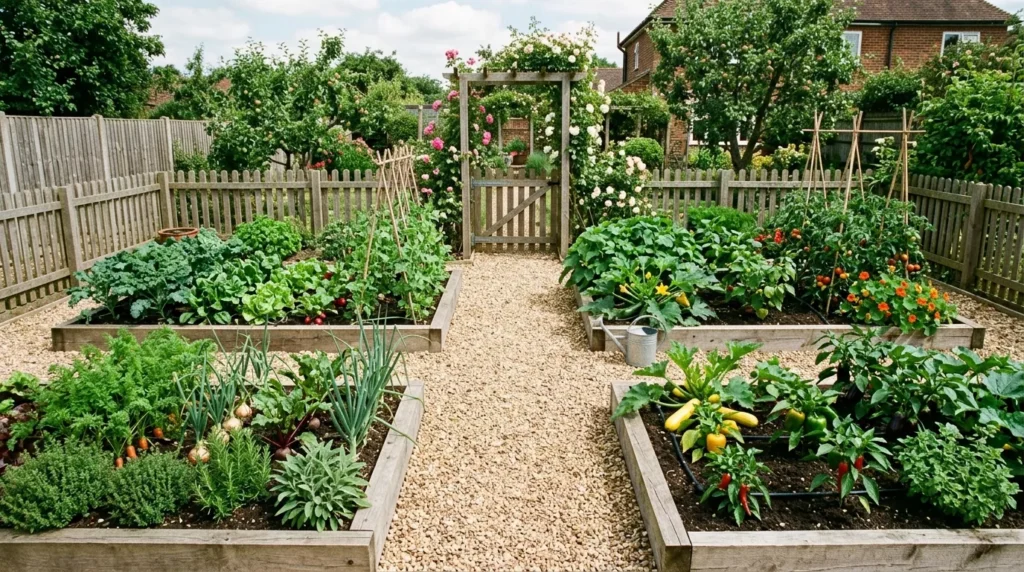
19. Vegetable Garden with Central Path
A central pathway creates a strong visual line through the middle of a vegetable garden. Use gravel, brick, mulch, or stepping stones to create a comfortable walking route. Place planting beds on either side of the path so every section remains easy to access. This arrangement can make a garden feel organized without wasting excessive space.
Place frequently harvested crops close to the central path for convenience. Larger vegetables can be positioned farther away where they have more room to spread. A bench, planter, or garden feature at the end of the path can create a focal point. This simple layout combines practicality with attractive garden symmetry.
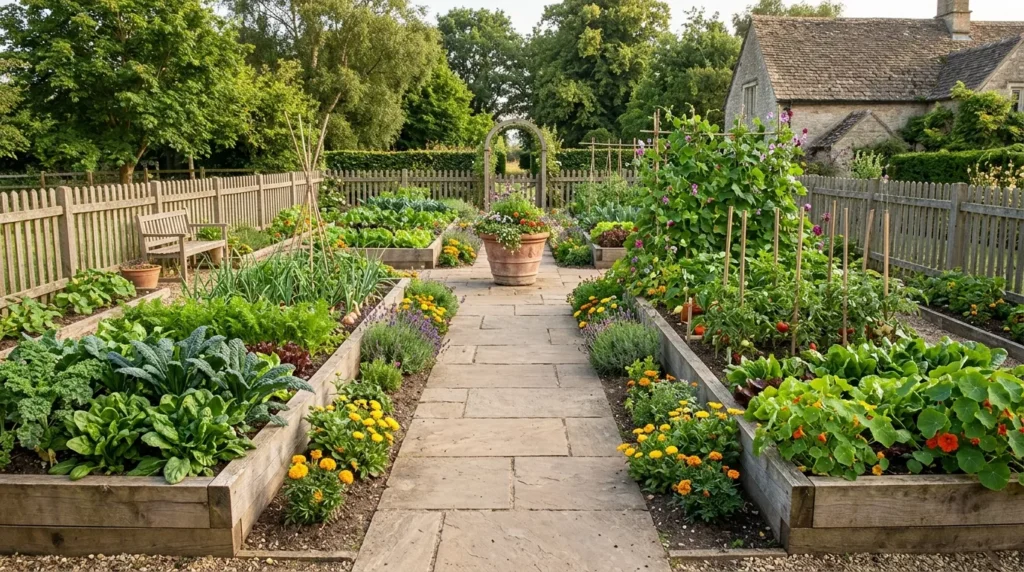
20. Small Raised Bed Vegetable Garden
Several small raised beds can be easier to manage than one large growing area. Create three or four compact beds with comfortable pathways between them and assign different crops to each section. Smaller beds also make it easier to separate vegetables according to their watering and growing requirements. This approach works well in compact backyards.
Add a trellis to one bed for climbing crops and containers around the edges for herbs. Choose dimensions that allow you to reach the center of every bed without stepping inside. Keep the layout open enough for easy watering and harvesting. A small raised-bed garden can provide plenty of produce without becoming difficult to manage.
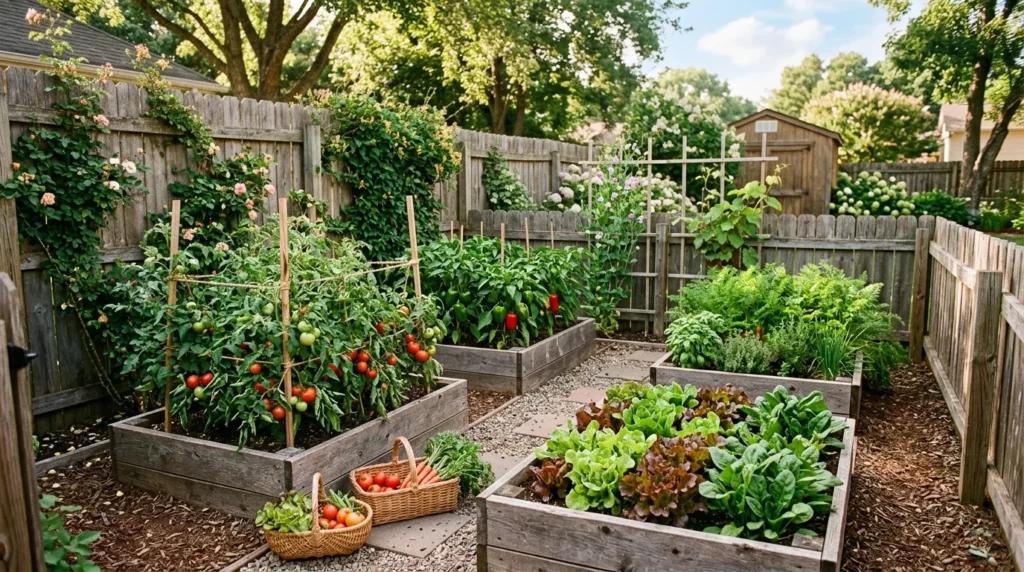
21. Vegetable Garden with Compost Area
Including a compost area near your vegetable garden can create a convenient system for recycling suitable garden and kitchen materials. Position the compost bin or structure somewhere accessible without allowing it to dominate the main garden. A simple screen or surrounding plants can help it blend into the landscape. Keeping it nearby makes it easier to use finished compost in your beds.
Place the compost area near a pathway so moving garden materials remains convenient. You can also add a small tool station or storage box nearby. Keep the compost area tidy and use appropriate composting practices. This approach turns the vegetable garden into a more complete and practical growing system.
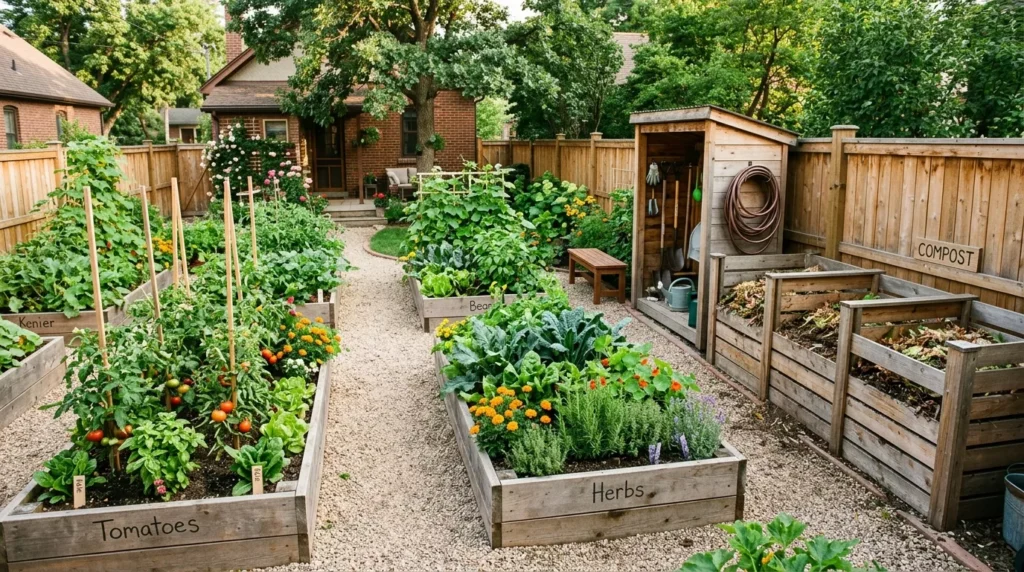
22. Accessible Vegetable Garden
An accessible vegetable garden can make planting, watering, and harvesting more comfortable for a wide range of gardeners. Use raised beds at convenient heights and create wide, stable pathways between the growing areas. Place frequently harvested vegetables where they can be reached easily. Avoid unnecessary obstacles or narrow passages that make movement difficult.
Elevated containers and planters can provide additional flexibility for different gardening needs. Keep tools and watering equipment in convenient locations near the beds. Choose smooth, stable pathway materials that are comfortable to walk across. A thoughtful accessible layout can make vegetable gardening more enjoyable and practical.
23. Vegetable Garden with Greenhouse
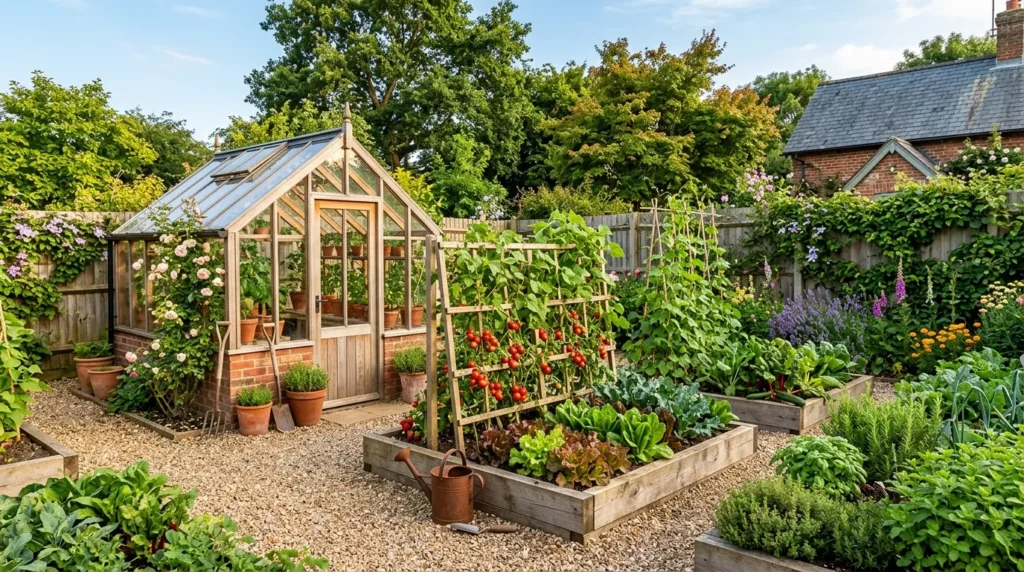
Combining a greenhouse with outdoor vegetable beds creates a versatile growing area with separate spaces for different crops. Position the greenhouse where it receives appropriate sunlight and remains convenient to access. Use the surrounding outdoor beds for vegetables that don’t require protected growing conditions. Connect everything with clear, practical pathways.
A greenhouse can provide space for starting seedlings or growing suitable crops under protection. Keep pots, tools, and other supplies close to the structure when possible. Use matching materials around the garden to make the entire space feel cohesive. This layout is ideal for gardeners who want to expand their growing possibilities.
24. Vegetable Garden with Herb Spiral
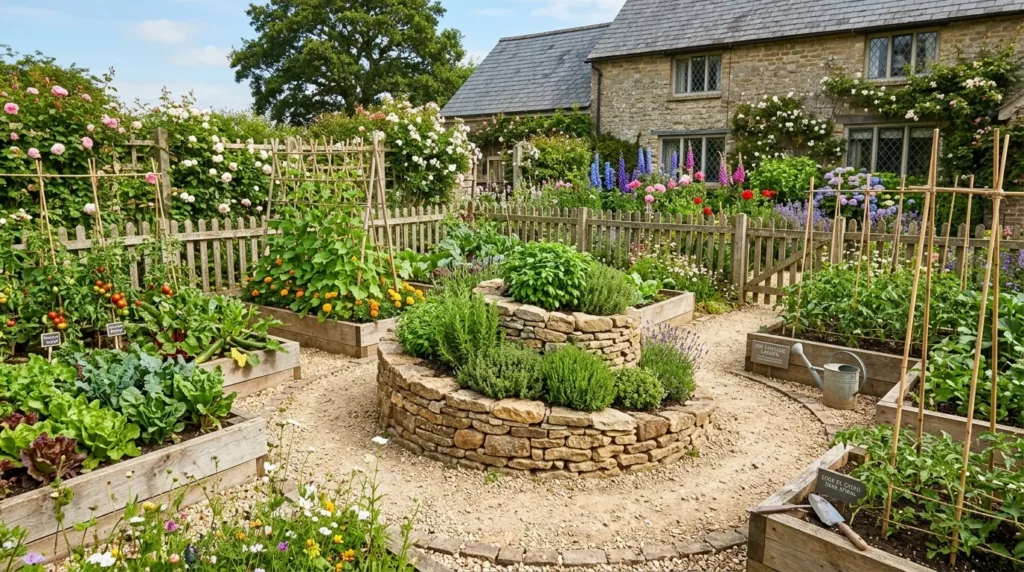
An herb spiral is a compact vertical planting feature that creates several growing levels within one small footprint. Build the spiral using suitable stones or bricks and fill each section with appropriate growing soil. Different herbs can be placed according to their moisture, sunlight, and drainage preferences. The spiral also adds a sculptural element to the vegetable garden.
Position the herb spiral close to the kitchen or main garden pathway for convenient harvesting. Surround it with gravel or another simple surface to keep maintenance manageable. Choose herbs that are appropriate for your climate and growing conditions. This design combines edible gardening with attractive landscape design.
25. Balcony Vegetable Garden
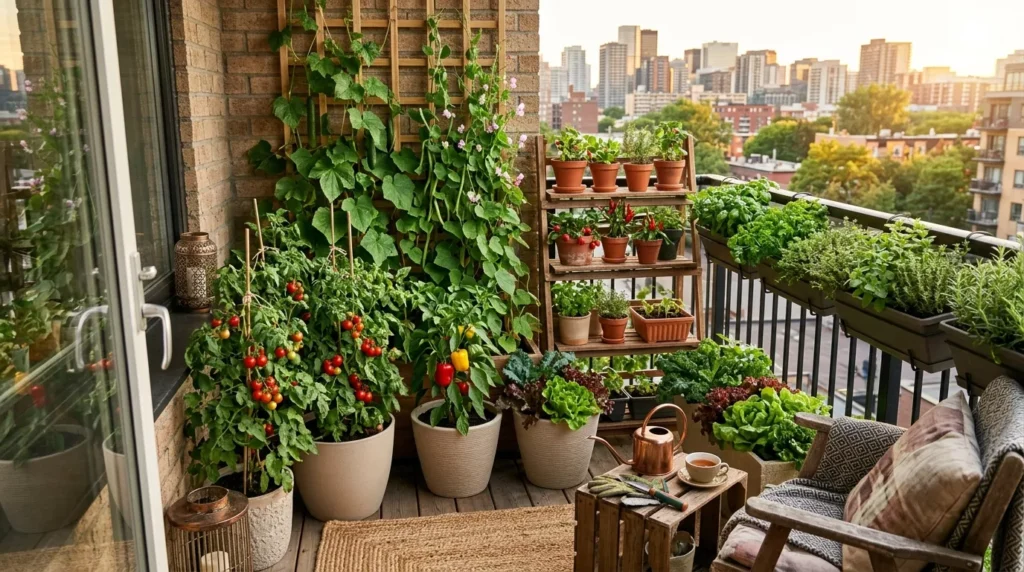
A balcony can become a productive mini vegetable garden with carefully selected containers and vertical supports. Use suitable pots, railing planters, and lightweight growing containers for vegetables that can thrive in the available conditions. Arrange plants according to their height and sunlight requirements. Vertical supports can provide additional space for appropriate climbing crops.
Keep drainage and watering needs in mind when choosing containers and their locations. Avoid overcrowding the balcony and make sure access remains comfortable. Always consider the building’s structural load limits and any relevant property rules. With thoughtful planning, even a small balcony can provide fresh seasonal vegetables.
26. Beautiful Organized Vegetable Garden
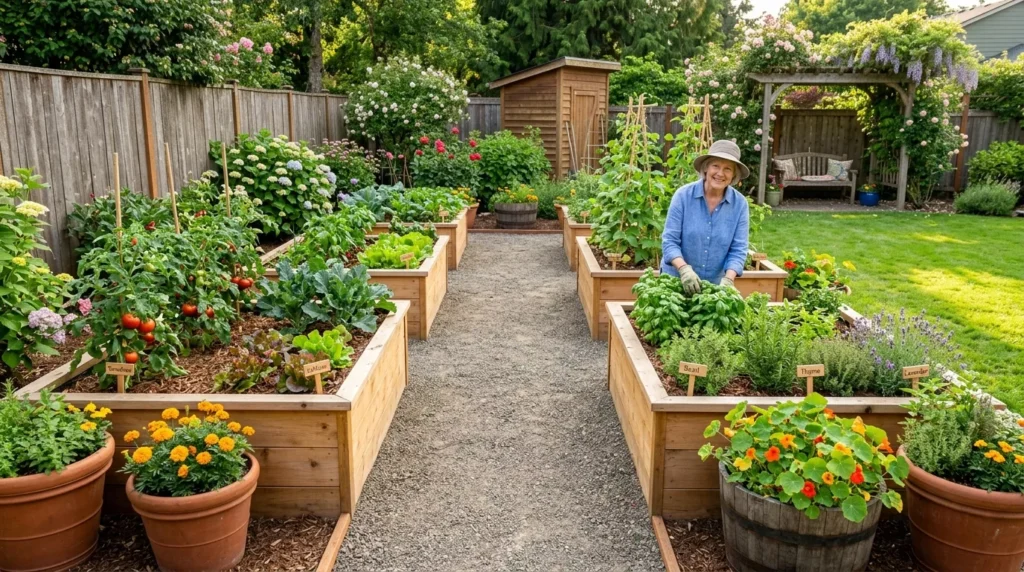
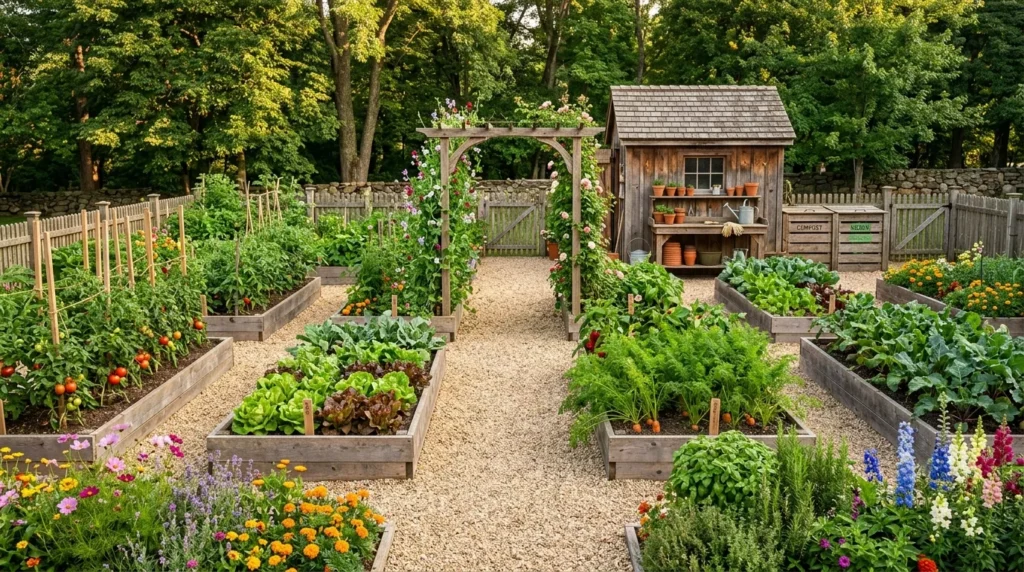
Create a beautiful organized vegetable garden with symmetrical raised beds, wide gravel pathways, wooden edging, vertical trellises, and neatly arranged planting sections. Dedicate different beds to leafy greens, root vegetables, herbs, climbing crops, and seasonal produce. A consistent layout makes the space feel more like a designed landscape than a basic growing area.
Add a small wooden potting bench, tool storage area, compost section, and attractive containers to complete the garden. Use colorful flowers around the edges to soften the structured design. Keep every planting bed easy to access while leaving enough room for comfortable movement. The finished space can be both highly productive and visually beautiful.
Vegetable Garden Layout Tips
Start by observing how much sunlight different parts of your garden receive throughout the day.
Measure the available space before deciding on the number and size of your planting beds.
Leave comfortable pathways so you can easily reach plants without stepping into the soil.
Consider mature plant size, watering requirements, and vertical growth before planting.
Use trellises and other vertical supports whenever suitable to maximize limited space.
Keep frequently harvested crops close to convenient pathways and entrances.
Group vegetables with similar growing requirements to simplify maintenance.
A little planning before planting can make the entire growing season easier.
Frequently Asked Questions
What is the best layout for a vegetable garden?
Raised beds, square-foot gardens, traditional rows, and U-shaped layouts are all practical options. The best design depends on the size of your garden, available sunlight, preferred vegetables, and how much maintenance you want to handle. Small spaces often benefit from raised beds and vertical growing. Larger spaces provide more flexibility for traditional rows and multiple planting zones.
How do I plan a vegetable garden layout?
Begin by measuring your available growing area and identifying sunny and shaded sections. Decide where pathways, raised beds, containers, and vertical supports should go before planting. Consider how large each vegetable will become and leave enough room for comfortable access. Planning the layout first can prevent overcrowding and make maintenance much easier.
What is the best vegetable garden layout for a small yard?
Raised beds, square-foot gardens, vertical systems, containers, and narrow beds are excellent options for small yards. Focus on productive vegetables that don’t require excessive space and use trellises for suitable climbing crops. Keep pathways compact but comfortable and avoid creating too many separate zones. A simple, organized design will usually make the most of a small space.
How wide should vegetable garden paths be?
Garden paths should provide enough room for comfortable walking and easy access to the plants on both sides. If you plan to use a garden cart or wheelbarrow, make the main pathway wider to accommodate it. Smaller paths between compact beds can be narrower as long as you can reach the plants comfortably. The ideal width ultimately depends on your garden layout and maintenance routine.
Can vegetables and flowers grow together?
Yes, vegetables and flowers can be combined to create a colorful and productive garden. Flowers can add visual interest around raised beds and pathways while helping the garden feel more ornamental. Choose plants according to their growing conditions and make sure they have enough room to mature. A mixed vegetable and flower garden can be both practical and beautiful.
Conclusion
A successful vegetable garden begins with a layout that works for your available space and gardening routine. Whether you prefer raised beds, traditional rows, vertical growing, containers, or creative geometric designs, careful planning can help you grow more while keeping maintenance manageable.
These 25+ vegetable garden layout ideas provide plenty of inspiration for creating a productive and attractive growing space. Start with your sunlight, soil, available area, and favorite vegetables, then choose a layout that makes planting, watering, harvesting, and enjoying your garden as easy as possible.