25+ Homeschool Room Ideas to Create an Inspiring Learning Space
Creating a dedicated homeschool room can make learning more enjoyable, organized, and productive for both children and parents. A thoughtfully designed learning environment encourages creativity, minimizes distractions, and helps establish a daily routine that supports academic success. Whether you have an entire room or just a small corner, the right setup can make a big difference. Retro Apartment Aesthetic Ideas
The best homeschool rooms combine functionality with comfort by incorporating smart storage, flexible furniture, educational decor, and plenty of natural light. From reading nooks to interactive learning walls, every detail contributes to an engaging educational experience. These 25+ Homeschool Room Ideas will inspire you to design a beautiful, practical, and Pinterest-worthy learning space your children will love.
1. Bright Learning Corner
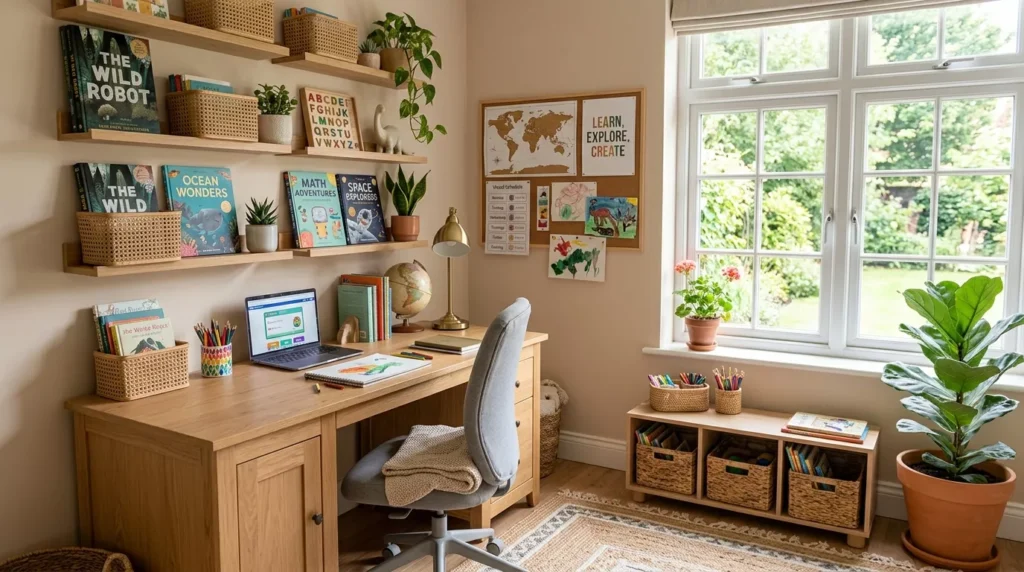
A bright learning corner filled with natural light creates the perfect environment for focused study sessions. Position a sturdy desk near a large window so children can enjoy daylight while reading, writing, and completing assignments. Bright spaces naturally improve concentration while making the room feel more welcoming.
Complete the corner with a comfortable chair, a desk lamp, and a few educational decorations that inspire curiosity without becoming distracting. Add a small shelf for frequently used books and supplies to keep everything within easy reach. This simple setup works beautifully in both dedicated homeschool rooms and shared living spaces.
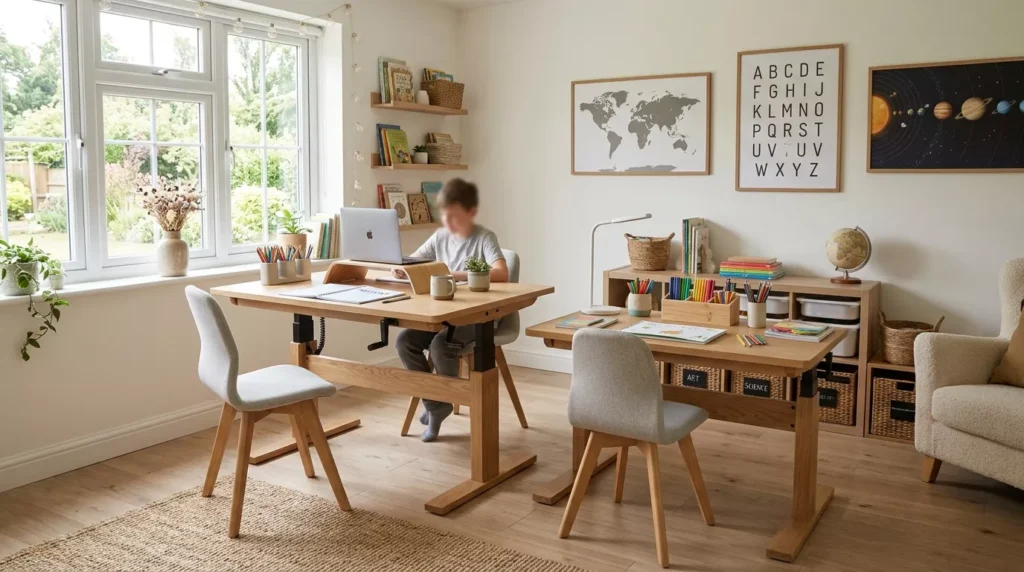
2. Adjustable Study Desks
An adjustable study desk grows with your child and supports healthy posture throughout the school years. Height-adjustable desks allow children to sit comfortably while writing, reading, drawing, or using a computer. Investing in ergonomic furniture creates a more enjoyable and productive learning experience.
Pair the desk with an adjustable chair that provides proper back support and encourages good posture. Keep the desktop organized with pencil holders, storage trays, and cable organizers to minimize distractions. A clean and functional workspace helps students stay focused on their lessons.
3. Educational Wall Maps
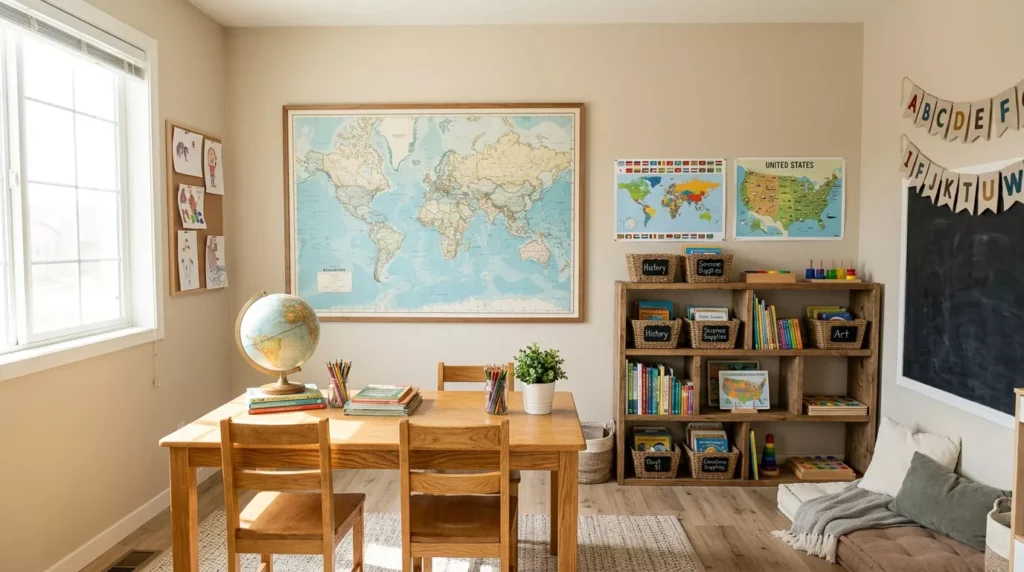
Wall maps are both decorative and educational, making them an excellent addition to any homeschool room. Display world maps, country maps, or interactive geography charts where children can easily reference them during lessons. Colorful maps encourage curiosity about different cultures, continents, and landmarks.
Combine maps with globes, travel-themed artwork, and educational posters to create an inspiring learning wall. Rotate additional educational displays throughout the year to match different subjects. This dynamic setup keeps the room visually engaging while supporting hands-on learning.
4. Open Bookshelves
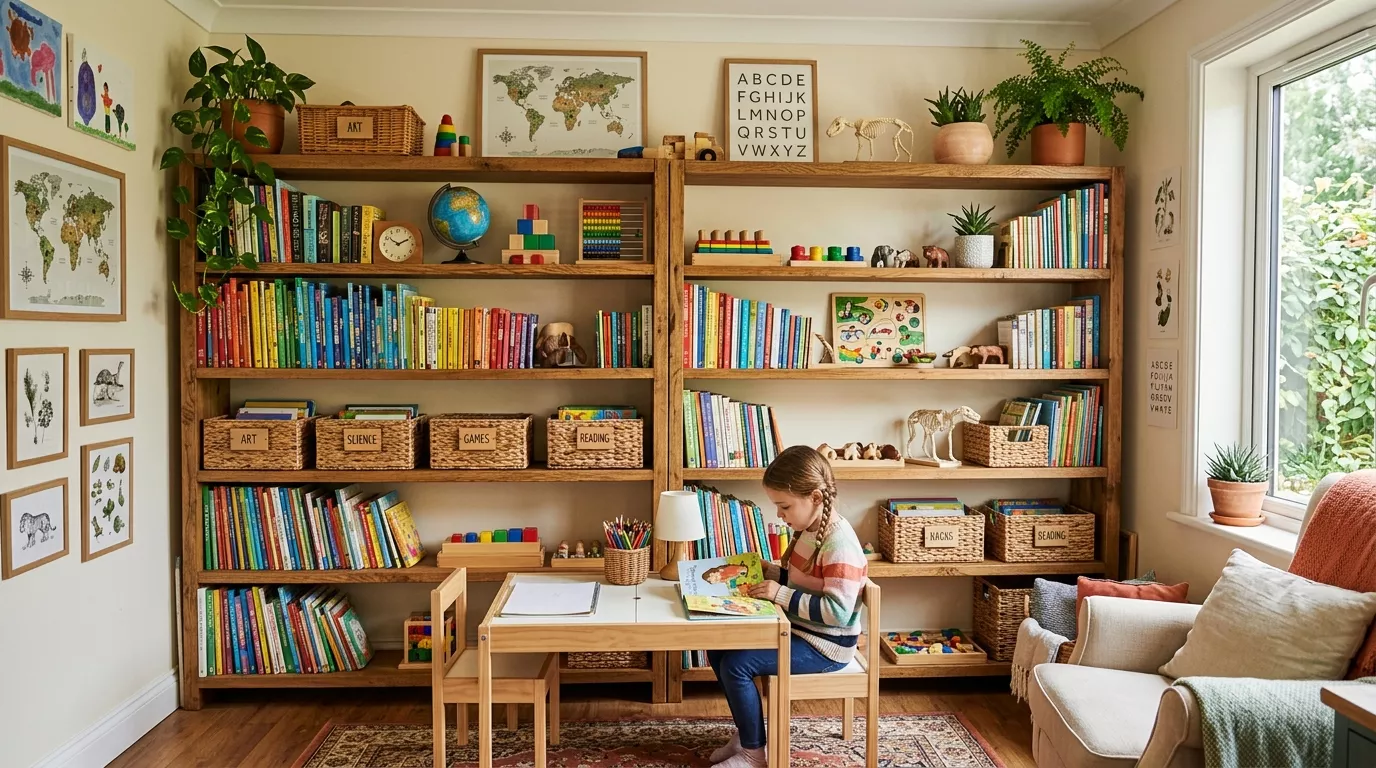
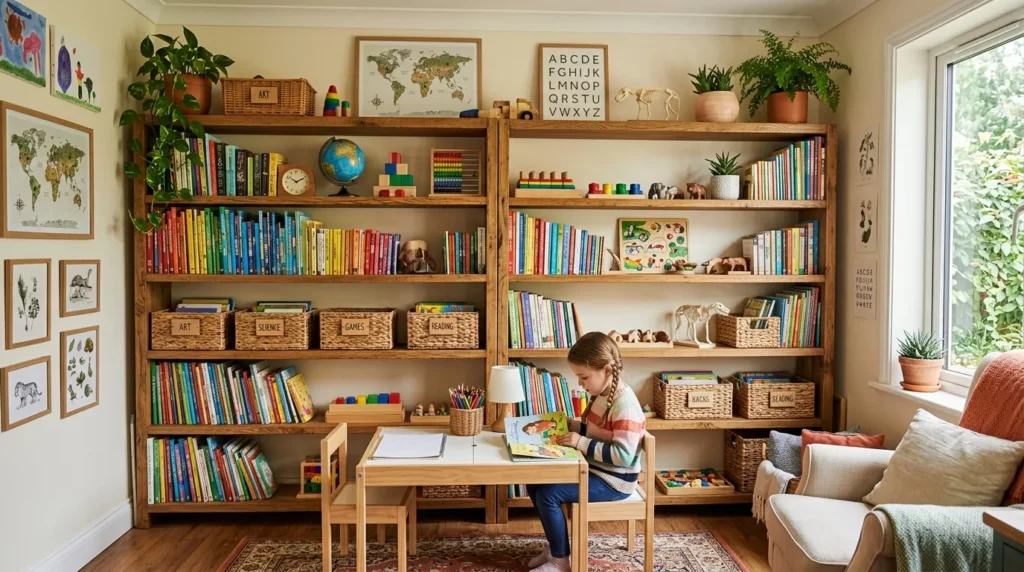
Open bookshelves make educational materials easily accessible while encouraging children to develop independent reading habits. Arrange books by subject, reading level, or color to create an organized display that’s both practical and visually appealing. A tidy bookshelf helps students quickly find the resources they need.
Decorate the shelves with small plants, educational toys, framed quotes, and storage baskets to balance functionality with style. Keeping frequently used books at eye level promotes independence and responsibility. Open shelving creates a welcoming classroom atmosphere that encourages exploration.
5. Reading Nook
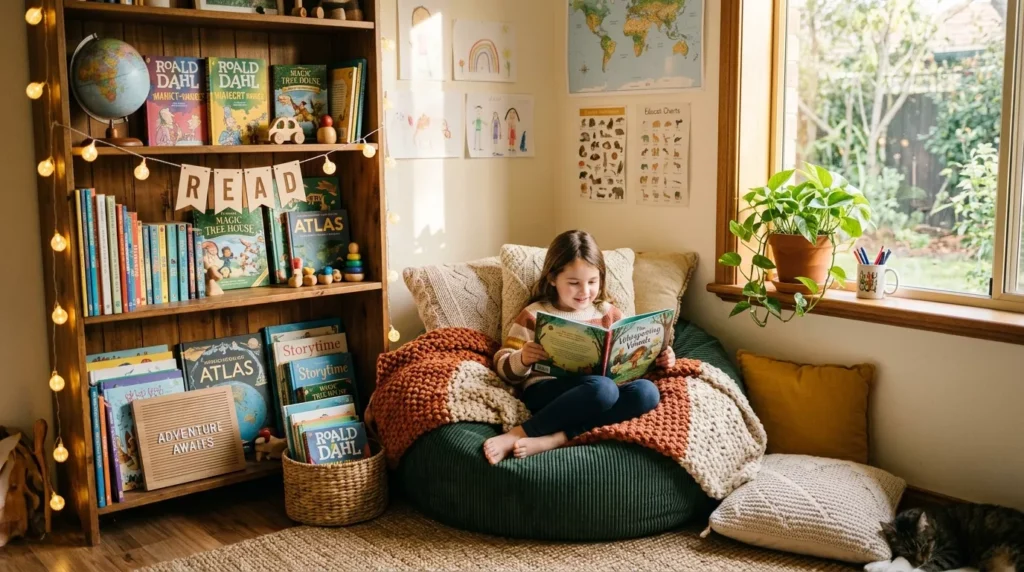
A cozy reading nook provides a peaceful retreat where children can develop a lifelong love of books. Add a comfortable bean bag, floor cushions, or a small armchair alongside soft blankets and plenty of pillows. Warm lighting creates a relaxing environment that invites quiet reading time.
Fill nearby shelves with age-appropriate books and decorate the space with whimsical artwork or string lights. Including a small side table for drinks or bookmarks makes the nook even more functional. This comfortable corner quickly becomes a favorite part of the homeschool room.
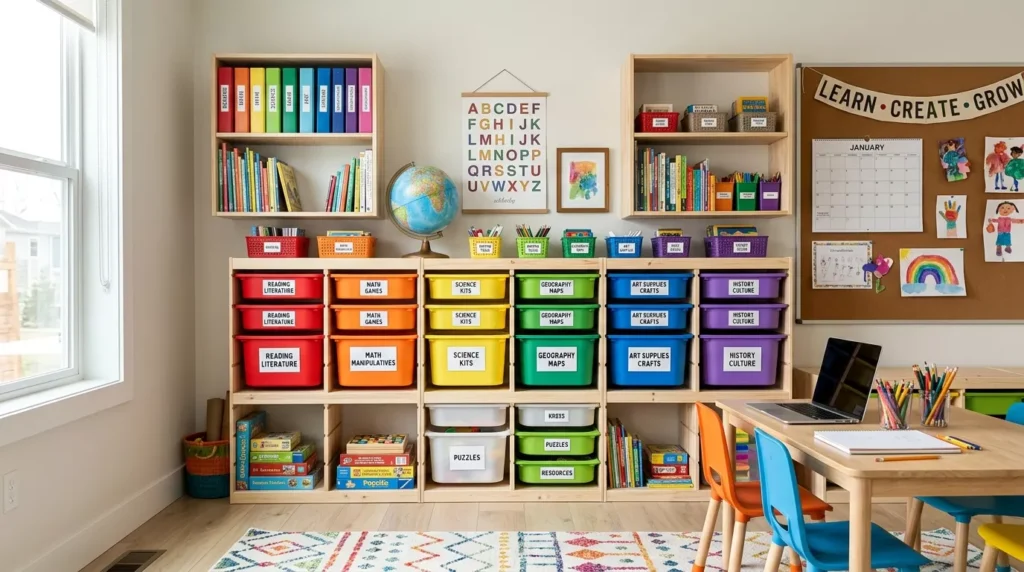
6. Color-Coded Storage
Keeping homeschool supplies organized becomes much easier with a color-coded storage system. Assign different colors to each subject using bins, folders, baskets, and labels so children can quickly locate their materials. This simple organization method reduces clutter and saves valuable teaching time.
Choose stackable containers and open bins that are easy for children to access independently. Store frequently used supplies at lower levels while placing seasonal or specialty materials higher up. An organized classroom creates a calmer and more productive learning environment.
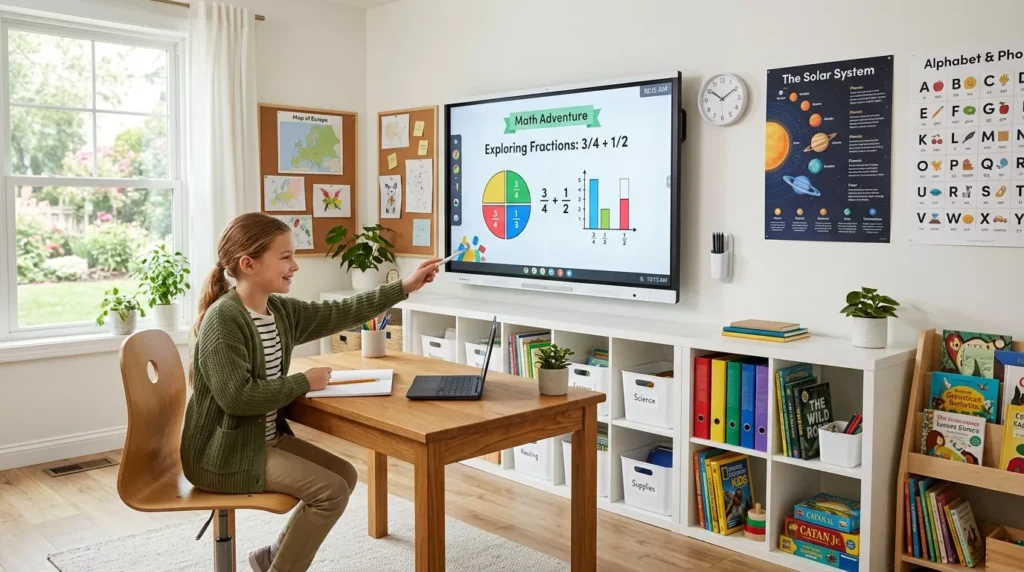
7. Interactive Whiteboard
An interactive whiteboard transforms ordinary lessons into engaging learning experiences. Use it for math practice, spelling activities, drawing diagrams, brainstorming ideas, and displaying daily schedules. The reusable writing surface encourages participation while making lessons more dynamic.
Position the whiteboard where every student can see it comfortably and keep markers, erasers, and magnets neatly organized nearby. Pair it with educational charts and calendars to maximize its usefulness throughout the school day. This versatile teaching tool adapts easily to every subject and age group.
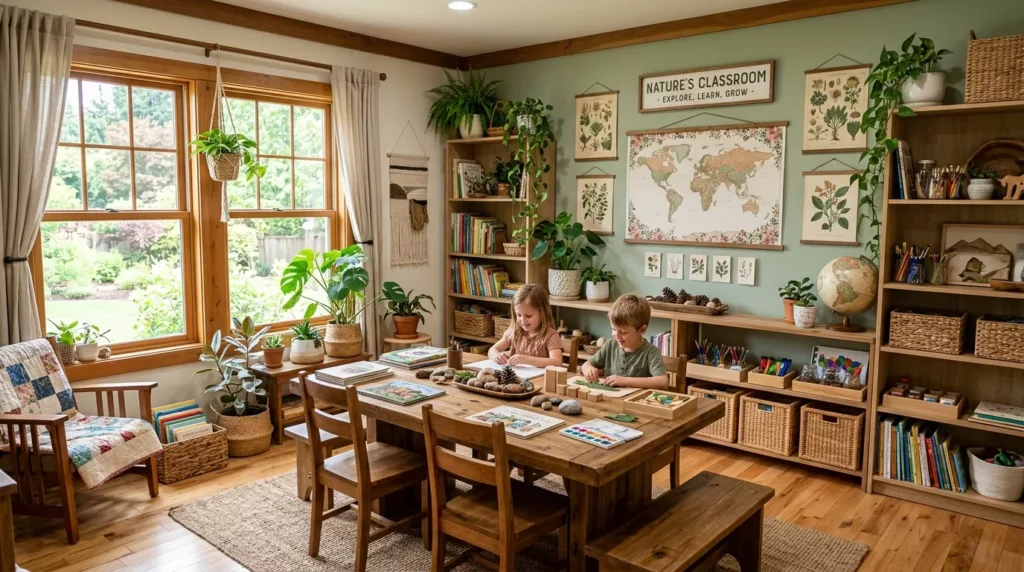
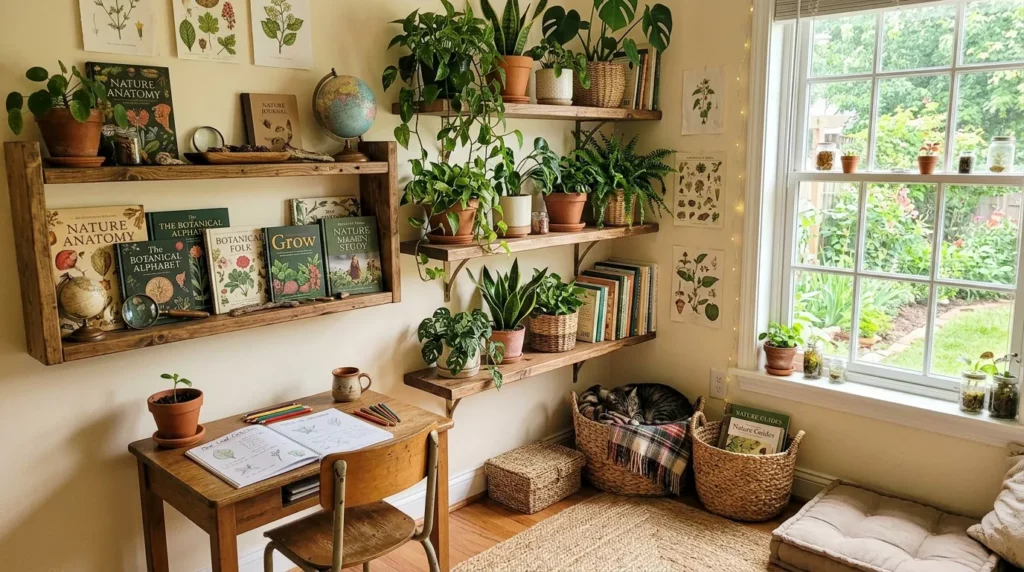
8. Nature-Inspired Classroom
Bring the outdoors inside by designing a homeschool room inspired by nature. Decorate with wooden furniture, woven baskets, indoor plants, botanical prints, and earthy colors to create a calm and welcoming learning environment. Natural elements help reduce stress while encouraging creativity and focus.
Place potted plants near windows and use wooden shelves to display books, science collections, or nature-themed crafts. Soft green, beige, and warm wood tones create a peaceful atmosphere that supports daily learning. This timeless design works beautifully for students of all ages.
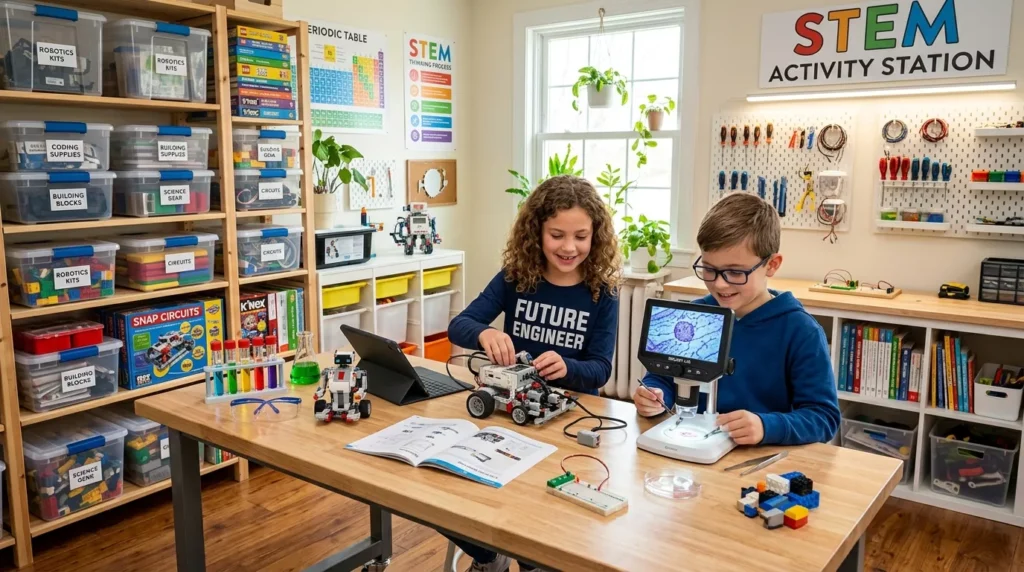
9. STEM Activity Station
A dedicated STEM station encourages hands-on exploration through science, technology, engineering, and math activities. Organize building blocks, robotics kits, microscopes, puzzles, measuring tools, and experiment supplies on open shelves for easy access. Keeping everything together inspires independent learning.
Include a sturdy worktable with plenty of space for projects and experiments. Label storage bins clearly so children can quickly find materials and clean up afterward. A well-organized STEM corner makes learning interactive, exciting, and engaging every day.
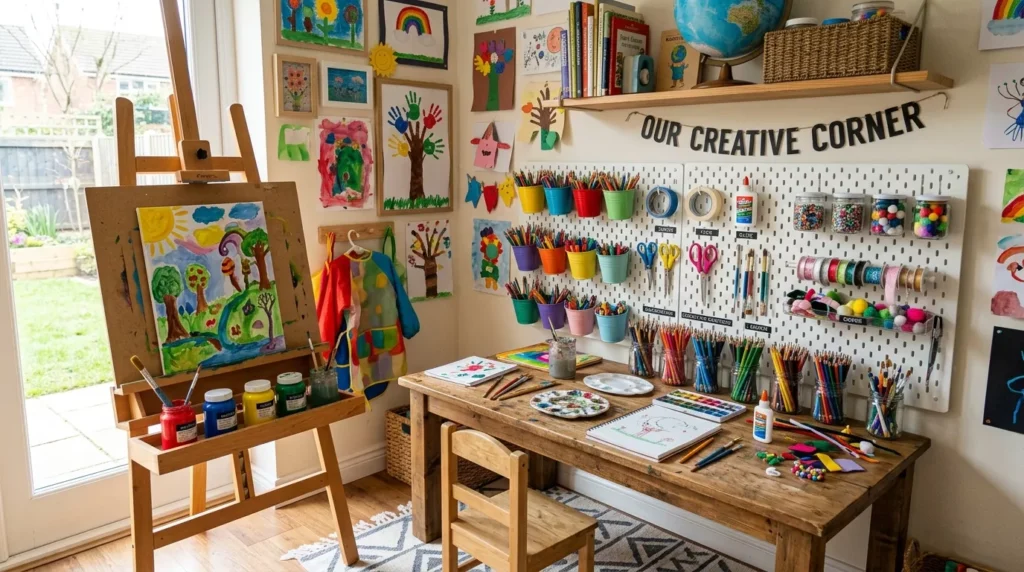
10. Art & Craft Corner
Encourage creativity by setting aside a special area for drawing, painting, crafting, and DIY projects. Stock the space with colored pencils, paints, markers, paper, scissors, glue, and storage containers that keep supplies organized. Having a dedicated creative zone inspires children to express themselves freely.
Install open shelving or pegboards to display art materials while keeping the workspace tidy. Add a washable table cover and an easel for even more artistic opportunities. This colorful corner brings imagination and fun into your homeschool routine.
11. Rolling Supply Cart
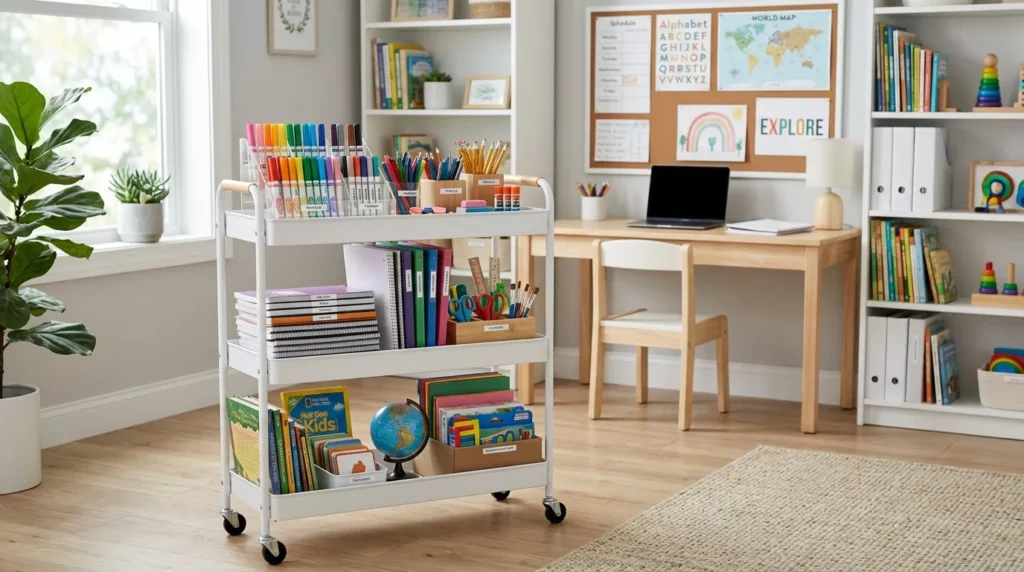
A rolling supply cart provides flexible storage that can move wherever it’s needed. Fill each tier with frequently used classroom supplies such as notebooks, pencils, calculators, markers, scissors, and educational games. Its portable design keeps essential materials within easy reach throughout the day.
Choose a cart with labeled compartments to simplify organization and encourage children to return items after use. When lessons end, simply roll the cart into a corner to free up valuable floor space. This practical solution works especially well in smaller homeschool rooms.
12. Montessori Learning Shelf
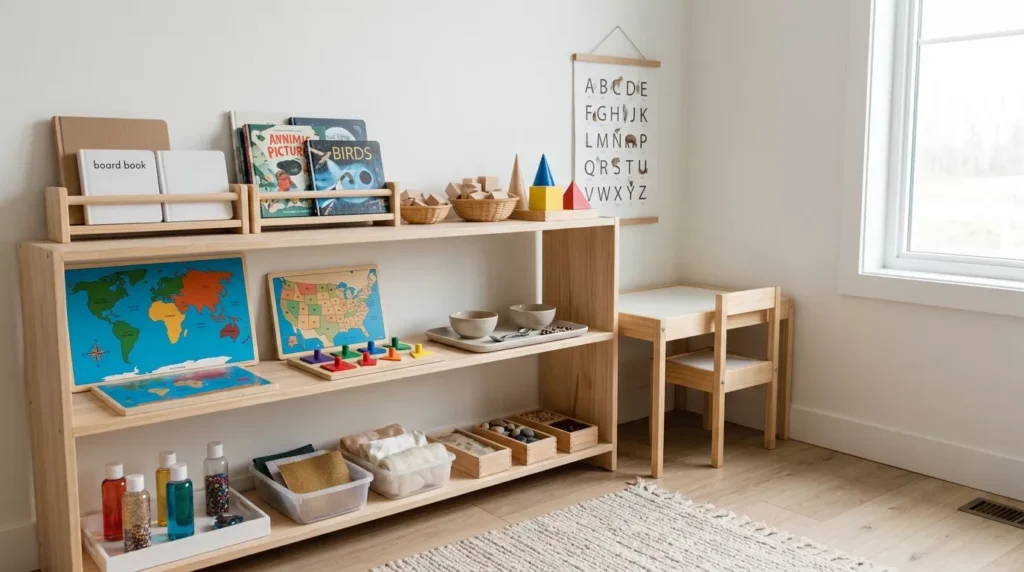
Montessori-inspired shelves encourage children to explore educational materials independently. Arrange books, puzzles, sensory activities, math manipulatives, and practical life tools neatly on low open shelves where children can access them without assistance. This promotes confidence and self-directed learning.
Keep the shelves uncluttered by displaying only a few carefully selected activities at a time. Rotate learning materials regularly to maintain curiosity and introduce new concepts throughout the year. A simple and organized environment helps children stay focused and engaged.
13. Alphabet & Number Wall
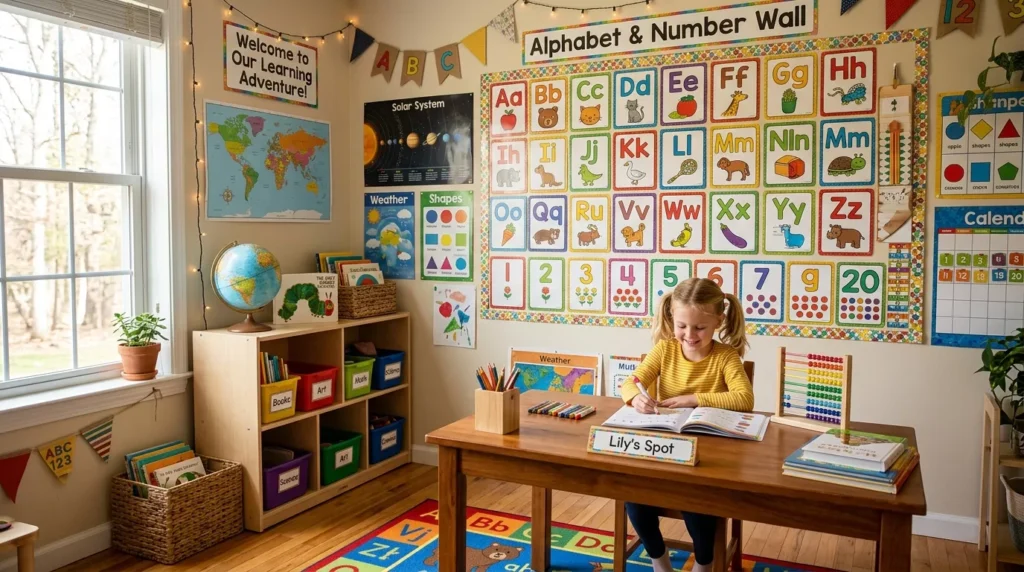
Turn an empty wall into an interactive learning tool by displaying colorful alphabet letters, numbers, phonics charts, and educational posters. Large visual references support reading, spelling, counting, and early math skills while brightening the classroom.
Update the wall with seasonal themes or subject-specific materials to keep lessons fresh and exciting. Add magnetic letters or removable flashcards so children can participate in hands-on activities every day. This educational display combines decoration with meaningful learning.
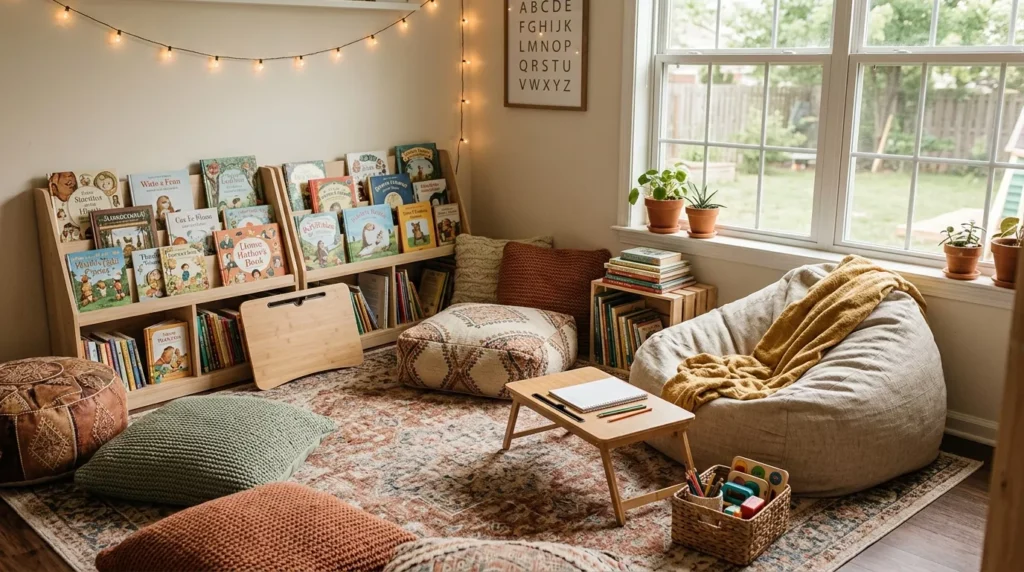
14. Cozy Floor Seating
Flexible floor seating creates a relaxed learning environment that allows children to choose the most comfortable place to study. Use floor cushions, bean bags, poufs, or soft rugs to create an inviting area for reading, group discussions, or independent work.
Combine the seating area with low bookshelves and small lap desks for added functionality. The comfortable setup encourages movement throughout the day while making learning feel less formal. This versatile space is perfect for story time, collaborative activities, and quiet reading sessions.
15. Calendar & Weather Station
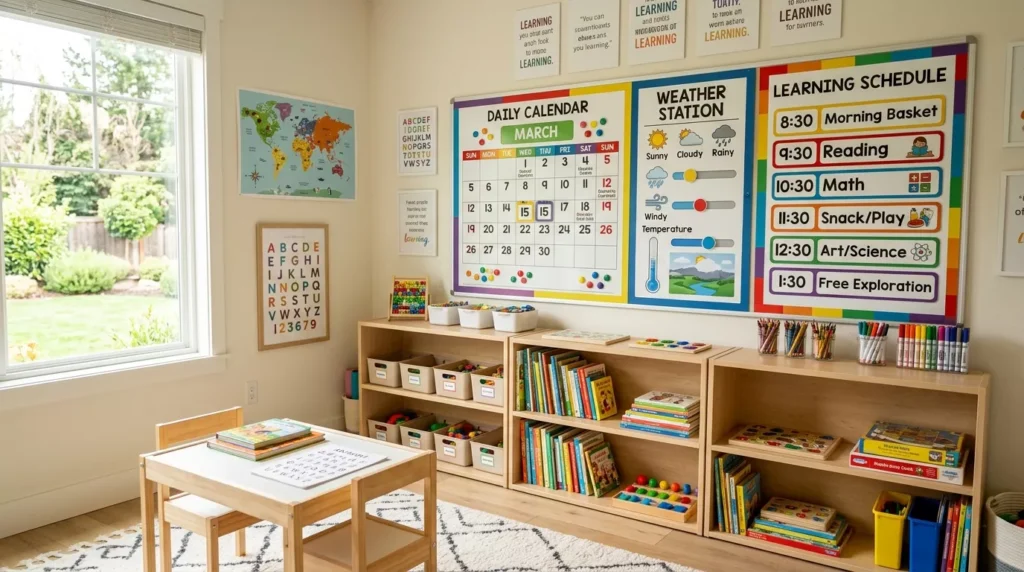
A calendar and weather station helps children build daily routines while learning about time, seasons, and weather patterns. Display a large monthly calendar, weather chart, days of the week, months, and temperature tracker on one dedicated wall. Updating the station each morning turns it into a fun educational activity.
Include magnetic pieces or dry-erase sections so children can change the date, weather, and daily schedule independently. Add a clock nearby to practice telling time and reinforce everyday life skills. This interactive station creates structure while making mornings more engaging.
16. Flexible Learning Zones
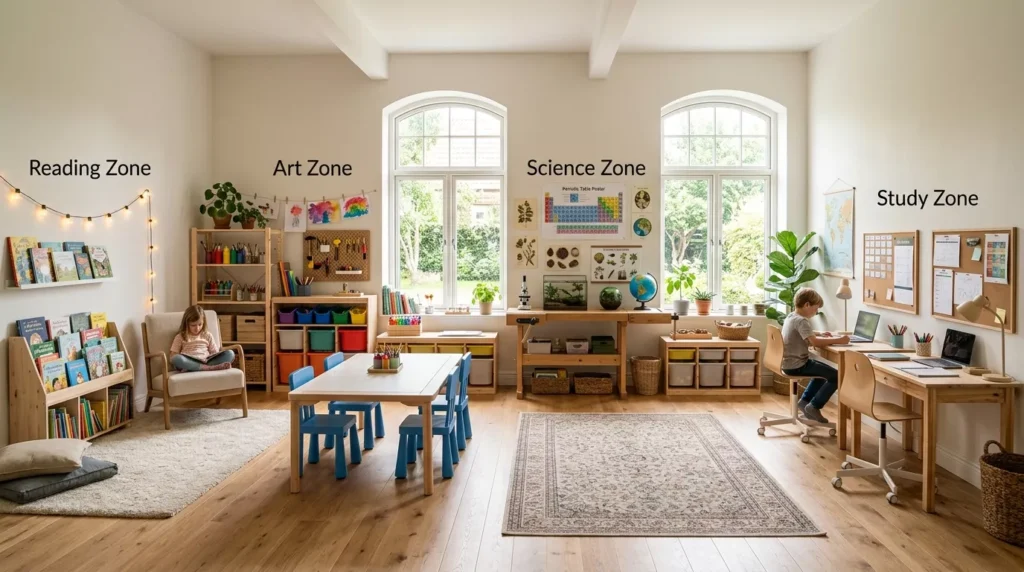
Divide your homeschool room into separate learning zones to support different subjects and activities. Create dedicated areas for reading, science experiments, arts and crafts, computer work, and independent study. Clearly defined spaces help children transition between lessons more smoothly.
Use area rugs, bookshelves, or storage units to visually separate each zone without making the room feel crowded. Flexible layouts also allow you to rearrange furniture as your children’s learning needs evolve. This organized approach keeps the classroom functional and engaging.
17. Science Display Area
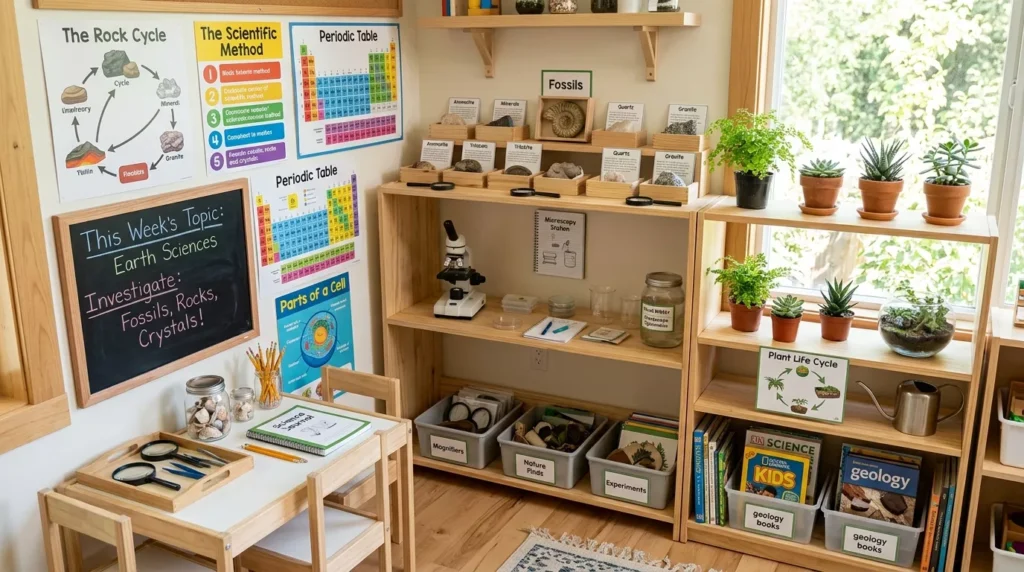
Create a science display that encourages curiosity and hands-on exploration throughout the year. Showcase rocks, minerals, shells, leaves, insects, fossils, magnifying glasses, and microscopes on open shelves or inside glass display cases. Rotating collections keeps children excited about discovering new topics.
Add educational labels and small fact cards beside each item to encourage independent learning. Include a notebook where students can record observations and questions during science activities. This inspiring display transforms everyday discoveries into valuable learning opportunities.
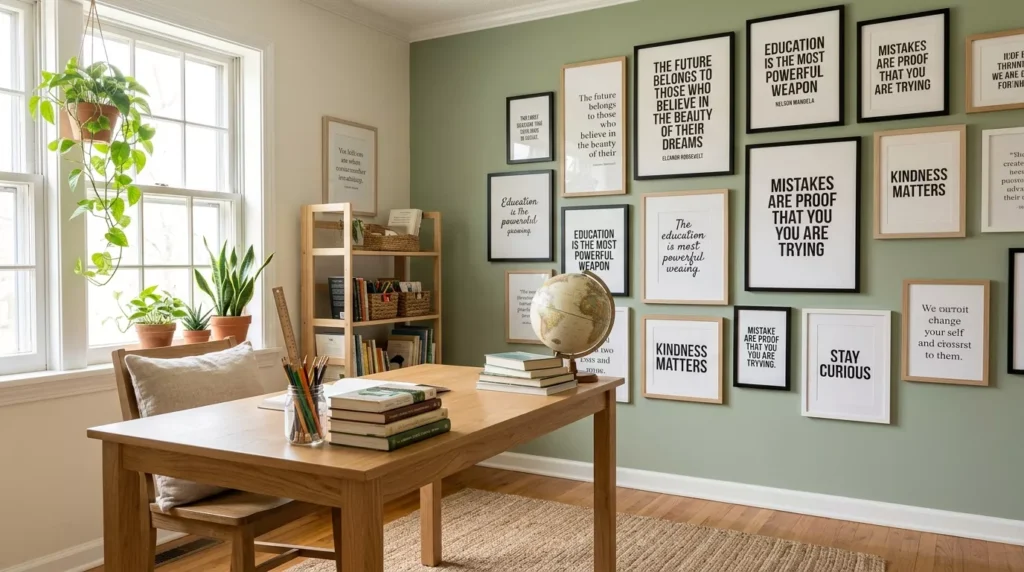
18. Inspirational Quote Wall
An inspirational quote wall adds positivity and motivation to your homeschool room while creating an uplifting atmosphere. Display encouraging messages about curiosity, perseverance, creativity, and kindness using framed prints, wooden signs, or colorful typography. Positive reminders help build confidence throughout the school day.
Arrange the quotes alongside educational artwork or student achievements to create a personalized learning environment. Choose calming colors and clean layouts that complement the rest of the room’s decor. This thoughtful wall inspires children to stay motivated and enjoy learning.
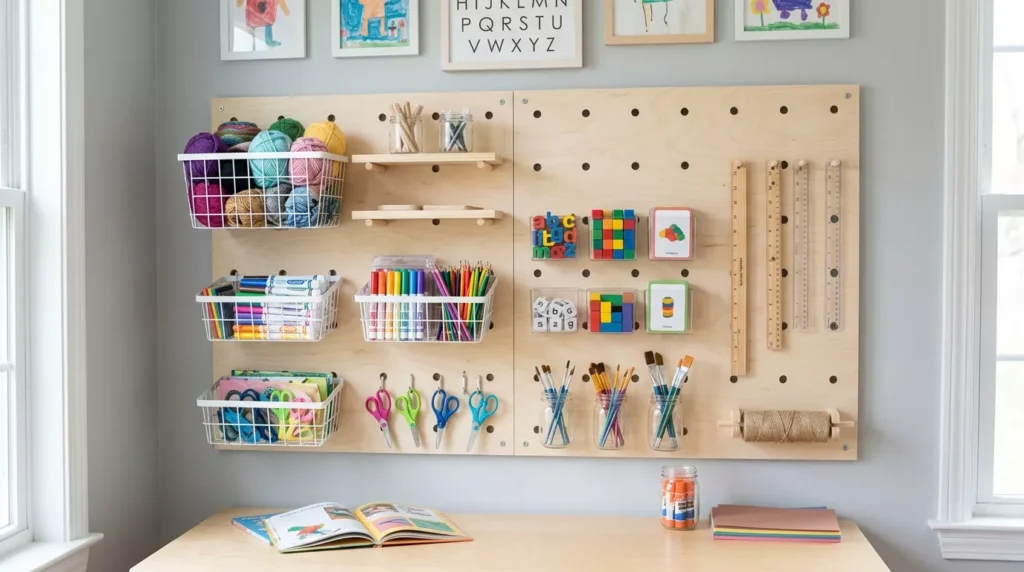
19. Pegboard Organization
A pegboard is one of the most versatile organization tools for any homeschool classroom. Hang scissors, rulers, headphones, markers, baskets, clipboards, and craft supplies neatly on hooks so everything remains visible and easy to reach. Vertical storage also saves valuable desk and shelf space.
Customize the pegboard with adjustable shelves and containers to fit your family’s changing needs. Paint it in a neutral or cheerful color that matches your classroom design for a cohesive look. This practical solution keeps supplies organized while adding visual interest to the room.
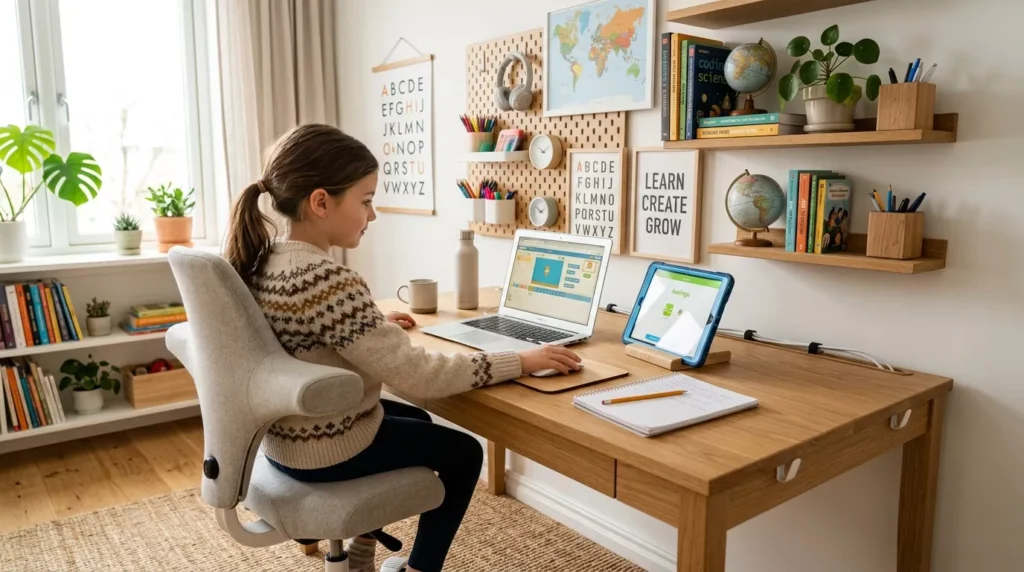
20. Technology Learning Station
Create a dedicated technology station where children can safely use computers, tablets, or educational devices. A clean desk with proper cable management, headphones, and ergonomic seating helps students stay comfortable during digital lessons. Organized technology spaces also minimize distractions.
Decorate the area with simple educational artwork and keep charging stations neatly hidden inside cable organizers. Position the desk near natural light while avoiding screen glare for a comfortable learning experience. This modern setup supports both online learning and creative digital projects.
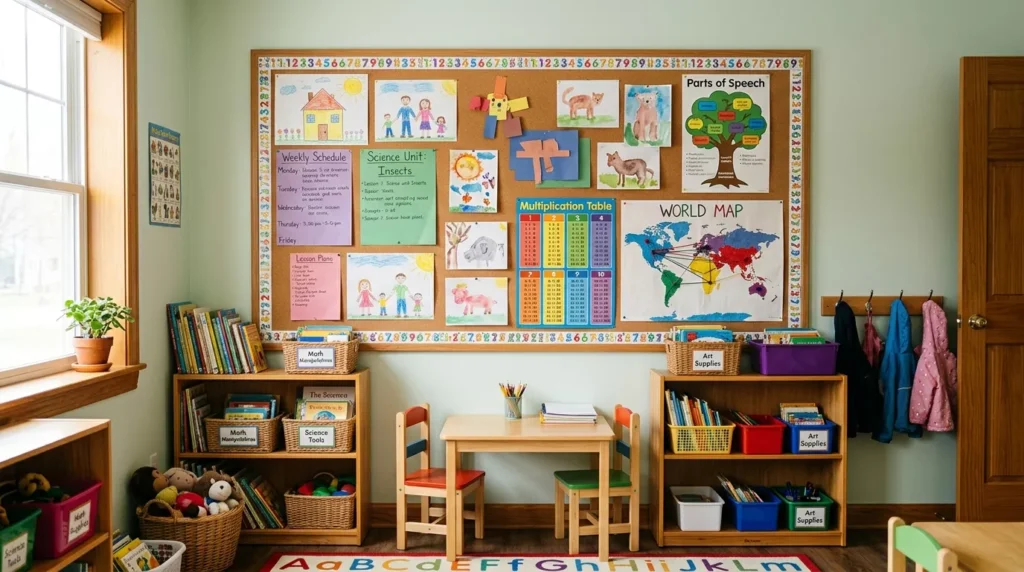
21. Creative Bulletin Board
A creative bulletin board keeps your homeschool room dynamic by showcasing artwork, achievements, lesson plans, weekly goals, and educational reminders. Rotating the content regularly keeps students engaged and gives them a sense of accomplishment as their work is displayed.
Use colorful borders, seasonal decorations, and labeled sections to organize information neatly. Include a space for inspirational quotes or fun learning challenges to encourage participation. A thoughtfully designed bulletin board becomes both decorative and educational, making the classroom feel lively and personalized.
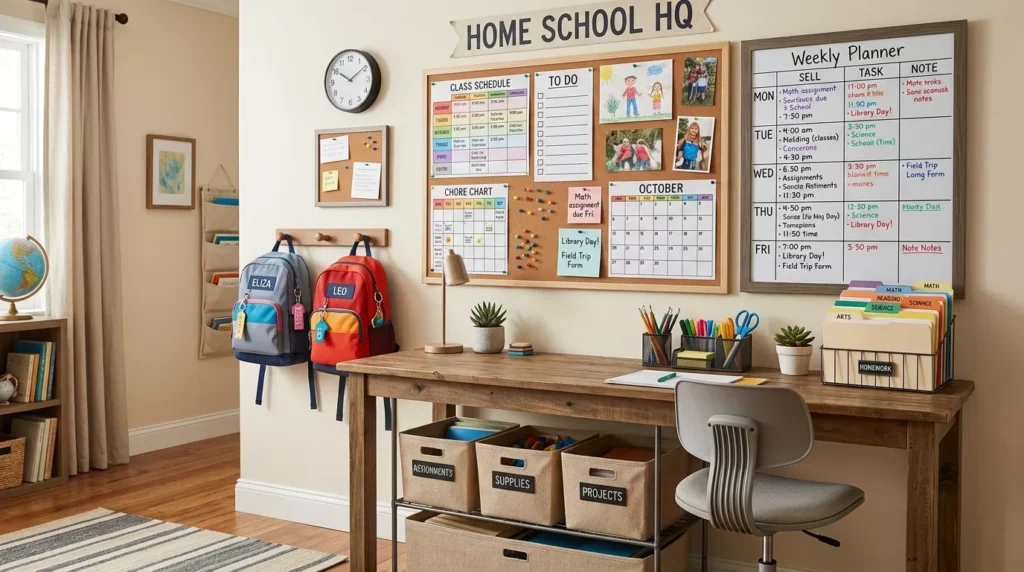
22. Homework Command Center
A homework command center keeps daily assignments, schedules, and school supplies organized in one convenient location. Include a corkboard or dry-erase board for reminders, a weekly planner, file organizers, and labeled bins for completed and unfinished work. Having a dedicated station helps children stay on top of their responsibilities.
Add hooks for backpacks, clipboards for important papers, and small containers for pencils, markers, and calculators. Position the command center near the study area so everything remains within easy reach. This organized setup reduces clutter and encourages independence.
23. Indoor Plant Corner
Bring life into your homeschool room with a cozy indoor plant corner filled with easy-care greenery. Plants like pothos, snake plants, spider plants, and peace lilies improve the room’s atmosphere while creating a calm learning environment. Their natural beauty makes the classroom feel fresh and inviting.
Display plants on floating shelves, plant stands, or windowsills where they receive plenty of natural light. Pair them with woven baskets and wooden furniture to create a warm, nature-inspired classroom. Caring for plants also teaches children responsibility and appreciation for nature.
24. Neutral Color Palette
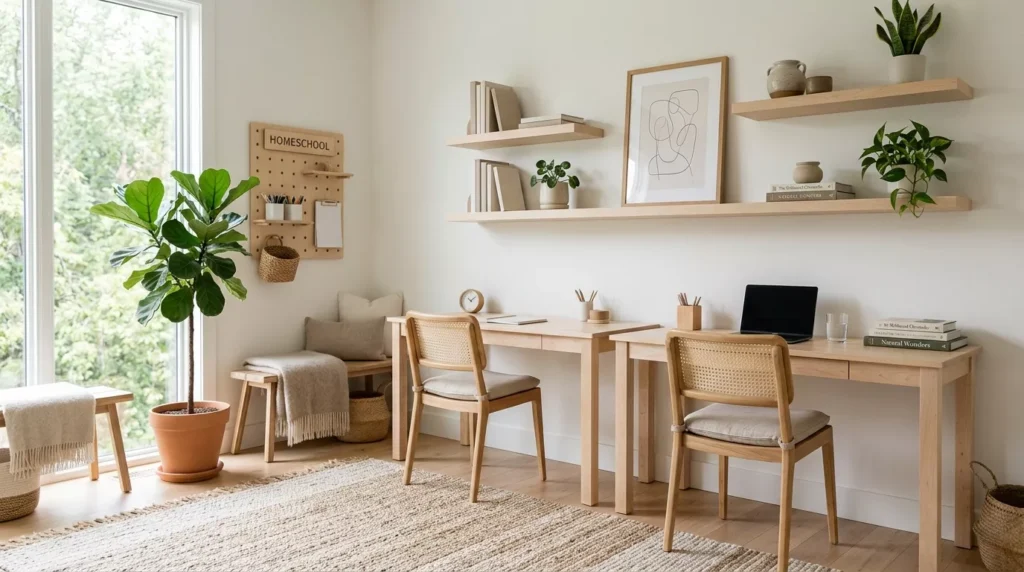
A neutral color palette creates a peaceful homeschool environment that supports focus and creativity. Shades of white, beige, soft gray, warm taupe, and natural wood help reduce visual distractions while making the room feel bright and spacious. These timeless colors work well with every decorating style.
Introduce subtle pops of color through educational posters, books, and decorative storage bins rather than bold wall colors. Soft textiles like rugs, curtains, and cushions add warmth without overwhelming the space. This balanced design creates a calming atmosphere that promotes productive learning.
25. Personalized Learning Space
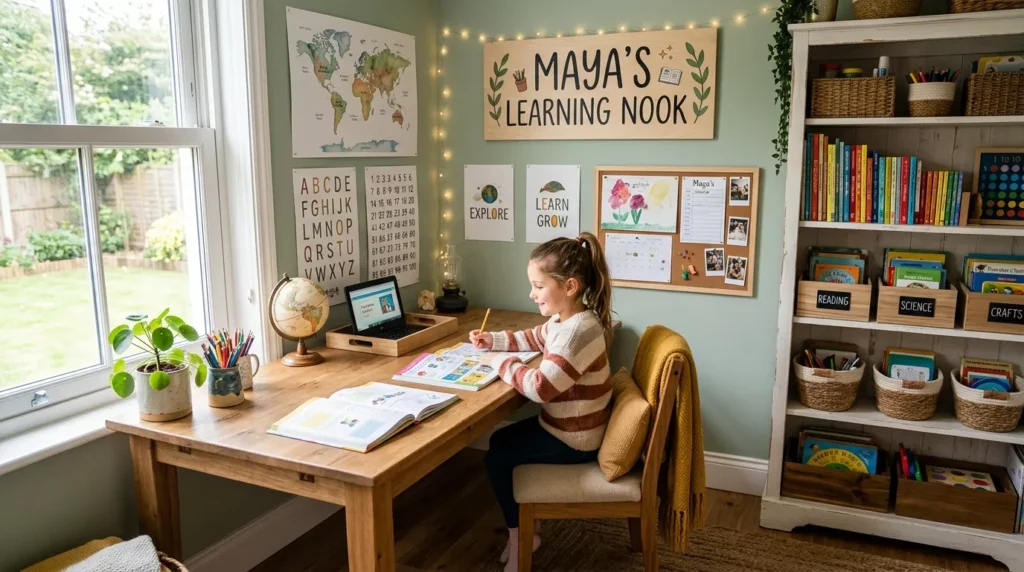
Every child learns differently, so creating a personalized learning area makes the homeschool room more engaging and meaningful. Decorate each study space with favorite colors, inspirational artwork, personalized name signs, and subject-specific supplies that reflect individual interests. A customized environment encourages confidence and creativity.
Include storage baskets, adjustable seating, and organizational tools that match each child’s learning style. Giving children input during the decorating process helps them feel connected to their classroom. This thoughtful approach creates a space where learning feels exciting and enjoyable.
26. Multi-Purpose Classroom Design
A multi-purpose homeschool room maximizes every inch of available space by combining learning, creativity, reading, and organization into one flexible layout. Choose furniture that serves multiple purposes, such as desks with built-in storage, foldable tables, and shelving that doubles as room dividers. Smart planning keeps the room functional without feeling crowded.
Use movable furniture and portable storage solutions so the layout can easily adapt to different activities throughout the day. Whether it’s science experiments, art projects, or quiet reading time, a versatile classroom grows with your family’s changing educational needs. This practical design ensures your homeschool room remains organized and inspiring for years to come.
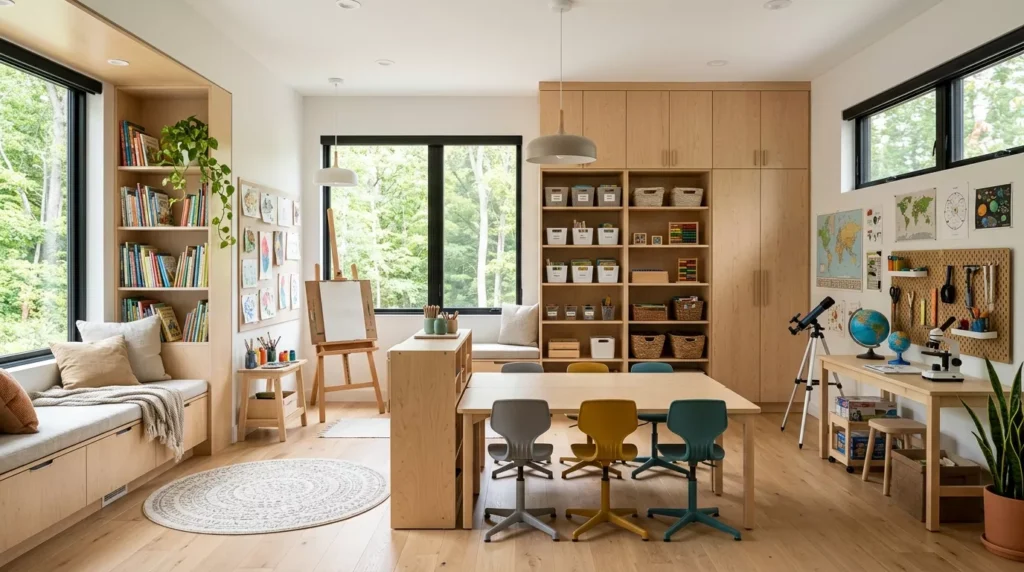
Homeschool Room Organization Tips
- Maximize natural light to create a bright and inviting learning environment.
- Use labeled bins and baskets to keep supplies organized by subject.
- Choose flexible furniture that grows with your children.
- Incorporate open shelving for easy access to books and educational materials.
- Create separate learning zones for reading, science, art, and technology.
- Add comfortable seating options for different learning styles.
- Rotate educational displays and activities to keep the room fresh.
- Keep decorations simple to minimize distractions and encourage focus.
Frequently Asked Questions
How do I set up a homeschool room on a budget?
You can create an affordable homeschool room by repurposing existing furniture, using open shelving, organizing supplies in labeled bins, and decorating with printable educational posters. Shopping at thrift stores or using DIY storage solutions can also help reduce costs.
What should every homeschool room include?
A functional homeschool room should include a comfortable study area, organized storage, bookshelves, educational wall displays, proper lighting, flexible seating, and a dedicated space for creative activities. These essentials support both structured lessons and independent learning.
How can I organize homeschool supplies?
Use labeled bins, rolling carts, drawer organizers, pegboards, and open shelves to sort supplies by subject or activity. Keeping frequently used materials within easy reach encourages children to stay organized and work independently.
What colors are best for a homeschool room?
Neutral colors such as white, beige, soft gray, sage green, and light wood tones create a calm environment that supports concentration. Bright accent colors can be introduced through educational decor, artwork, and storage accessories to keep the room cheerful.
How do I homeschool in a small space?
Even a small corner can become an effective homeschool area with a compact desk, floating shelves, portable storage, and multi-functional furniture. Creating clearly defined learning zones helps maximize limited space while keeping everything organized.
Conclusion
A thoughtfully designed homeschool room can transform everyday lessons into engaging learning experiences that inspire curiosity, creativity, and confidence. By combining organized storage, flexible furniture, educational displays, and comfortable seating, you can create a classroom that supports your children’s academic growth while making learning enjoyable.
Whether you have a dedicated room or a small learning corner, these 25+ Homeschool Room Ideas provide practical inspiration for building a beautiful and functional educational space. Personalize the design to fit your family’s needs, stay organized with smart storage solutions, and create a homeschool environment where children can thrive every day.